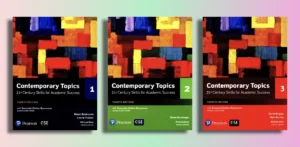
Contemporary Topics 4e (PDFs & Resources)
Level 1 (A2 / B1)
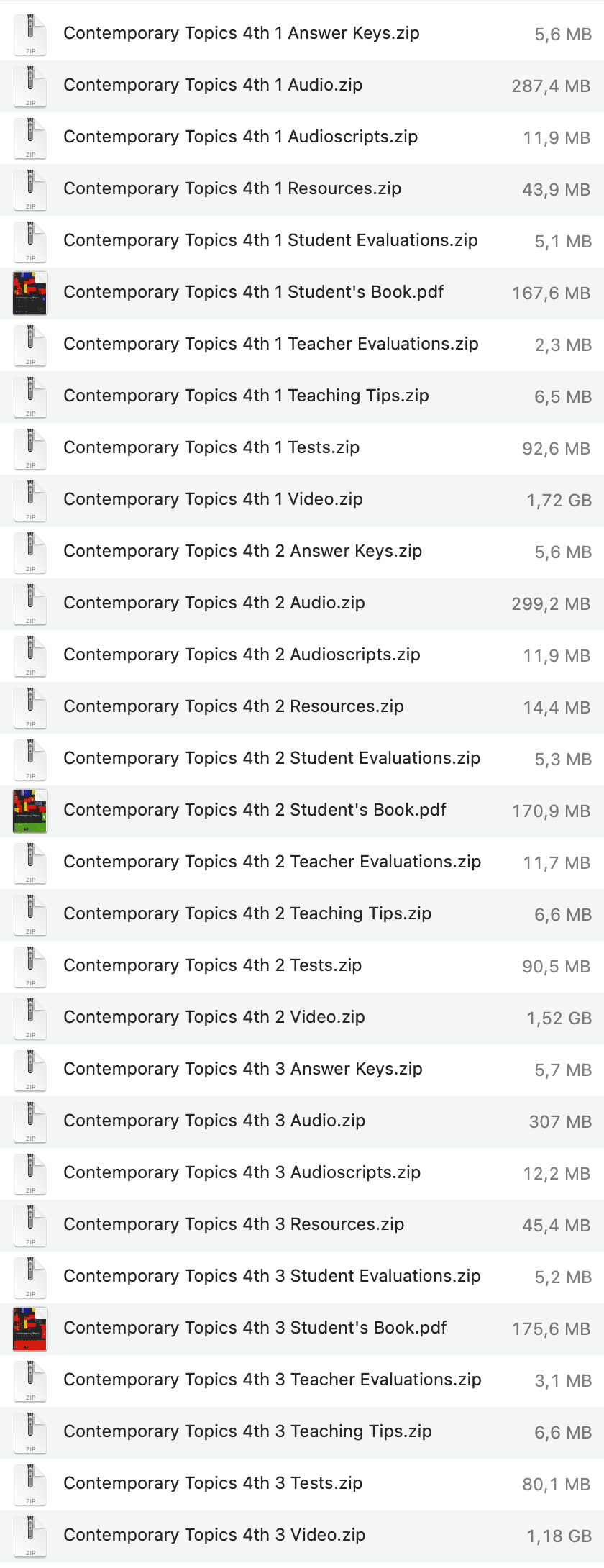
Contemporary Topics 4th 1 Answer Keys.zip
Contemporary Topics 4th 1 Audio.zip
Contemporary Topics 4th 1 Audioscripts.zip
Contemporary Topics 4th 1 Resources.zip
Contemporary Topics 4th 1 Student Evaluations.zip
Contemporary Topics 4th 1 Student’s Book.pdf – Sample: Click
Contemporary Topics 4th 1 Teacher Evaluations.zip
Contemporary Topics 4th 1 Teaching Tips.zip
Contemporary Topics 4th 1 Tests.zip
Contemporary Topics 4th 1 Video.zip
Level 2 (B1 / B1+)
Contemporary Topics 4th 2 Answer Keys.zip
Contemporary Topics 4th 2 Audio.zip
Contemporary Topics 4th 2 Audioscripts.zip
Contemporary Topics 4th 2 Resources.zip
Contemporary Topics 4th 2 Student Evaluations.zip
Contemporary Topics 4th 2 Student’s Book.pdf – Sample: Click
Contemporary Topics 4th 2 Teacher Evaluations.zip
Contemporary Topics 4th 2 Teaching Tips.zip
Contemporary Topics 4th 2 Tests.zip
Contemporary Topics 4th 2 Video.zip
Level 3 (B2)
Contemporary Topics 4th 3 Answer Keys.zip
Contemporary Topics 4th 3 Audio.zip
Contemporary Topics 4th 3 Audioscripts.zip
Contemporary Topics 4th 3 Resources.zip
Contemporary Topics 4th 3 Student Evaluations.zip
Contemporary Topics 4th 3 Student’s Book.pdf – Sample: Click
Contemporary Topics 4th 3 Teacher Evaluations.zip
Contemporary Topics 4th 3 Teaching Tips.zip
Contemporary Topics 4th 3 Tests.zip
Contemporary Topics 4th 3 Video.zip
| Name | Price | Buy |
|---|---|---|
| Contemporary Topics 4th Edition 1 PDFs & Resources | $7 | |
| Contemporary Topics 4th Edition 2 PDFs & Resources | $7 | |
| Contemporary Topics 4th Edition 3 PDFs & Resources | $7 | |
| Contemporary Topics 4th Edition (PDFs & Resources) - All 3 Levels | Original price was: $21.$18Current price is: $18. |
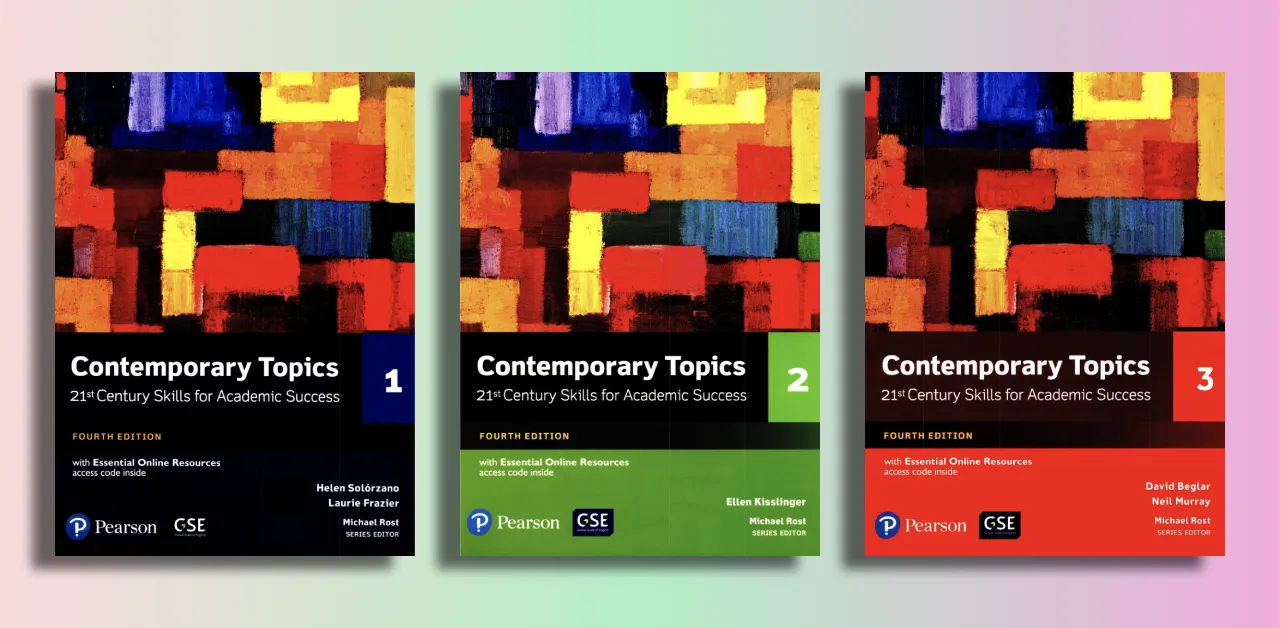
Contemporary Topics Fourth Edition by Pearson: A Complete Overview
| ✅ Coursebook: | Contemporary Topics Fourth Edition |
| ✅ Publisher: | Pearson |
| ✅ For: | Adult, High School, Higher Education |
| ✅ 6 Levels: | A2, B1, B2 |
| ✅ English type: | American English |
| ✅ Skills: | Academic, Listening, Speaking, Vocabulary |
| ✅ Publication year: | 2018 |
Contemporary Topics Fourth Edition by Pearson is an academic English course designed to help adult learners develop the listening, note-taking, speaking, vocabulary, presentation and study skills needed for success in English-medium academic environments. Built around realistic college and university-style lectures, the series gives learners structured practice in understanding complex spoken information, identifying key ideas, organizing notes and communicating their own responses with greater confidence.
Rather than treating academic listening as a passive comprehension exercise, Contemporary Topics Fourth Edition approaches it as an active intellectual process. Learners are encouraged to predict content, identify lecture organization, distinguish main ideas from supporting details, take effective notes, interpret academic vocabulary, participate in discussions and prepare presentations connected to a wide range of subject areas.
Published by Pearson and presented in American English, the course is designed for adult learners across four levels, covering approximately GSE 40–66 and CEFR A2–B2. Its combination of academic language development, realistic lecture content and transferable study strategies makes it particularly valuable for students preparing for university, college, foundation programs, English for Academic Purposes courses and other contexts where English is used for serious academic study.
What Is Contemporary Topics Fourth Edition?
Contents
- 1 What Is Contemporary Topics Fourth Edition?
- 2 Contemporary Topics Fourth Edition at a Glance
- 3 A Strong Focus on Authentic Academic Communication
- 4 Key Features of Contemporary Topics Fourth Edition
- 5 How Contemporary Topics Develops Academic Listening
- 6 The Importance of Note-Taking in the Course
- 7 From Language-Focused Learning to Content-Focused Study
- 8 Digital Resources and Independent Learning
- 9 Assessment and Preparation for Academic Testing
- 10 Who Is Contemporary Topics Fourth Edition For?
- 11 Benefits for Learners
- 12 Benefits for Teachers
- 13 Why Contemporary Topics Fourth Edition Stands Out
- 14 Contemporary Topics and the Global Scale of English
- 15 Is Contemporary Topics Suitable for Self-Study?
- 16 Educational Evaluation of Contemporary Topics Fourth Edition
- 17 Frequently Asked Questions About Contemporary Topics Fourth Edition
- 18 Final Thoughts
Contemporary Topics Fourth Edition is a multi-level academic English series with a particular emphasis on listening and study skills. Its central principle is simple but educationally important: learners become better prepared for academic study when they work with the kinds of extended spoken texts, disciplinary topics and learning demands they are likely to encounter in real educational settings.
The course therefore moves beyond short, isolated listening exercises. Students engage with lecture-style content and gradually learn how to process information over longer stretches of spoken English. They practice identifying the purpose and structure of a lecture, following the relationship between ideas, recognizing examples and explanations, recording essential information and using their notes for later discussion or presentation.
This is especially important for learners moving from general English into academic English. A student may know a substantial amount of grammar and vocabulary yet still struggle to follow a lecture, recognize which information deserves attention or organize notes efficiently. Contemporary Topics addresses this gap by integrating language learning with explicit academic strategy development.
Contemporary Topics Fourth Edition at a Glance
| Publisher | Pearson |
|---|---|
| Edition | Fourth Edition |
| Language | American English |
| Target Learners | Adult English language learners |
| Number of Levels | 4 levels |
| CEFR Range | A2–B2 |
| Global Scale of English | GSE 40–66 |
| Formats | Print and digital |
| Main Skills | Academic listening, note-taking, speaking, vocabulary, presentation and study skills |
| Primary Context | Academic English, college and university preparation, EAP and intensive English programs |
A Strong Focus on Authentic Academic Communication
One of the defining strengths of Contemporary Topics Fourth Edition is its emphasis on the realities of academic communication. In higher education, students do not simply listen for isolated facts. They must follow arguments, understand the organization of ideas, recognize relationships between points and decide what information should be recorded for future use.
The series reflects these demands through lecture-based learning. Learners encounter content organized in a way that resembles academic teaching, allowing them to practice listening not only for meaning but also for structure. This helps them become more strategic listeners who can recognize when a speaker introduces a topic, defines a concept, gives an example, contrasts two ideas, explains cause and effect or reaches a conclusion.
Such skills have value far beyond the English classroom. They are transferable to university seminars, professional training, online courses, conference presentations, webinars and many other situations in which learners need to understand extended spoken information efficiently.
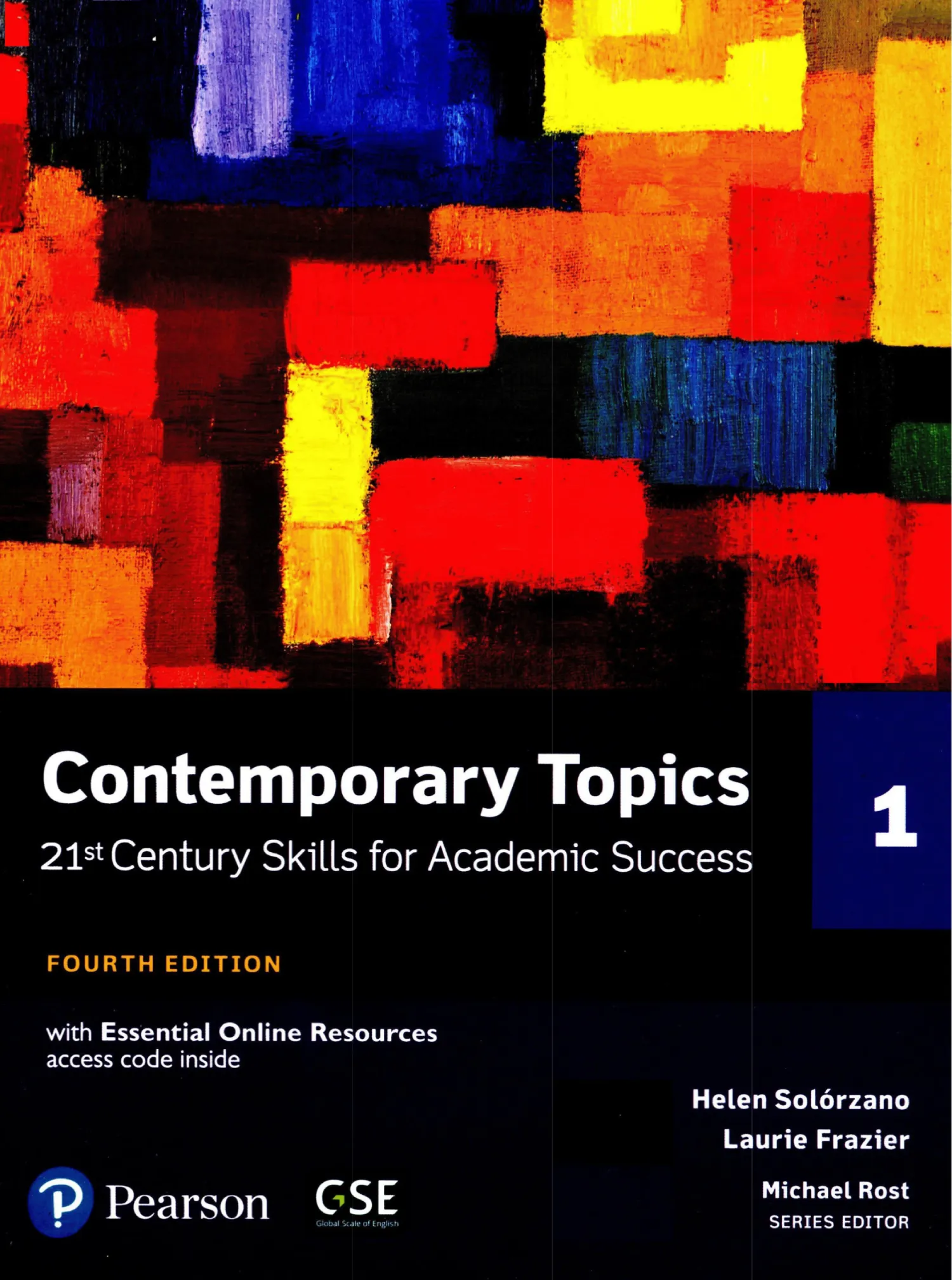
Contemporary Topics 4th Edition 1 Student’s Book
Key Features of Contemporary Topics Fourth Edition
1. Realistic College and University-Style Lectures
At the heart of the series are realistic lectures that expose students to the pace, organization and intellectual demands of academic spoken English. Instead of relying exclusively on short dialogues or artificially simplified listening texts, the course gives learners experience with longer, content-rich presentations.
This sustained exposure is essential for academic readiness. Understanding a lecture requires concentration, selective attention and the ability to maintain comprehension while new information continues to arrive. By practicing these processes regularly, learners can gradually build the listening stamina needed for more demanding educational environments.
2. Systematic Note-Taking Development
Effective note-taking is not simply the ability to write quickly. It involves deciding what matters, recognizing relationships between ideas and organizing information in a form that can be understood later. Contemporary Topics treats note-taking as a teachable academic skill rather than assuming students will develop it automatically.
Learners practice extracting central ideas, recording supporting details, recognizing lecture organization and using notes to review, discuss or respond to academic content. This process strengthens both comprehension and learner independence.
3. Intensive Listening Practice
Academic listeners need to process more than the general topic of a lecture. They may need to identify specific details, infer meaning, understand examples, distinguish essential information from secondary commentary and recognize how pronunciation influences comprehension.
The course therefore gives careful attention to intensive listening. Through sequenced activities, students learn to listen more precisely and purposefully. Rather than expecting immediate understanding of everything they hear, they develop strategies for approaching complex spoken English step by step.
4. Academic Vocabulary in Meaningful Contexts
Vocabulary learning is most effective when words are encountered as part of meaningful ideas rather than memorized in isolation. Contemporary Topics introduces vocabulary through academic subject matter and lecture content, helping learners understand how words function in realistic educational communication.
This contextual approach is particularly valuable for students preparing for higher education because academic comprehension depends on both general academic vocabulary and the ability to interpret unfamiliar terms through context, explanation and examples.
5. Integrated Speaking and Discussion Skills
Academic success requires more than listening silently. Students also need to ask questions, clarify information, express opinions, respond to classmates, support ideas and participate constructively in discussions.
Contemporary Topics develops these abilities alongside listening. Learners are encouraged to engage intellectually with the subject matter, communicate their interpretations and use English as a tool for exchanging ideas. This creates a more active model of language learning in which comprehension leads naturally to interaction.
6. Presentation Skills for Academic Confidence
Presentations are a common feature of university courses, professional education and workplace communication. The ability to organize ideas and speak clearly before an audience is therefore an important component of academic and professional competence.
The series helps students move from understanding lectures to producing spoken presentations of their own. This transition is educationally significant because it requires learners to select information, organize ideas, use appropriate language and communicate with a clear sense of purpose.
7. Broad Academic Subject Areas
The content of Contemporary Topics introduces learners to a variety of academic disciplines and real-world themes. This broad subject exposure is valuable because students preparing for higher education must become comfortable dealing with unfamiliar content rather than relying only on familiar everyday topics.
By working across different fields, learners develop intellectual flexibility and learn to apply academic listening strategies regardless of the specific discipline. The result is preparation that is more transferable to future study.
8. Career Exploration and Professional Relevance
The series also connects academic topics with professional applications and possible career paths. This gives learners a practical reason to engage with new subject areas while encouraging them to consider how language proficiency, academic study and future employment may be connected.
For adult learners in particular, this professional dimension can increase motivation. English is not presented merely as a school subject but as a tool for accessing education, exploring disciplines, developing expertise and pursuing future opportunities.
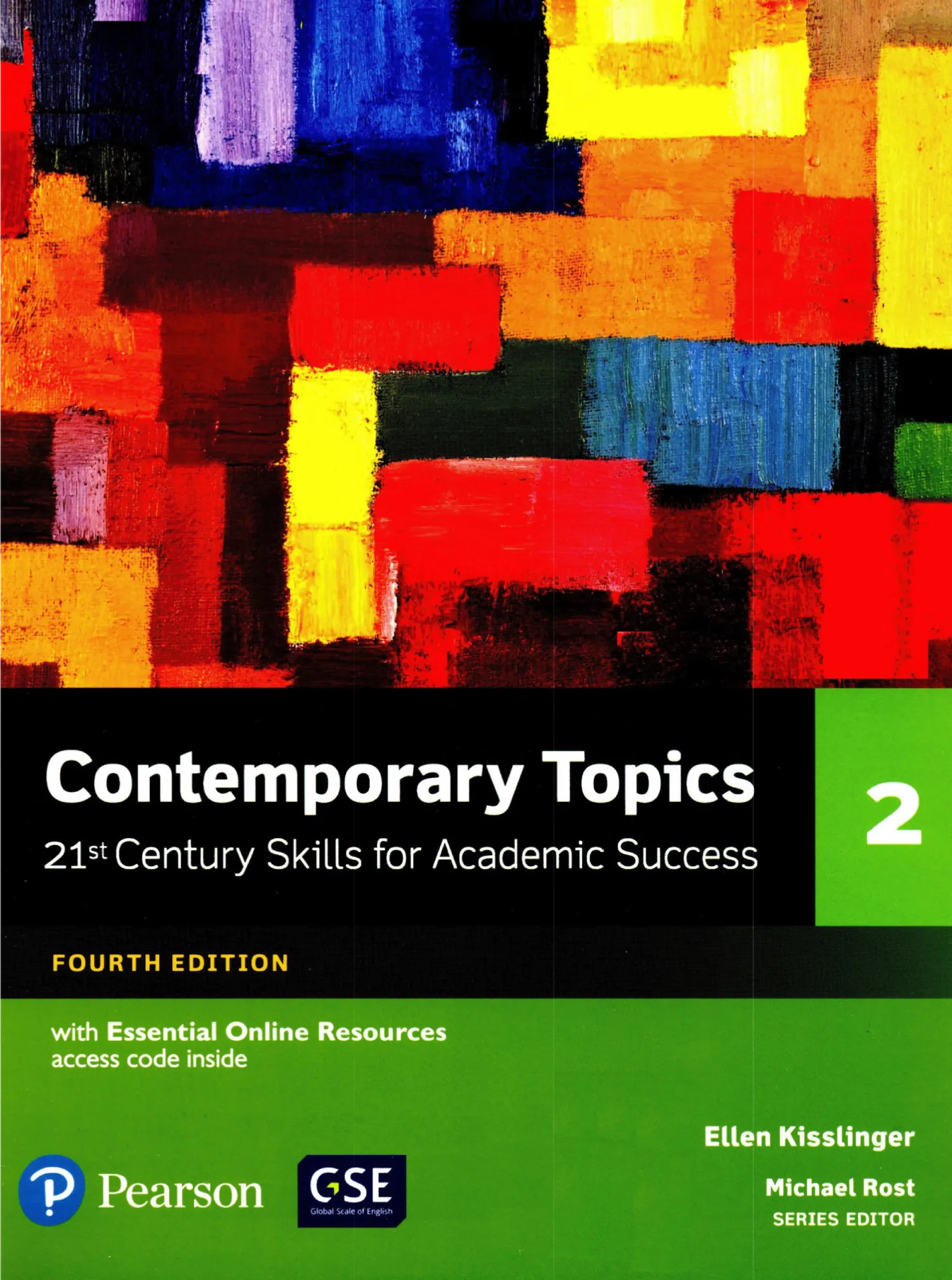
Contemporary Topics 4th Edition 2 Student’s Book
How Contemporary Topics Develops Academic Listening
Academic listening is a complex skill because learners must process language and content at the same time. A student listening to a lecture may need to understand unfamiliar vocabulary, recognize the speaker’s organization, retain earlier information and decide what to write down—all while the lecture continues.
Contemporary Topics Fourth Edition addresses this challenge through carefully sequenced learning activities. Students are not simply given a lecture and tested afterward. Instead, they are prepared for the topic, guided toward important listening strategies and supported in analyzing the content.
A typical learning process may involve activating prior knowledge, predicting the subject of a lecture, identifying important vocabulary, listening for main ideas, focusing on specific details, organizing notes, reviewing understanding and finally discussing or presenting ideas related to the topic.
This sequence reflects an important principle of effective language education: difficult skills become manageable when learners understand the process behind them. By making academic listening strategies visible and teachable, the course helps students become more conscious of how successful listening works.
The Importance of Note-Taking in the Course
Note-taking deserves particular attention because it connects listening, thinking and learning. Students who attempt to record every word often lose track of the lecture, while students who write too little may struggle to remember important information later.
Contemporary Topics helps learners find a more effective balance. They learn to listen selectively and record information that reflects the structure and meaning of the lecture. This may include main points, examples, definitions, contrasts, numerical information or relationships between ideas.
Over time, effective note-taking can reduce cognitive overload. Instead of attempting to remember an entire lecture, students create an external representation of the information that supports review, discussion and further study.
This makes note-taking much more than a classroom exercise. It is a lifelong academic skill with applications in university education, professional development, meetings, conferences and independent learning.
From Language-Focused Learning to Content-Focused Study
One of the most educationally valuable aspects of Contemporary Topics is its position between traditional language instruction and content-based education. Learners continue to develop English, but they do so while engaging with meaningful academic ideas.
This transition is essential for students preparing to study through English. In a general English classroom, the language itself is often the central object of attention. In a university lecture, however, English becomes the medium through which students learn about psychology, business, history, science, society or other disciplines.
Contemporary Topics helps bridge this gap. Students continue receiving linguistic support, but they also learn to direct more attention toward meaning, concepts and academic communication. This creates a valuable stepping stone toward independent study in English-medium environments.
Digital Resources and Independent Learning
The course supports print and digital learning, with online resources that may include audio and video lecture content. These materials can extend learning beyond the classroom and provide opportunities for repeated listening and self-study.
Repeated access is particularly useful for academic listening development. In a real lecture, students usually hear information only once, but during the learning process, replaying difficult sections allows them to notice details that were initially missed, compare their notes with the recording and examine why particular passages were challenging.
Digital materials can therefore support a more flexible learning model. Teachers may use them for classroom instruction, homework, review or blended learning, while students can use them to develop greater independence and take more responsibility for their progress.
Assessment and Preparation for Academic Testing
Assessment plays an important role in helping students understand whether they can apply their developing skills under more formal conditions. Contemporary Topics includes proficiency assessment tasks designed to give learners practice with academically oriented listening and language demands.
The course also exposes learners to assessment formats influenced by TOEFL-style testing. This can be particularly useful for students who may later need to demonstrate their ability to understand academic English in high-stakes contexts.
However, the broader educational value of the course extends beyond test preparation. Its central goal is to help learners become more capable academic listeners, note-takers, speakers and independent students—skills that remain valuable regardless of the specific assessment they eventually take.
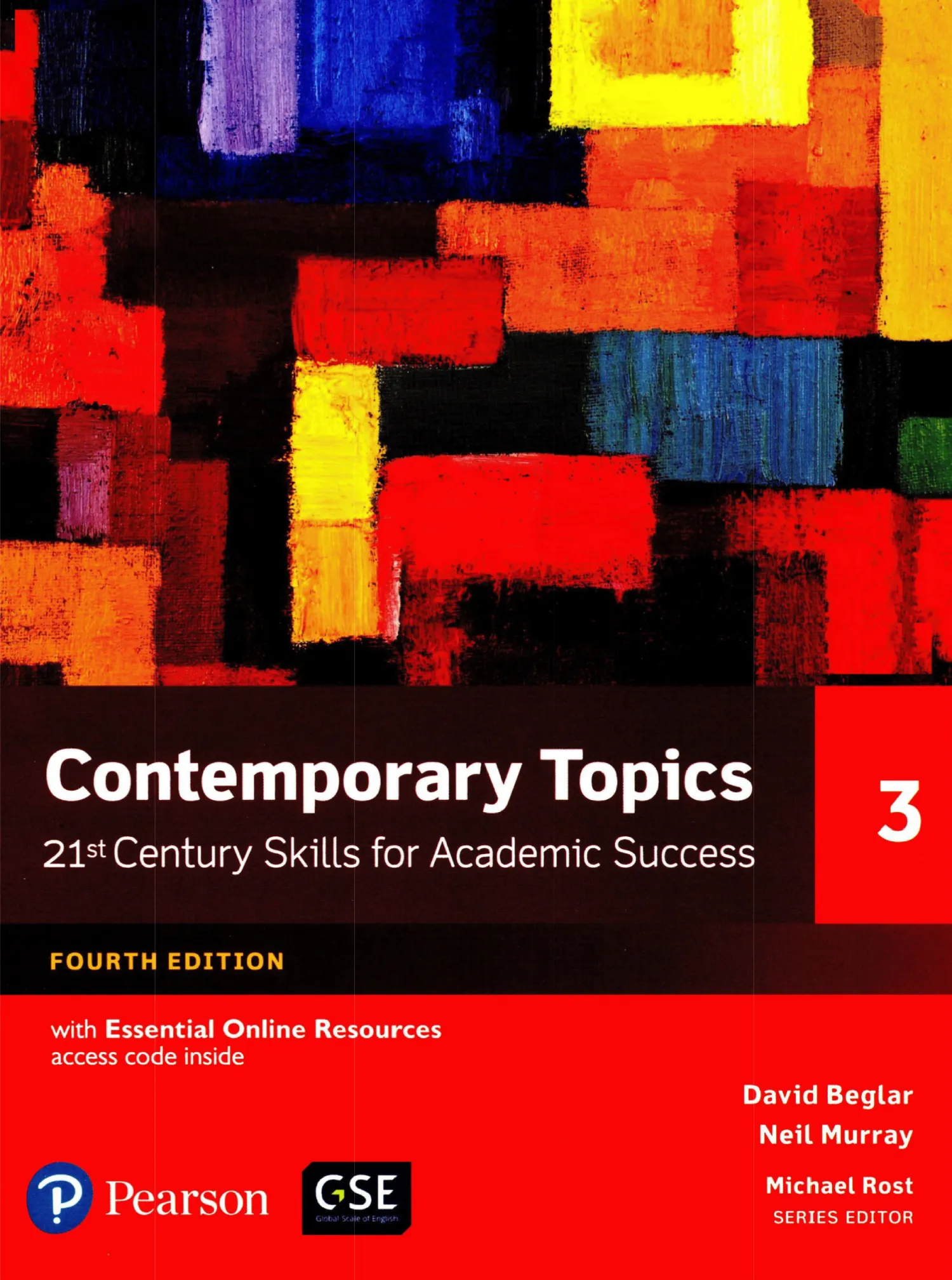
Contemporary Topics 4th Edition 3 Student’s Book
Who Is Contemporary Topics Fourth Edition For?
The series is particularly suitable for learners who need English for academic study or intellectually demanding professional contexts. Potential users include:
- Adult learners preparing for college or university study in English.
- Students enrolled in English for Academic Purposes programs.
- Learners in intensive English programs or university preparation courses.
- International students who need stronger academic listening and note-taking skills.
- Students preparing to participate in English-medium lectures and seminars.
- Learners seeking practice with presentations, discussions and academic vocabulary.
- Students who need greater confidence when listening to extended spoken English.
- Teachers looking for structured materials that integrate language development with academic study skills.
Benefits for Learners
For learners, the greatest strength of Contemporary Topics is that it develops skills that can be transferred directly to future academic situations. Students are not merely practicing English to complete an exercise; they are learning how to listen, think, record information and respond in ways that resemble real educational tasks.
The course can help learners become more confident when facing longer lectures, unfamiliar topics and cognitively demanding material. It also encourages active participation through discussion and presentation, helping students move from passive understanding toward purposeful communication.
Another important benefit is the development of learner independence. Once students understand strategies for identifying main ideas, following lecture organization, taking notes and reviewing information, they are better equipped to approach new academic content without depending entirely on teacher support.
Benefits for Teachers
For teachers, Contemporary Topics offers a clear framework for teaching skills that are often difficult to explain explicitly. Academic listening and note-taking can seem invisible because successful students often use these processes automatically. The course makes them easier to teach by organizing instruction around specific strategies and carefully sequenced activities.
The lecture-based content also creates opportunities for deeper classroom interaction. Teachers can use topics as the basis for prediction, critical discussion, vocabulary development, note comparison, presentations and reflection on learning strategies.
Because the series combines language learning with meaningful subject matter, it can support a more intellectually engaging classroom environment than materials built mainly around isolated grammar points or short everyday conversations.
Why Contemporary Topics Fourth Edition Stands Out
Many English courses provide listening practice, but relatively few make academic listening the organizing principle of the learning experience. Contemporary Topics stands out because it treats listening as a sophisticated combination of language processing, strategic thinking, note-taking and intellectual engagement.
Its lecture-centered methodology gives learners experience with the kinds of extended spoken texts that often create difficulties when students enter higher education. At the same time, the course provides enough structured support to make these demands accessible to learners who are still developing their English proficiency.
The integration of listening, vocabulary, note-taking, discussion and presentation is another significant strength. These skills are naturally interconnected in academic life, and the course reflects that reality rather than teaching each skill in complete isolation.
Contemporary Topics and the Global Scale of English
Contemporary Topics is aligned with Pearson’s Global Scale of English, or GSE, which provides a detailed framework for describing language proficiency and learner progress. The course spans approximately GSE 40 to 66, corresponding broadly to CEFR A2 to B2.
This range means the series can support learners as they progress from developing intermediate competence toward greater independence in academic English. The emphasis is not simply on completing course levels but on acquiring observable abilities related to listening, speaking, study and communication.
For teachers and institutions, this alignment can support more transparent goal setting and course planning. For students, clearly defined learning outcomes can make progress easier to recognize and understand.
Is Contemporary Topics Suitable for Self-Study?
Contemporary Topics can support independent learning, particularly when students have access to the accompanying audio and video resources. Repeated listening, transcript analysis, vocabulary review and note-taking practice can all be valuable forms of self-study.
However, learners can gain additional benefits when the course is used with a teacher or study group because many activities involve discussion, interaction, feedback and presentation. These communicative elements are important parts of academic preparation.
For independent learners, a productive approach is to listen first without pausing, record the main ideas, listen again for supporting details, compare notes, review unfamiliar vocabulary and finally summarize the lecture orally or in writing.
Educational Evaluation of Contemporary Topics Fourth Edition
From an educational perspective, the value of Contemporary Topics lies in its understanding that academic success requires more than general language knowledge. Students entering English-medium education must be able to process extended spoken information, maintain concentration, identify organizational patterns, decide what deserves attention and communicate ideas in response.
The course addresses these demands directly. Its realistic lecture content provides meaningful exposure, while its sequenced activities offer the scaffolding learners need before they can perform independently. The result is a model of instruction that connects language proficiency with genuine academic behaviors.
The inclusion of varied subject areas also contributes to academic readiness. Students learn that successful listening strategies should remain useful even when the topic is unfamiliar. This is an important transition from topic-dependent comprehension toward flexible academic competence.
For learners preparing for university or other serious educational environments, this combination of language development, strategy training, content engagement and communication practice makes Contemporary Topics a particularly relevant resource.
Frequently Asked Questions About Contemporary Topics Fourth Edition
What is Contemporary Topics Fourth Edition?
Contemporary Topics Fourth Edition is an academic English course from Pearson designed to develop listening, note-taking, speaking, vocabulary, presentation and study skills through realistic college and university-style lectures.
What English variety does Contemporary Topics use?
The course uses American English.
How many levels are there in Contemporary Topics Fourth Edition?
The series consists of four levels and spans approximately GSE 40–66 and CEFR A2–B2.
Is Contemporary Topics suitable for university preparation?
Yes. The course is particularly well suited to learners preparing for college, university, foundation programs, intensive English courses and English for Academic Purposes programs because of its strong focus on lecture comprehension, note-taking and academic communication.
Does Contemporary Topics focus only on listening?
No. Although academic listening is central to the series, the course also develops note-taking, vocabulary, speaking, discussion, presentation and broader study skills.
Does the course include digital resources?
Yes. Contemporary Topics is available in print and digital formats, and its online resources support self-study through materials such as video lectures and audio content.
Is Contemporary Topics useful for TOEFL preparation?
The course includes proficiency assessments that simulate TOEFL-style tasks, making it useful for learners who want additional exposure to academically oriented listening and assessment demands. However, Contemporary Topics is primarily a broader academic skills course rather than a dedicated TOEFL preparation program.
Final Thoughts
Contemporary Topics Fourth Edition by Pearson is a carefully structured academic English series that prepares learners for one of the most demanding aspects of English-medium education: understanding, processing and responding to extended academic spoken content.
Through realistic lectures, systematic note-taking practice, intensive listening activities, academic vocabulary development, discussions, presentations and digital resources, the course helps learners move beyond basic comprehension toward more independent academic participation.
Its greatest strength is the way it connects English language development with the actual processes students need for successful study. Learners practice how to follow ideas, recognize structure, identify important information, organize notes, communicate responses and explore academic subject areas with growing confidence.
For adult learners preparing for university, college, EAP programs or other academically demanding contexts, Contemporary Topics Fourth Edition offers a practical and intellectually engaging pathway toward stronger academic listening, study skills and English proficiency.