English Wave (PDFs, Resources)
Level 1 (A1)
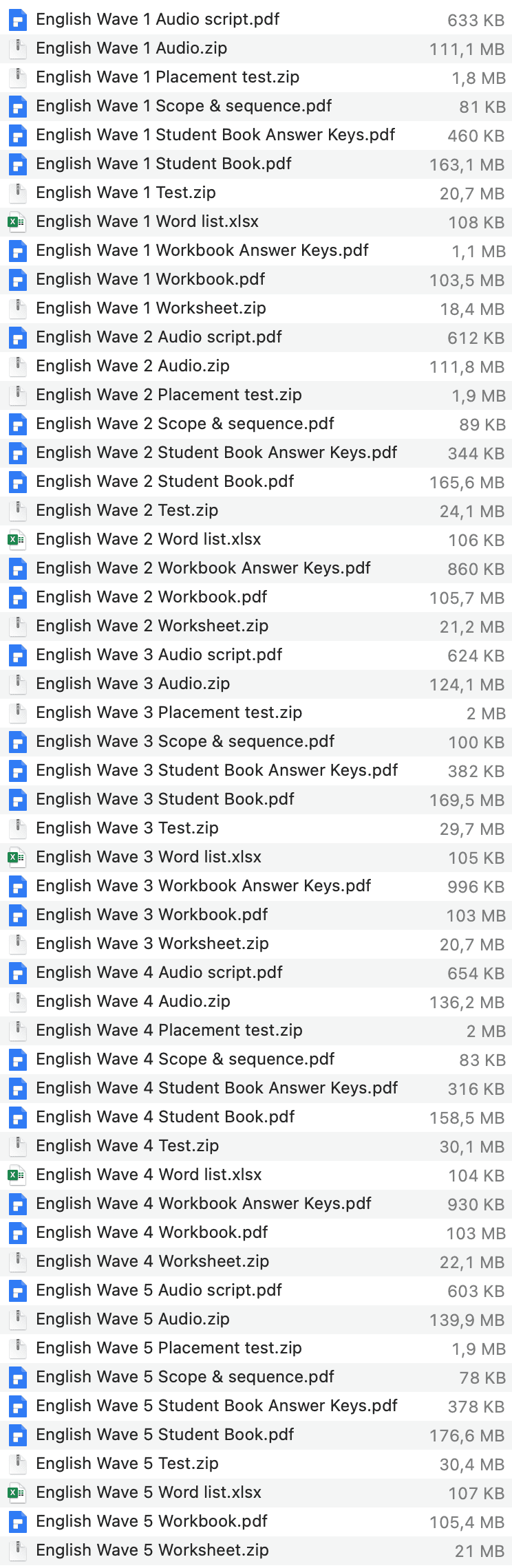
English Wave 1 Audio script.pdf
English Wave 1 Audio.zip
English Wave 1 Placement test.zip
English Wave 1 Scope & sequence.pdf
English Wave 1 Student Book Answer Keys.pdf
English Wave 1 Student Book.pdf – Sample: Click
English Wave 1 Test.zip
English Wave 1 Word list.xlsx
English Wave 1 Workbook Answer Keys.pdf
English Wave 1 Workbook.pdf – Sample: Click
English Wave 1 Worksheet.zip
Level 2 (A2)
English Wave 2 Audio script.pdf
English Wave 2 Audio.zip
English Wave 2 Placement test.zip
English Wave 2 Scope & sequence.pdf
English Wave 2 Student Book Answer Keys.pdf
English Wave 2 Student Book.pdf – Sample: Click
English Wave 2 Test.zip
English Wave 2 Word list.xlsx
English Wave 2 Workbook Answer Keys.pdf
English Wave 2 Workbook.pdf – Sample: Click
English Wave 2 Worksheet.zip
Level 3 (A2 – B1)
English Wave 3 Audio script.pdf
English Wave 3 Audio.zip
English Wave 3 Placement test.zip
English Wave 3 Scope & sequence.pdf
English Wave 3 Student Book Answer Keys.pdf
English Wave 3 Student Book.pdf – Sample: Click
English Wave 3 Test.zip
English Wave 3 Word list.xlsx
English Wave 3 Workbook Answer Keys.pdf
English Wave 3 Workbook.pdf – Sample: Click
English Wave 3 Worksheet.zip
Level 4 (B1)
English Wave 4 Audio script.pdf
English Wave 4 Audio.zip
English Wave 4 Placement test.zip
English Wave 4 Scope & sequence.pdf
English Wave 4 Student Book Answer Keys.pdf
English Wave 4 Student Book.pdf – Sample: Click
English Wave 4 Test.zip
English Wave 4 Word list.xlsx
English Wave 4 Workbook Answer Keys.pdf
English Wave 4 Workbook.pdf – Sample: Click
English Wave 4 Worksheet.zip
Level 5 (B1 – B2)
English Wave 5 Audio script.pdf
English Wave 5 Audio.zip
English Wave 5 Placement test.zip
English Wave 5 Scope & sequence.pdf
English Wave 5 Student Book Answer Keys.pdf
English Wave 5 Student Book.pdf – Sample: Click
English Wave 5 Test.zip
English Wave 5 Word list.xlsx
English Wave 5 Workbook.pdf – Sample: Click
English Wave 5 Worksheet.zip
Level 6 (B2)
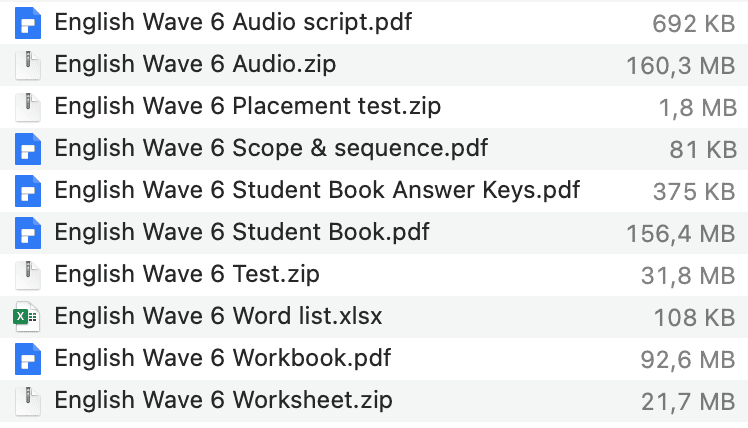
English Wave 6 Audio script.pdf
English Wave 6 Audio.zip
English Wave 6 Placement test.zip
English Wave 6 Scope & sequence.pdf
English Wave 6 Student Book Answer Keys.pdf
English Wave 6 Student Book.pdf – Sample: Click
English Wave 6 Test.zip
English Wave 6 Word list.xlsx
English Wave 6 Workbook.pdf – Sample: Click
English Wave 6 Worksheet.zip
| Name | Price | Buy |
|---|---|---|
| English Wave 1 PDFs, Resources | $9 | |
| English Wave 2 PDFs, Resources | $9 | |
| English Wave 3 PDFs, Resources | $9 | |
| English Wave 4 PDFs, Resources | $9 | |
| English Wave 5 PDFs, Resources | $9 | |
| English Wave 6 PDFs, Resources | $9 | |
| English Wave PDFs, Resources - All 6 Levels | Original price was: $54.$45Current price is: $45. |
English Wave
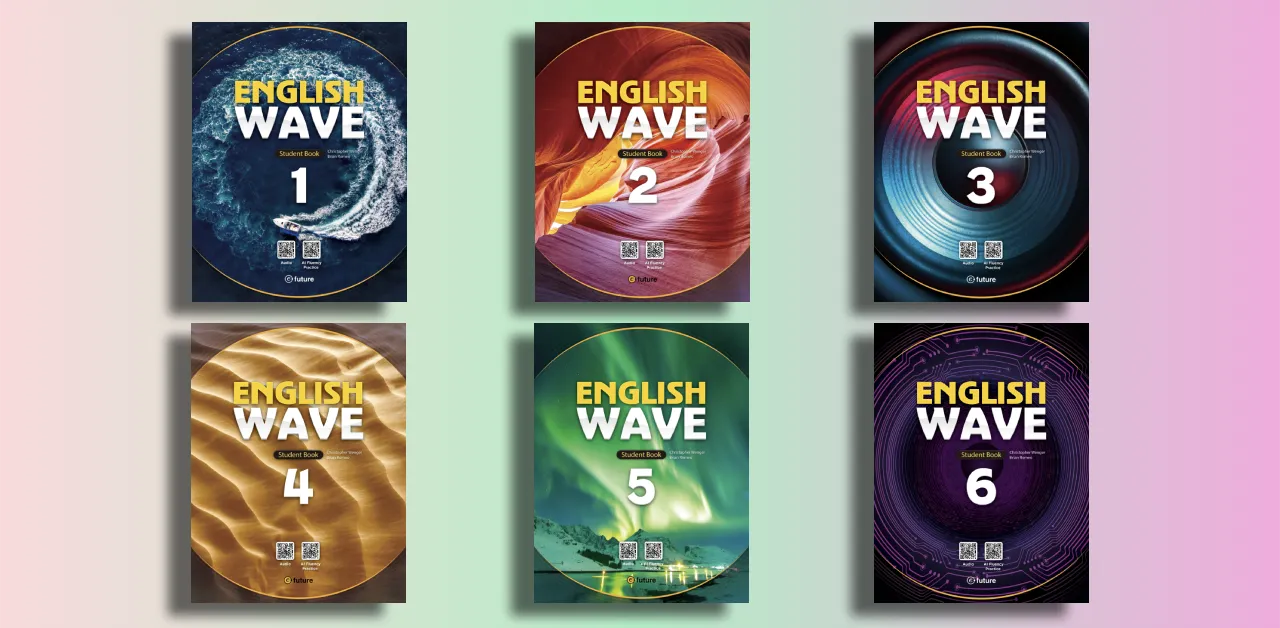
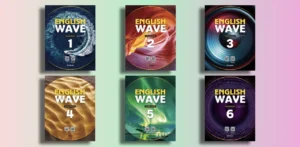
Overview of the “English Wave” by eFuture
Contents
| ✅ Coursebook: | English Wave |
| ✅ Authors: | Christopher Wenger, Brian Romeo |
| ✅ Publisher: | eFuture |
| ✅ Levels: | A1, A2, B1, B2 |
| ✅ For: | Secondary, Junior High School, High School |
| ✅ Skill: | Listening, Speaking, Reading, Writing |
| ✅ Publication year: | 2025 |
A new generation secondary English course
In today’s rapidly evolving English language education landscape, English Wave by eFuture represents a modern response to the needs of learners growing up in a global, communication-driven world. Developed by eFuture—a publisher recognized for its strong focus on EFL learners—the series is designed as a comprehensive six-level course (A1–B2) that supports long-term, structured language development.
What distinguishes English Wave is its positioning as a secondary-level coursebook series, bridging the gap between foundational English and independent communication. Rather than relying on isolated grammar instruction, the course adopts a communicative, learner-centered approach, enabling students to actively use English in meaningful contexts from the earliest stages.
A structured pathway to communicative competence
At the heart of English Wave lies a clearly defined progression system. The six levels are carefully aligned with the CEFR framework (A1–B2), ensuring that learners advance in a logical and measurable way.
Each level gradually increases:
- Vocabulary range and complexity
- Grammatical accuracy
- Cognitive and communicative demands
This structured scaffolding is particularly important in EFL contexts, where students often depend on classroom input. By controlling the learning load while steadily expanding language exposure, English Wave enables learners to build confidence without feeling overwhelmed.

English Wave 1 Student Book
Integrating communication, content, and real-world skills
A defining feature of English Wave is its multi-dimensional learning approach. The course combines:
- Communicative Language Teaching (CLT)
- Project-Based Learning (PBL)
- Content and Language Integrated Learning (CLIL)
These elements work together to create a dynamic classroom environment where language is not merely studied but actively used to explore ideas, solve problems, and express opinions.
For example, students may:
- Engage in collaborative projects
- Discuss real-life topics relevant to their age group
- Apply English to cross-curricular themes
This integration reflects current research in language acquisition, which emphasizes that meaningful interaction and contextualized input are key drivers of fluency.
A comprehensive resource ecosystem
Beyond the core Student Book, English Wave offers a rich set of supporting materials:
- Audio files and scripts for listening development
- Workbooks and worksheets for reinforcement
- Placement tests and assessments for progress tracking
- Scope & sequence documents for curriculum alignment
Such a system allows both teachers and learners to maintain a continuous learning cycle: input → practice → output → review. It also supports differentiated instruction, making the course adaptable to mixed-ability classrooms.
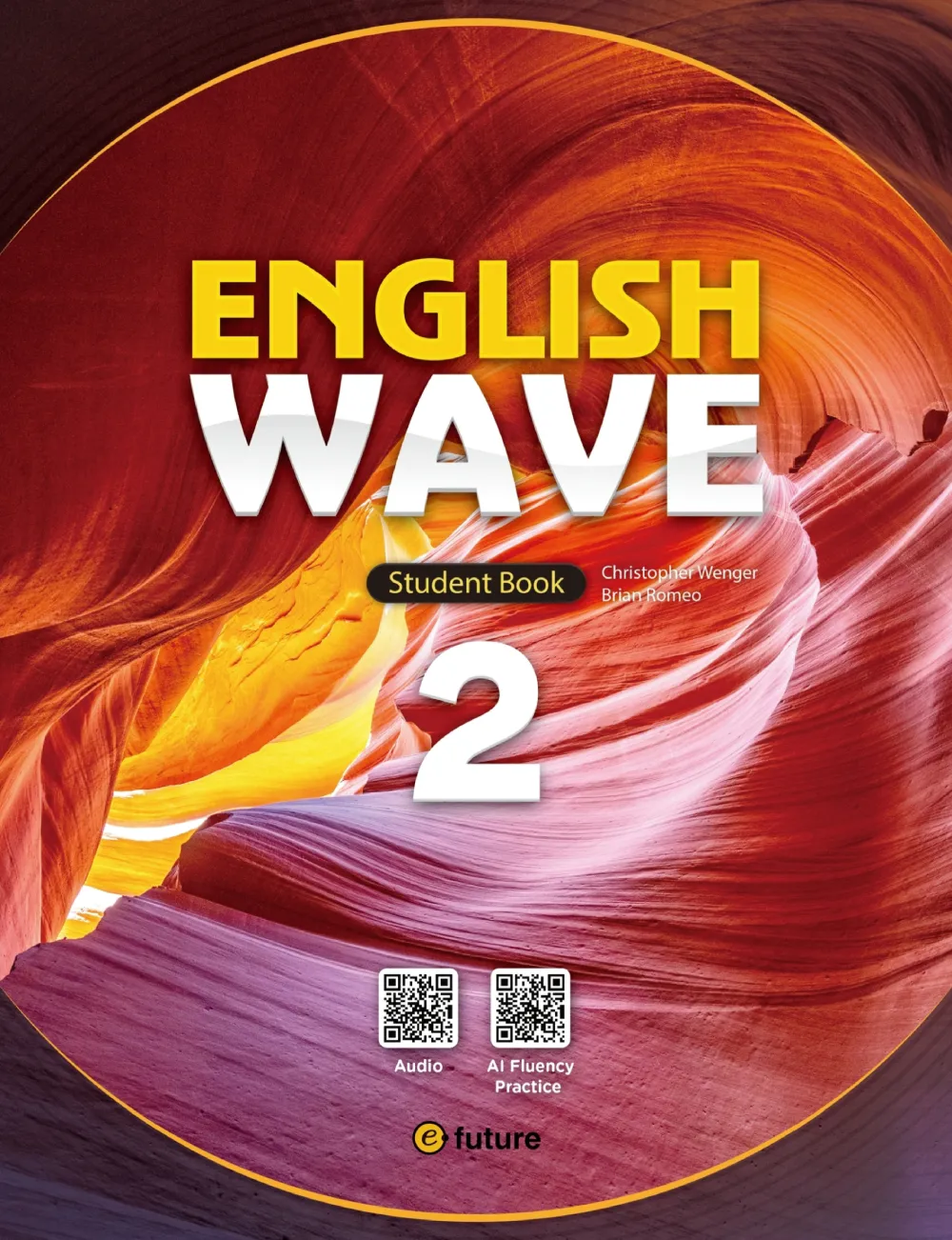
English Wave 2 Student Book
Designed for the realities of EFL classrooms
eFuture’s long-standing expertise in EFL education is evident throughout English Wave. The publisher has consistently focused on creating materials that are practical, engaging, and accessible for learners in non-English-speaking environments.
In English Wave, this philosophy translates into:
- Clear lesson structures that reduce cognitive overload
- Repetition and recycling strategies that enhance retention
- Visually engaging content that sustains learner motivation
These features are not incidental—they are grounded in an understanding that effective English learning must balance structure, exposure, and engagement.
Preparing learners for real-world communication
Ultimately, English Wave is designed to move learners beyond textbook knowledge toward functional, real-world communication. Through its emphasis on speaking tasks, listening comprehension, and interactive activities, students gradually develop the ability to:
- Express ideas confidently
- Understand spoken English in context
- Participate in everyday and academic conversations
This focus aligns with global educational priorities, where English is increasingly viewed not just as a subject, but as a tool for communication, collaboration, and future opportunity.
Final perspective
From a research-informed perspective, English Wave stands out as a well-balanced, future-oriented ELT course. Its integration of communicative practice, structured progression, and real-world application reflects the direction of modern language education.
For schools, teachers, and learners seeking a coherent pathway from A1 to B2, English Wave offers a compelling solution—one that combines pedagogical rigor with practical classroom usability.
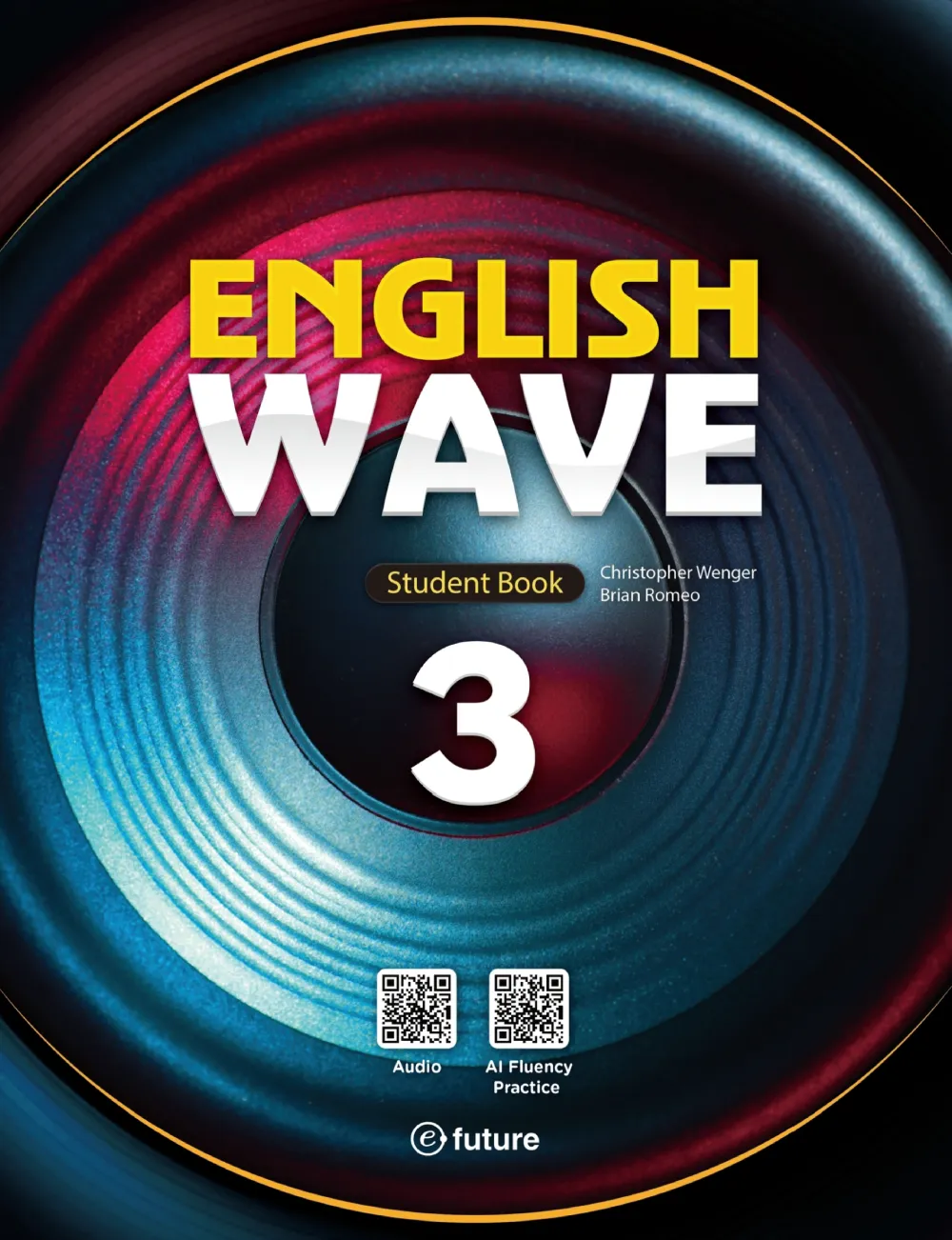
English Wave 3 Student Book
Who is suitable for English Wave?
English Wave is designed as a comprehensive, level-based English course (A1–B2), making it highly adaptable across different learning contexts. It is particularly suitable for the following groups:
🎯 Secondary school learners (core audience)
This series is best suited for:
- Students aged 11–18
- Learners progressing from beginner (A1) to upper-intermediate (B2)
- School programs that require a clear, long-term learning pathway
The 6-level structure ensures steady development in both language knowledge and communication skills.
🌏 EFL learners in structured environments
English Wave is ideal for students in non-English-speaking countries who:
- Learn English mainly in classroom settings
- Need guided instruction and repeated practice
- Benefit from organized, syllabus-based learning
With resources like audio, scripts, and worksheets, learners receive consistent exposure and reinforcement.
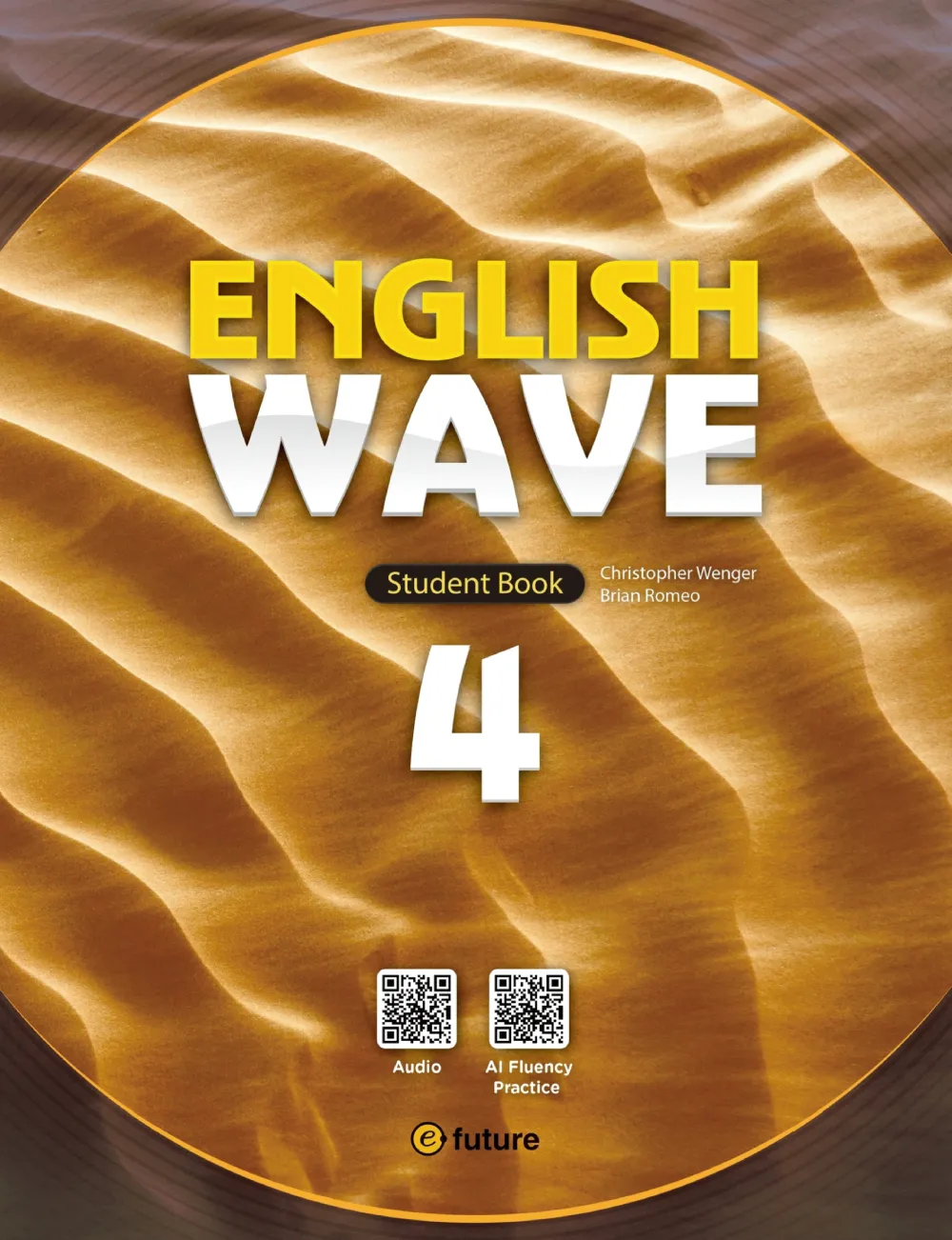
English Wave 4 Student Book
📚 Learners aiming for balanced skill development
This course suits students who want to improve all four core skills:
- Listening (audio + scripts)
- Speaking (interactive tasks)
- Reading (level-appropriate texts)
- Writing (workbook practice)
It’s especially effective for building a strong, well-rounded foundation in English.
🧠 Students who prefer step-by-step progression
English Wave works well for learners who:
- Prefer clear lesson structure and predictable format
- Need gradual difficulty increase
- Learn better with scaffolded support and review materials
👩🏫 Teachers and language centers
The course is also highly suitable for:
- Public schools and private English centers
- Teachers who want a ready-to-use teaching system
- With placement tests, answer keys, and supplementary resources, it helps streamline teaching while maintaining quality.
✅ Final takeaway
English Wave is most suitable for secondary-level EFL learners and structured academic programs that aim to guide students from basic understanding to confident communication through a clear and systematic approach.
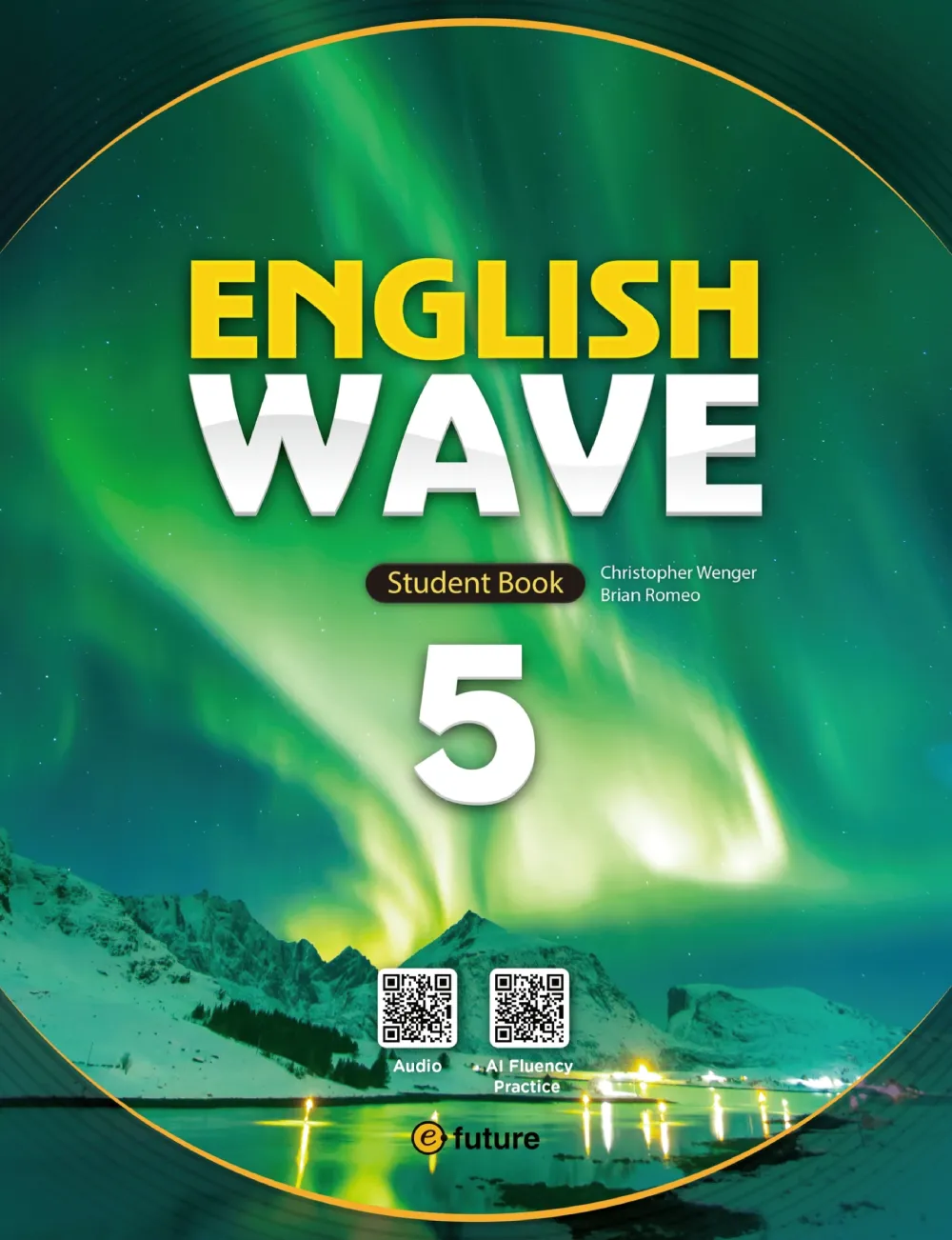
English Wave 5 Student Book
The Benefits of English Wave
English Wave by eFuture is more than a traditional coursebook series—it is a complete learning system designed to support steady, measurable progress in English. Its structure, resources, and pedagogy offer several key advantages for both learners and teachers.
📈 1. Clear progression from A1 to B2
One of the strongest benefits of English Wave is its well-structured 6-level pathway:
- Learners move step by step from basic communication (A1) to independent use of English (B2)
- Vocabulary, grammar, and skills are introduced in a controlled, logical sequence
- Students experience real progress, not confusion or overload
This makes it ideal for long-term academic programs.
🧩 2. Balanced development of all four skills
English Wave integrates:
- Listening (Audio + scripts)
- Speaking (guided dialogues & tasks)
- Reading (contextualized texts)
- Writing (workbook & worksheets)
👉 Instead of focusing on one skill, learners build complete communicative competence, which is essential for real-life English use.
🎧 3. Rich and practical learning resources
The course comes with a full ecosystem of materials:
- Audio files for listening practice
- Audio scripts for deeper understanding
- Worksheets and workbooks for reinforcement
- Tests and placement tests for assessment
- Word lists and scope & sequence for structured learning
This ensures students can practice, review, and improve continuously, both in class and at home.
🧠 4. Strong support for memory and retention
Through repetition and varied practice formats, English Wave helps learners:
- Retain vocabulary more effectively
- Understand grammar in context
- Build confidence through repeated exposure
The combination of input (listening/reading) and output (speaking/writing) aligns with proven language acquisition principles.
🚀 5. Builds real communication skills
The course focuses on practical, everyday English, not just theory:
- Students learn how to express ideas, ask questions, and interact naturally
- Activities simulate real-life situations
- Learners gradually gain confidence in speaking and understanding
👩🏫 6. Saves time and improves teaching efficiency
For teachers and schools, English Wave offers:
- Ready-to-use lesson structure
- Pre-designed tests and assessments
- Clear learning objectives for every unit
👉 This reduces preparation time while maintaining high teaching quality and consistency.
🎯 7. Suitable for different learning speeds
The course is flexible enough to support:
- Slower learners (through structured repetition and support materials)
- Faster learners (through extended practice and higher-level tasks)
- This makes it effective in mixed-ability classrooms.
✅ Final insight
The key benefit of English Wave lies in its ability to combine structure, flexibility, and real-world communication. It provides learners with a clear path to fluency while giving teachers a reliable, complete teaching system—a balance that is often difficult to achieve in modern ELT materials.
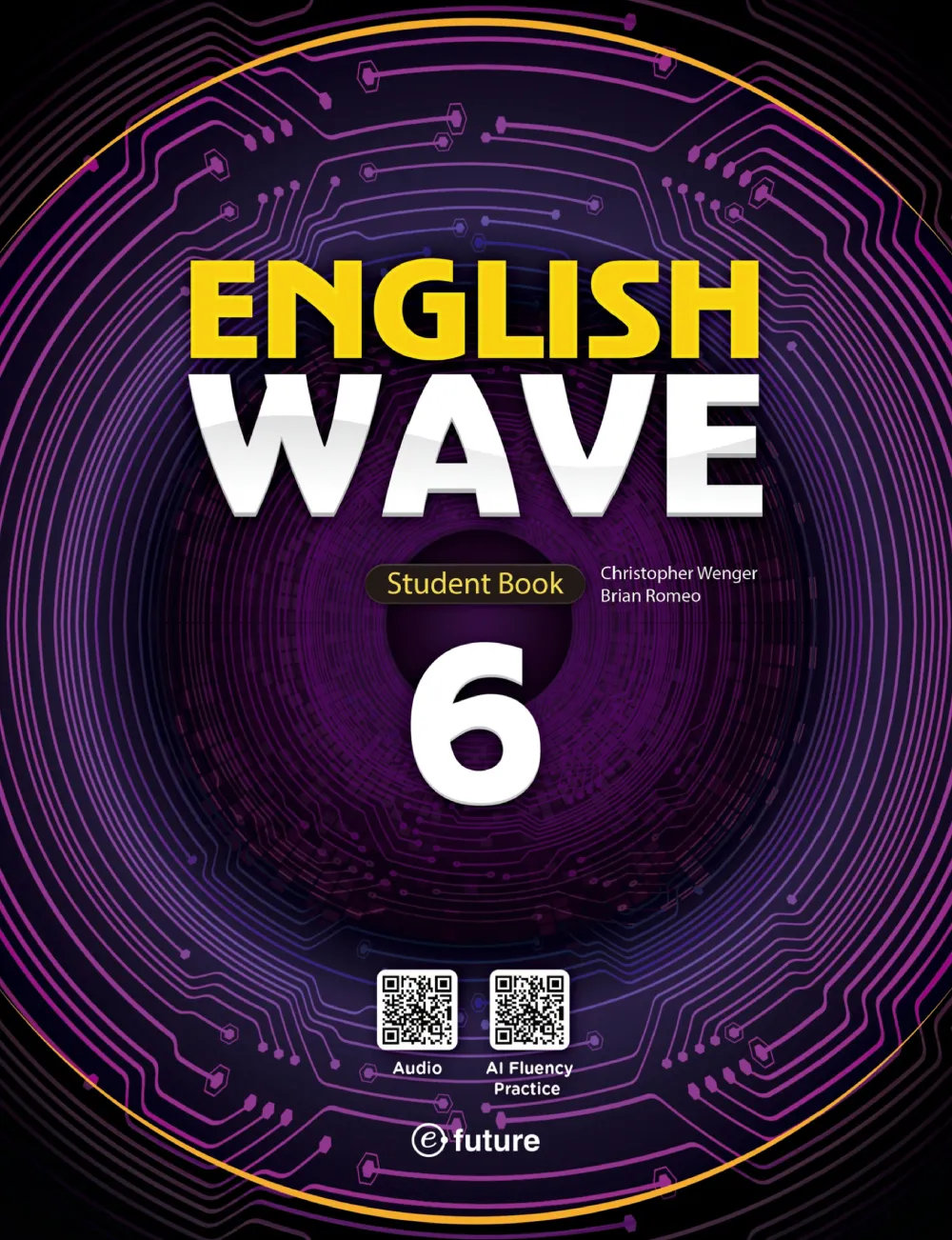
English Wave 6 Student Book
Effective Learning Strategies for English Wave
To get the most out of English Wave, learners and teachers should go beyond simply completing exercises. The course is designed for active, structured, and repeated engagement, and the following strategies help unlock its full potential.
🎧 1. Use a “Listen → Repeat → Apply” cycle
The audio system in English Wave is one of its strongest features. Instead of passive listening:
- Listen to the audio once for general understanding
- Repeat key sentences aloud (shadowing technique)
- Apply the language in short speaking tasks or personal examples
👉 This transforms listening into active speaking practice, improving pronunciation and fluency.
🧠 2. Learn vocabulary in context, not isolation
With the provided word lists and unit themes, learners should:
- Study vocabulary within dialogues or reading texts
- Create personal sentences using new words
- Review words regularly using spaced repetition
👉 This approach improves long-term retention and real usage, rather than memorization.
📚 3. Combine Student Book + Workbook strategically
A highly effective routine:
- Use the Student Book for input (learning new language)
- Use the Workbook for output (practice and reinforcement)
Best practice:
- Complete workbook exercises after each lesson, not later
- Check answers and analyze mistakes, not just correct them
👉 This ensures immediate reinforcement and deeper understanding.
🗣️ 4. Turn every lesson into a speaking opportunity
Even in non-speaking tasks, learners should:
- Read texts aloud
- Practice dialogues in pairs or self-recordings
- Answer questions using full sentences, not single words
👉 The goal is to build automatic speaking habits, not just recognition.
🔁 5. Apply spaced review and recycling
Language learning requires repetition. Use:
- Weekly review of previous units
- Quick revision of key vocabulary and grammar
- Reuse old language in new contexts
👉 This prevents forgetting and strengthens language recall speed.
📝 6. Use tests and placement tools diagnostically
The course includes placement tests and unit tests, which should be used to:
- Identify weak areas (e.g., listening vs grammar)
- Adjust study focus accordingly
- Track measurable progress over time
👉 Testing becomes a learning tool, not just evaluation.
👩🏫 7. Personalize and extend learning
To maximize engagement:
- Relate topics to real-life experiences
- Expand tasks (e.g., turn short answers into mini conversations)
- Use external tools (flashcards, recordings, simple journals)
👉 Personalization increases motivation and makes learning more meaningful.
⚖️ 8. Balance accuracy and fluency
Learners should aim for:
- Accuracy during practice (correct grammar, vocabulary)
- Fluency during communication (natural flow, confidence)
👉 Don’t stop speaking just to be perfect—progress comes from consistent use.
✅ Final insight
The most effective way to use English Wave is to treat it as a complete learning cycle: input → practice → output → review.
When learners actively engage with audio, personalize vocabulary, and consistently recycle knowledge, the course becomes a powerful tool for building real, lasting English proficiency.