English Vocabulary in Use
Elementary (A2)
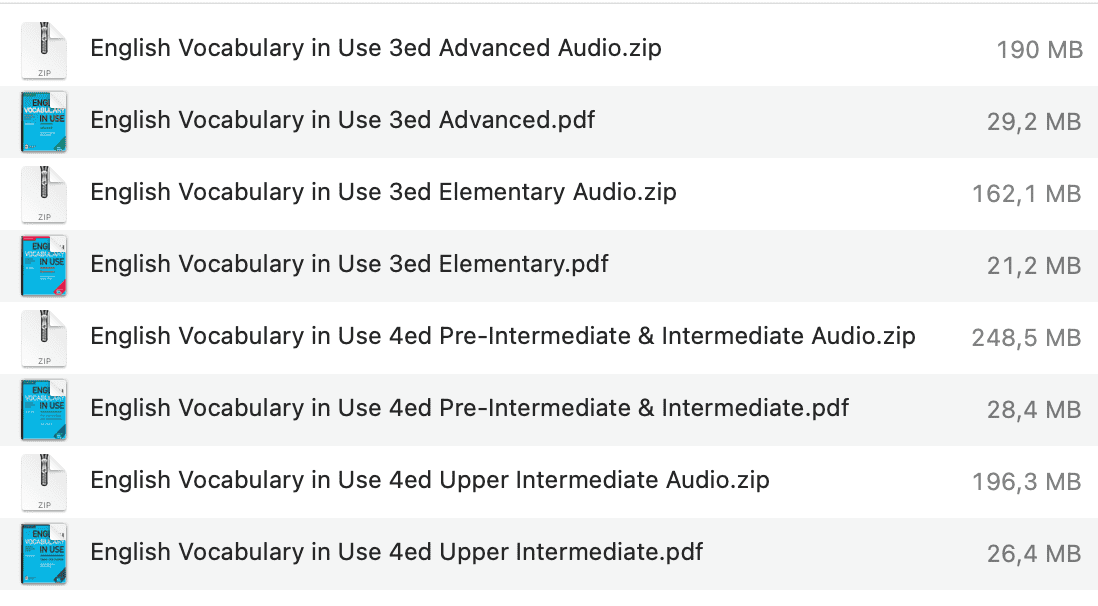
English Vocabulary in Use 3ed Elementary Audio.zip
English Vocabulary in Use 3ed Elementary.pdf – Sample: Click
Pre-Intermediate & Intermediate (B1)
English Vocabulary in Use 4ed Pre-Intermediate & Intermediate Audio.zip
English Vocabulary in Use 4ed Pre-Intermediate & Intermediate.pdf – Sample: Click
Upper Intermediate (B2)
English Vocabulary in Use 4ed Upper Intermediate Audio.zip
English Vocabulary in Use 4ed Upper Intermediate.pdf – Sample: Click
Advanced (C1 – C2)
English Vocabulary in Use 3ed Advanced Audio.zip
English Vocabulary in Use 3ed Advanced.pdf – Sample: Click
| Name | Price | Buy |
|---|---|---|
| English Vocabulary in Use Elementary A2 PDF & Audio | $7 | |
| English Vocabulary in Use B1 PDF & Audio | $7 | |
| English Vocabulary in Use Upper Intermediate B2 PDF & Audio | $7 | |
| English Vocabulary in Use Advanced C1–C2 PDF & Audio | $7 | |
| English Vocabulary in Use – All 4 Levels | Original price was: $28.$25Current price is: $25. |
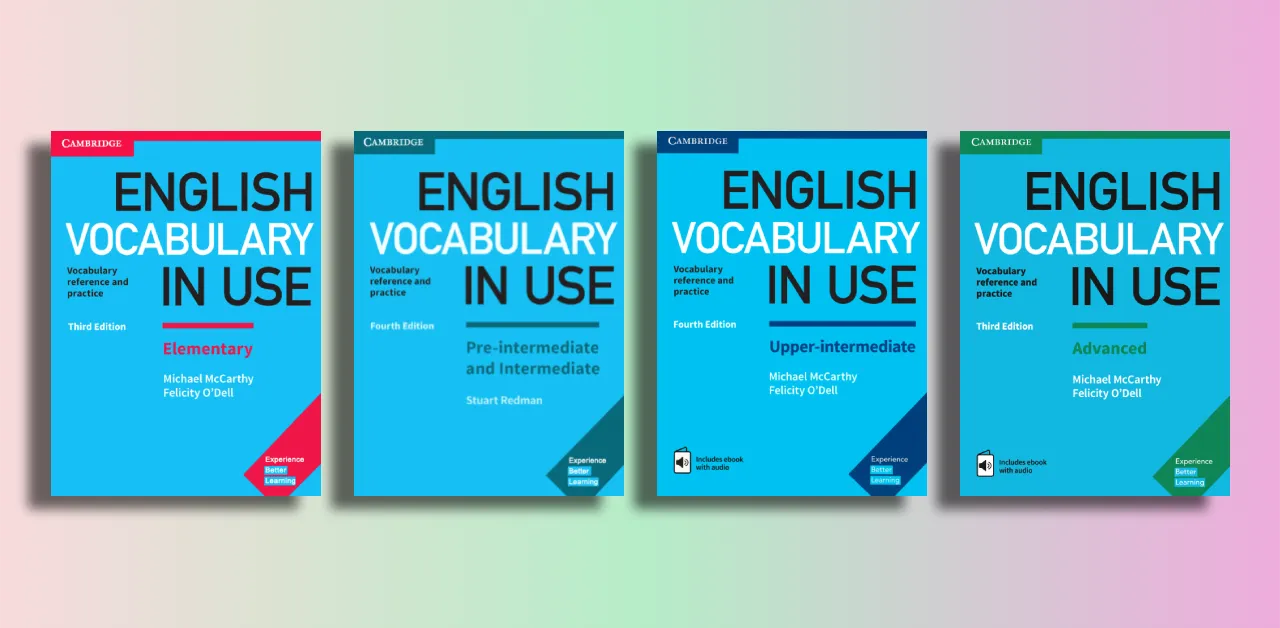
Overview of the “English Vocabulary in Use”
Contents
- 1 Overview of the “English Vocabulary in Use”
- 2 What Is English Vocabulary in Use?
- 3 English Vocabulary in Use Levels and CEFR Mapping
- 4 English Vocabulary in Use Elementary, Third Edition
- 5 English Vocabulary in Use Pre-Intermediate & Intermediate, Fourth Edition
- 6 English Vocabulary in Use Upper-Intermediate, Fourth Edition
- 7 English Vocabulary in Use Advanced, Third Edition
- 8 What Makes English Vocabulary in Use Effective?
- 9 Vocabulary Areas Covered Across the Series
- 10 PDF and Audio Resources Included in This Collection
- 11 How to Study with English Vocabulary in Use
- 12 Using the Series in the Classroom
- 13 Who Should Use English Vocabulary in Use?
- 14 Is English Vocabulary in Use a Complete English Course?
- 15 Frequently Asked Questions
- 16 Final Evaluation
| ✅ Coursebook: | English Vocabulary in Use 4th Edition & 3rd Edition |
| ✅ Publisher: | Cambridge University Press |
| ✅ English type: | British English |
| ✅ Levels: | A2, B1, B2, C1, C2 |
| ✅ For: | Vocabulary |
| ✅ Publication year: | 2017 |
English Vocabulary in Use is a carefully structured vocabulary reference and practice series published by Cambridge University Press & Assessment. Designed for learners from elementary to highly advanced levels, the series provides clear explanations, contextual examples and focused exercises that help students understand, remember and use English vocabulary accurately.
Rather than presenting isolated word lists, English Vocabulary in Use teaches vocabulary as part of meaningful communication. Learners study words together with common collocations, grammatical patterns, pronunciation, register and real-life usage. This makes the series suitable for anyone who wants to move beyond simply recognising words and begin using them confidently in speech and writing.
The collection covers four main stages of English development, from CEFR A2 to C2, and includes PDF books and accompanying audio resources for pronunciation and listening practice.
What Is English Vocabulary in Use?
English Vocabulary in Use is a multi-level series created for both independent learners and classroom students. Each book combines vocabulary reference material with immediate practice, allowing learners to study a topic and then apply what they have learned without needing a separate exercise book.
The series is written in British English, although many units also highlight differences between British and American usage where these distinctions are important. Vocabulary is organised according to level, usefulness and communicative purpose, helping learners focus on language that is appropriate for their current stage of development.
The books are particularly well known for their accessible two-page unit format:
- The left-hand page normally introduces new vocabulary through explanations, examples, short texts, tables, pictures or diagrams.
- The right-hand page provides exercises that check understanding and encourage active use of the target language.
This predictable structure makes the books easy to navigate and allows learners to complete a focused vocabulary lesson in a relatively short study session.
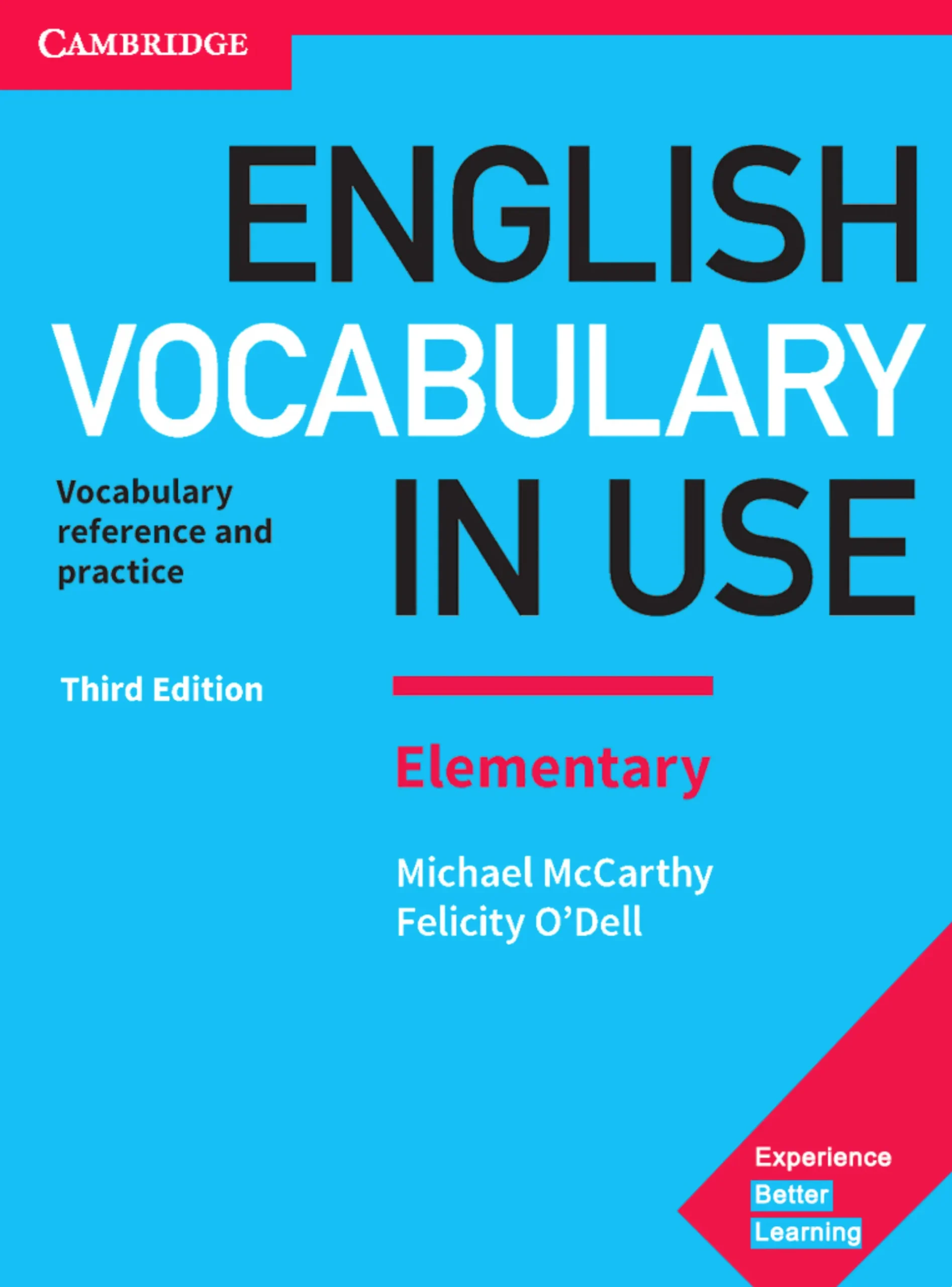
English Vocabulary in Use Elementary, Third Edition
English Vocabulary in Use Levels and CEFR Mapping
| Book | Edition | CEFR Level | Main Learning Focus |
|---|---|---|---|
| English Vocabulary in Use Elementary | Third Edition | A2 | Essential vocabulary for everyday situations and basic communication |
| English Vocabulary in Use Pre-Intermediate & Intermediate | Fourth Edition | Upper A2–B1 | High-frequency vocabulary, functional language and more flexible communication |
| English Vocabulary in Use Upper-Intermediate | Fourth Edition | B2 | Collocations, word formation, topic-based vocabulary and greater precision |
| English Vocabulary in Use Advanced | Third Edition | C1–C2 | Nuance, register, connotation, idiomatic language and sophisticated expression |
English Vocabulary in Use Elementary, Third Edition
English Vocabulary in Use Elementary is intended for learners at approximately CEFR A2. Written by Michael McCarthy and Felicity O’Dell, it helps students build the practical vocabulary needed for everyday communication.
The book introduces language connected with familiar areas such as people, families, homes, food, travel, work, study, shopping, health and leisure. Illustrations, diagrams and simple examples make new vocabulary easier to understand, even when learners are studying without a teacher.
At this level, the focus is not only on learning individual words. Students also begin to notice common phrases, basic word partnerships and grammatical features such as countable and uncountable nouns, verb patterns and prepositions.
This level is especially suitable for:
- Elementary learners who already understand basic English grammar
- Students moving from beginner materials into A2-level study
- Adults returning to English after a long break
- Learners who need practical vocabulary for travel and daily life
English Vocabulary in Use Pre-Intermediate & Intermediate, Fourth Edition
English Vocabulary in Use Pre-Intermediate & Intermediate, written by Stuart Redman, is designed mainly for B1 learners, while also supporting students progressing from the upper A2 level.
The book contains 100 units and teaches more than 2,000 useful words and phrases. Its coverage extends beyond everyday topics to include word formation, phrasal verbs, fixed expressions, connecting language, formal and informal English, education, employment, technology and communication.
The first units also introduce useful vocabulary-learning strategies. Students learn how to organise a vocabulary notebook, use dictionaries effectively and record words together with examples and related expressions.
Many units end with a personalised activity that encourages learners to use the new language to describe their own experiences, opinions, culture or daily routines. These activities help transform passive vocabulary knowledge into language that can be used in real communication.
This book is a strong choice for learners who can manage basic conversations but need a wider and more reliable vocabulary to discuss familiar subjects in greater detail.
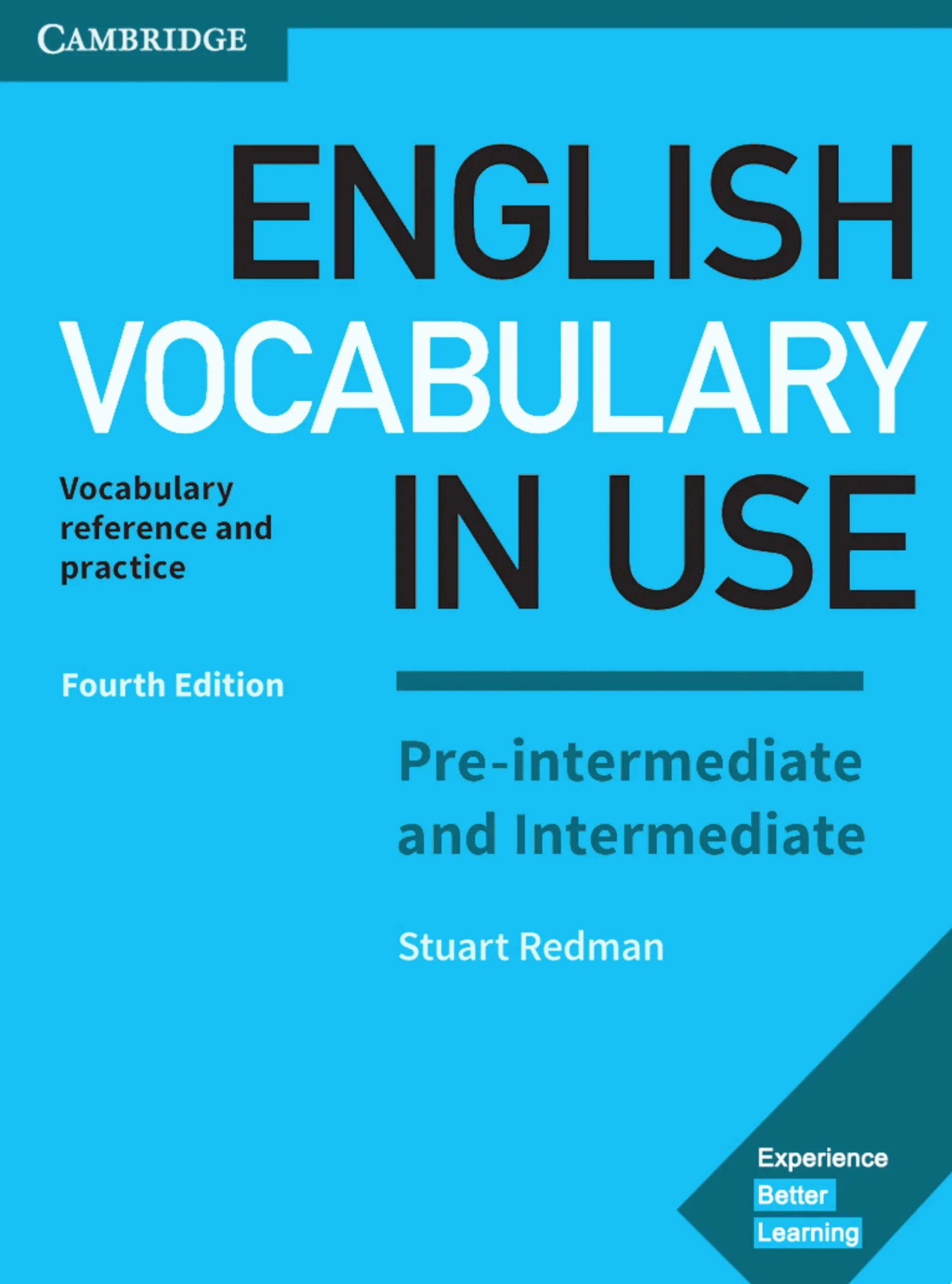
English Vocabulary in Use Pre-Intermediate & Intermediate, Fourth Edition
English Vocabulary in Use Upper-Intermediate, Fourth Edition
English Vocabulary in Use Upper-Intermediate is aimed at CEFR B2 learners. At this stage, students usually know a large number of English words but may still have difficulty choosing the most natural expression, combining words correctly or adapting their language to different situations.
The book therefore places greater emphasis on:
- Common collocations and natural word combinations
- Synonyms and differences in meaning
- Phrasal verbs and multi-word expressions
- Prefixes, suffixes and word families
- Formal and informal language
- Vocabulary for study, work, media, society and contemporary life
The exercises encourage learners to make more precise vocabulary choices and recognise why one expression may be more appropriate than another. This is particularly valuable for students preparing for university study, international employment or upper-intermediate English examinations.
Upper-Intermediate is also an effective bridge between general English courses and more specialised vocabulary books focusing on academic English, business communication, collocations, idioms or phrasal verbs.
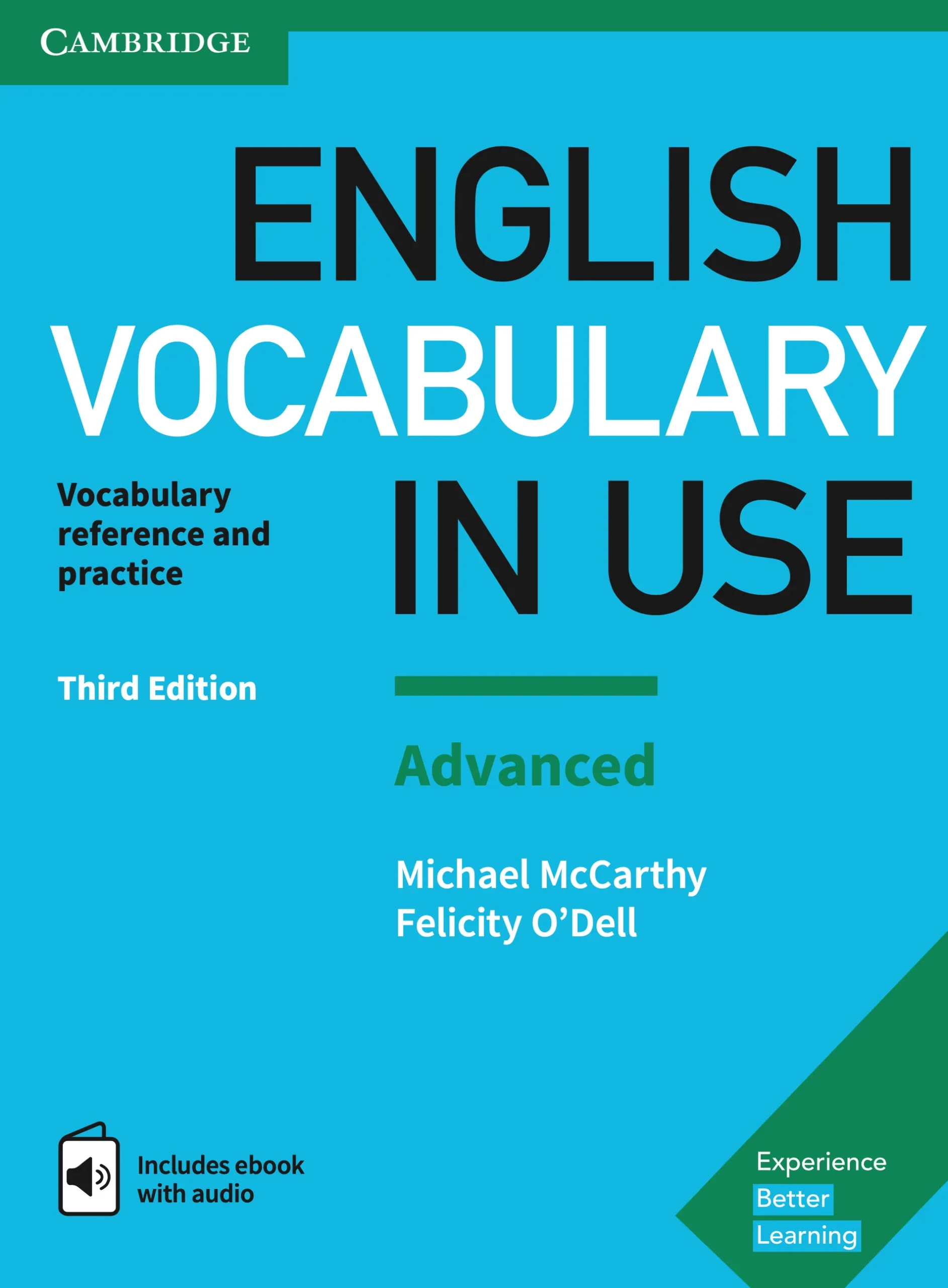
English Vocabulary in Use Advanced, Third Edition
English Vocabulary in Use Advanced, written by Michael McCarthy and Felicity O’Dell, is intended for learners at CEFR C1 and C2.
Advanced learners often understand the general meaning of a word but still need to develop control over connotation, register, style and subtle differences between near-synonyms. This book addresses those challenges by presenting vocabulary in rich contexts and showing how language choices influence tone and meaning.
Topics include professional communication, social issues, technology, health, the media, language variation, idiomatic expressions, phrasal verbs, formal language and sophisticated ways of expressing opinions.
The book also explores how vocabulary changes according to context. Learners examine differences between neutral, formal, informal, humorous and potentially sensitive expressions. This helps them communicate more naturally and avoid language that may sound inappropriate or imprecise.
Advanced is particularly useful for:
- C1 and C2 learners working toward near-native flexibility
- University students using English for academic study
- Teachers and language professionals
- Writers, translators and editors
- Learners preparing for advanced English examinations
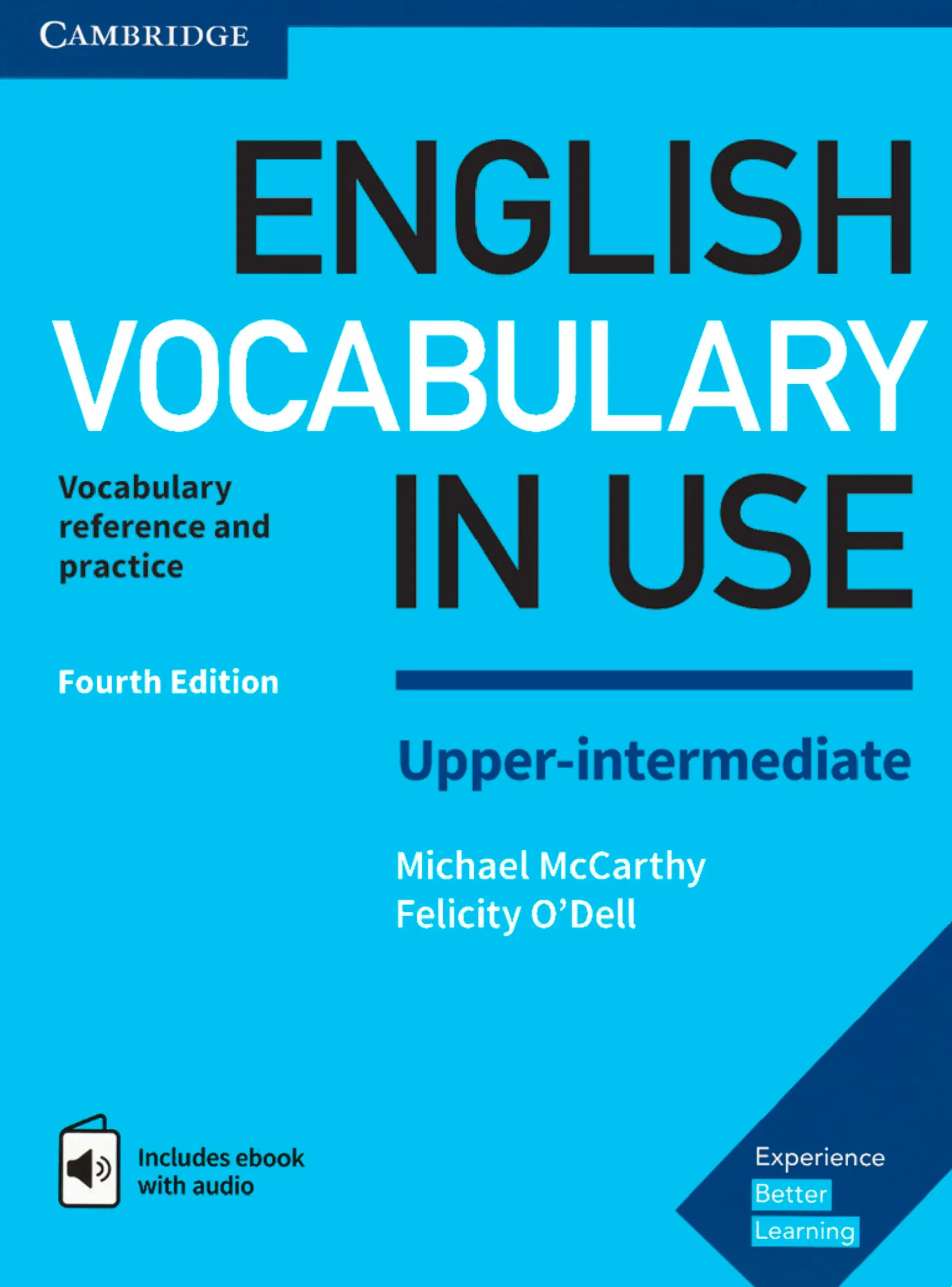
English Vocabulary in Use Upper Intermediate, Fourth Edition
What Makes English Vocabulary in Use Effective?
1. Vocabulary Is Presented in Context
New words are introduced through sentences, conversations, short texts, diagrams and realistic situations. Context helps learners understand not only what a word means, but also when and how it is normally used.
2. Explanation and Practice Are Closely Connected
Students can study the reference page and immediately complete related exercises. This reduces the gap between encountering a word and actively retrieving it from memory.
3. The Units Are Flexible
Most units can be studied independently and in almost any order. Learners can follow the book systematically or select topics according to their personal needs, classroom syllabus or examination objectives.
4. Vocabulary Is Taught as a Network
The series regularly connects words with collocations, word families, grammatical patterns, opposites and related expressions. This reflects the way vocabulary is actually stored and retrieved during communication.
5. Personalisation Encourages Active Use
Personalised exercises ask learners to relate new language to their own lives. This deeper level of processing can make vocabulary easier to remember and more available during speaking and writing.
6. Answer Keys Support Independent Learning
The answer sections allow students to check their work, identify recurring problems and monitor their progress. This makes the series highly practical for self-study as well as homework and revision.
7. Audio Supports Pronunciation
The accompanying audio allows learners to hear vocabulary pronounced clearly. Listening while reading can strengthen the connection between spelling, sound and meaning, while repeated listening can improve word recognition and pronunciation confidence.
Vocabulary Areas Covered Across the Series
Although the exact content varies by level, the series develops vocabulary across a broad range of themes and language systems, including:
- People, relationships and personality
- Home, food, shopping and daily routines
- Travel, transport and tourism
- Education, study skills and examinations
- Jobs, careers, offices and business
- Health, fitness and lifestyle
- Technology, media and communication
- Society, politics and environmental issues
- Word formation and word families
- Collocations and fixed expressions
- Phrasal verbs and prepositional phrases
- Formal, informal and academic language
- Connotation, register and language variation
PDF and Audio Resources Included in This Collection
This English Vocabulary in Use collection includes the following digital books and accompanying audio resources:
- English Vocabulary in Use Elementary, Third Edition — PDF and audio
- English Vocabulary in Use Pre-Intermediate & Intermediate, Fourth Edition — PDF and audio
- English Vocabulary in Use Upper-Intermediate, Fourth Edition — PDF and audio
- English Vocabulary in Use Advanced, Third Edition — PDF and audio
The PDF format is convenient for studying on computers, tablets and other compatible devices. The audio files can be used alongside the books to review pronunciation, notice word stress and build stronger connections between written and spoken English.
How to Study with English Vocabulary in Use
English Vocabulary in Use is flexible, but learners will achieve better results when they use a consistent study process.
- Choose the correct level. Select a book that is challenging but still understandable without constant translation.
- Study one manageable unit. Read the examples carefully and notice collocations, pronunciation and grammatical patterns.
- Complete the exercises without looking back immediately. Trying to retrieve the vocabulary strengthens memory.
- Check the answer key. Analyse mistakes instead of simply marking them wrong.
- Listen to the audio. Repeat useful words and phrases aloud, paying attention to stress and natural rhythm.
- Create personal examples. Write sentences that are relevant to your own work, interests and daily life.
- Review at spaced intervals. Return to the vocabulary after one day, one week and several weeks.
- Use the language actively. Include selected words in conversations, emails, essays or short speaking recordings.
Using the Series in the Classroom
Teachers can use English Vocabulary in Use as a core vocabulary resource, a supplementary book or a source of homework and revision activities.
A unit can be assigned before a lesson to prepare students for a topic, used during class for guided discovery, or given after a lesson for consolidation. Personalised exercises can be adapted into pair discussions, surveys, short presentations or writing tasks.
Because each unit is largely independent, teachers can select vocabulary that matches a general English course, examination class, academic programme or professional training syllabus.
Who Should Use English Vocabulary in Use?
The series is appropriate for a wide range of learners, including:
- Teenagers and adults studying general English
- Independent learners who need a structured vocabulary programme
- Students preparing for Cambridge English or other international examinations
- University students developing academic communication skills
- Professionals who need greater accuracy and confidence in English
- Teachers looking for reliable reference and practice materials
Is English Vocabulary in Use a Complete English Course?
English Vocabulary in Use is a specialised vocabulary series rather than a complete general English course. It does not replace systematic work on grammar, speaking, listening, reading and writing.
For the best results, learners should combine it with broader English study and regular exposure to authentic language. Reading articles, watching videos, listening to podcasts and participating in conversations give learners opportunities to encounter the vocabulary in new contexts.
Its greatest strength is providing the focused explanation and repeated practice that general coursebooks may not have enough space to offer.
English Vocabulary in Use Advanced, Third Edition
Frequently Asked Questions
What level does English Vocabulary in Use start at?
The main series begins with Elementary at CEFR A2. Learners who are complete beginners may need an introductory English course before starting this level.
What is the highest level in the series?
English Vocabulary in Use Advanced covers CEFR C1 to C2 and focuses on sophisticated vocabulary, nuance, register, connotation and advanced patterns of usage.
Is English Vocabulary in Use British or American English?
The series is based primarily on British English. However, relevant differences between British and American vocabulary are explained in a number of units.
Can the books be used without a teacher?
Yes. Clear explanations, modular units, indexes and answer keys make the books particularly suitable for independent study.
Which edition is included at each level?
This collection includes the Third Edition of Elementary, the Fourth Edition of Pre-Intermediate & Intermediate, the Fourth Edition of Upper-Intermediate and the Third Edition of Advanced.
Does the collection include audio?
Yes. Audio resources are included for all four levels in this collection and can be used for pronunciation, listening and vocabulary review.
How many units should learners study each week?
For most independent learners, two to four units per week is a realistic pace. Regular review is more important than completing a large number of units quickly.
Is the series useful for exam preparation?
Yes. The books develop the vocabulary range, accuracy, collocational control and register awareness needed for many international English examinations. However, they should be combined with exam-specific practice materials.
Final Evaluation
English Vocabulary in Use offers a clear and academically sound pathway from essential everyday vocabulary to advanced lexical control. Its combination of concise explanations, contextualised examples, varied exercises, personalisation and audio support makes it highly effective for both self-study and classroom learning.
The level progression from A2 to C2 enables learners to continue using a familiar study method as their English develops. Elementary establishes a practical foundation, Pre-Intermediate & Intermediate broadens everyday communication, Upper-Intermediate develops precision and natural word combinations, and Advanced focuses on nuance, register and sophisticated expression.
For learners who want to build a larger vocabulary and use English with greater confidence, accuracy and flexibility, English Vocabulary in Use remains an exceptionally practical reference and practice series.