Evolve Second Edition
Level 1 (A1)
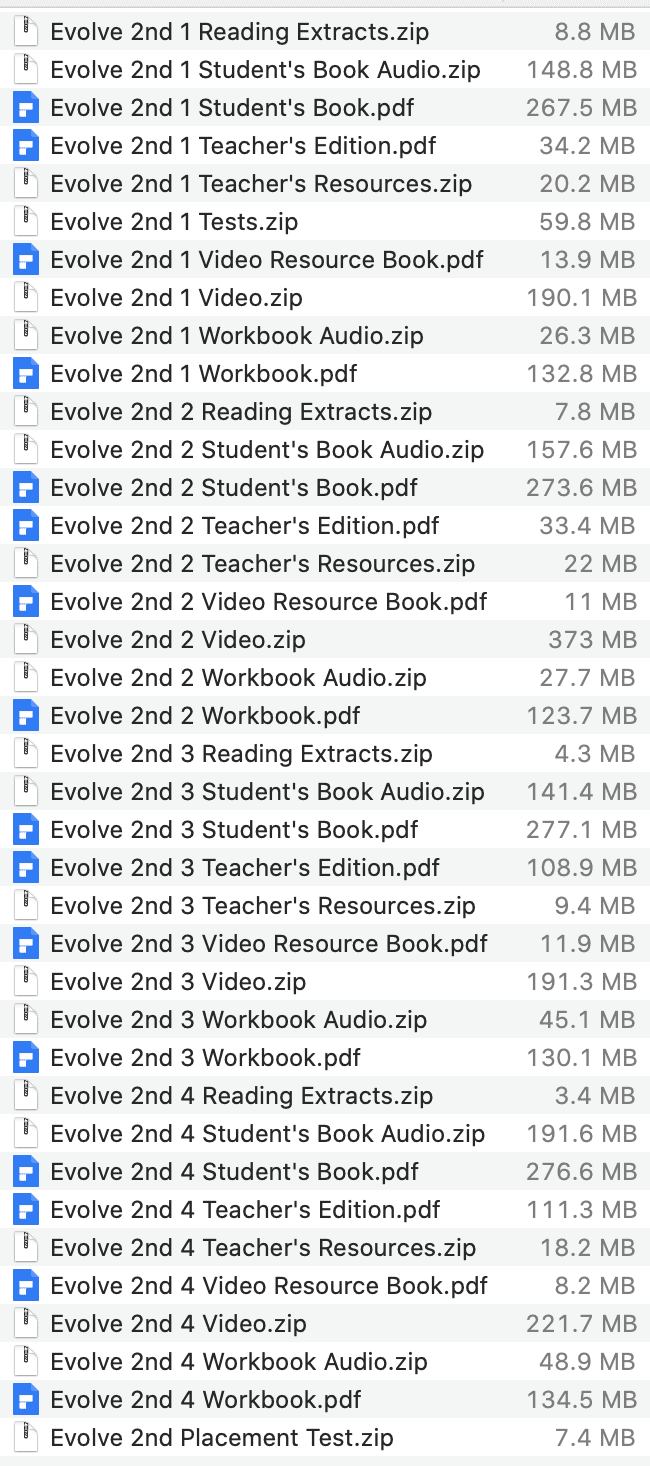
Evolve 2nd 1 Reading Extracts.zip
Evolve 2nd 1 Student’s Book Audio.zip
Evolve 2nd 1 Student’s Book.pdf – Sample: Click
Evolve 2nd 1 Teacher’s Edition.pdf – Sample: Click
Evolve 2nd 1 Teacher’s Resources.zip
Evolve 2nd 1 Tests.zip
Evolve 2nd 1 Video Resource Book.pdf
Evolve 2nd 1 Video.zip
Evolve 2nd 1 Workbook Audio.zip
Evolve 2nd 1 Workbook.pdf – Sample: Click
Level 2 (A2)
Evolve 2nd 2 Reading Extracts.zip
Evolve 2nd 2 Student’s Book Audio.zip
Evolve 2nd 2 Student’s Book.pdf – Sample: Click
Evolve 2nd 2 Teacher’s Edition.pdf – Sample: Click
Evolve 2nd 2 Teacher’s Resources.zip
Evolve 2nd 2 Video Resource Book.pdf
Evolve 2nd 2 Video.zip
Evolve 2nd 2 Workbook Audio.zip
Evolve 2nd 2 Workbook.pdf – Sample: Click
Level 3 (B1)
Evolve 2nd 3 Reading Extracts.zip
Evolve 2nd 3 Student’s Book Audio.zip
Evolve 2nd 3 Student’s Book.pdf – Sample: Click
Evolve 2nd 3 Teacher’s Edition.pdf – Sample: Click
Evolve 2nd 3 Teacher’s Resources.zip
Evolve 2nd 3 Video Resource Book.pdf
Evolve 2nd 3 Video.zip
Evolve 2nd 3 Workbook Audio.zip
Evolve 2nd 3 Workbook.pdf – Sample: Click
Level 4 (B1+)
Evolve 2nd 4 Reading Extracts.zip
Evolve 2nd 4 Student’s Book Audio.zip
Evolve 2nd 4 Student’s Book.pdf – Sample: Click
Evolve 2nd 4 Teacher’s Edition.pdf – Sample: Click
Evolve 2nd 4 Teacher’s Resources.zip
Evolve 2nd 4 Video Resource Book.pdf
Evolve 2nd 4 Video.zip
Evolve 2nd 4 Workbook Audio.zip
Evolve 2nd 4 Workbook.pdf – Sample: Click
Evolve 2nd Placement Test.zip
| Name | Price | Buy |
|---|---|---|
| Evolve 2nd Edition 1 PDFs, Resources | $10 | |
| Evolve 2nd Edition 2 PDFs, Resources | $10 | |
| Evolve 2nd Edition 3 PDFs, Resources | $10 | |
| Evolve 2nd Edition 4 PDFs, Resources | $10 | |
| Evolve 2nd Edition PDFs, Resources - All 4 Levels | Original price was: $40.$35Current price is: $35. |
Evolve Second Edition

Overview of the “Evolve Second Edition”
Contents
| ✅ Coursebook: | Evolve 2nd Edition |
| ✅ Authors: | Ben Goldstein, Ceri Jones, Kathryn O’Dell, Leslie Ann Hendra, Lindsay Clandfield, Mark Ibbottson, Philip Kerr |
| ✅ Publisher: | Cambridge University Press |
| ✅ English type: | American English |
| ✅ For: | Adult and Young Adult |
| ✅ 6 Level: | A1, A2, B1, B2, C1 |
| ✅ Publication year: | 2026 |
In adult and young-adult language education, fluency isn’t a “skill at the end”—it’s the engine that drives motivation, retention, and real-world transfer. Evolve Second Edition is designed around that reality: a six-level American English course built to move learners from CEFR A1 to C1 while keeping speaking, interaction, and confidence-building at the center of classroom life.
This overview explains what the course is, what’s new and distinctive about the Second Edition ecosystem, and how schools, centers, and independent teachers can implement it effectively—whether you teach fully face-to-face, blended, or with a strong digital layer.
What is Evolve Second Edition?
Evolve Second Edition is a six-level general English course for adults and young adults with a consistent design goal: get learners speaking with confidence, early and often. Retail and catalog descriptions emphasize the course’s student-centered structure, integration of speaking tasks, and use of learner-informed content and “peer models.”
A defining feature is that the course is not simply “skills balanced.” Instead, it takes a communication-first stance—treating speaking as the visible outcome of vocabulary growth, grammar control, listening comprehension, and pragmatic competence (the ability to choose appropriate language for real situations).
The learning design, in plain terms: why it tends to work
From a learning-science perspective, Evolve Second Edition leans into three evidence-aligned principles that matter in adult instruction:
Frequent retrieval + immediate use
- Learners encounter language and quickly use it in guided interaction. This supports stronger memory traces and more reliable access under real communication pressure.
Task-based speaking with purposeful constraints
- Course descriptions highlight “Time to Speak” lessons built around decision-making and problem-solving—formats that naturally generate negotiation of meaning (clarifying, confirming, disagreeing politely), which is where fluent performance grows.
Motivation through identity and relevance
- “Peer models” and real-student-informed content are not marketing extras; they are motivational scaffolds. Adult learners persist longer when materials reflect plausible goals, voices, and contexts they recognize.
Levels and CEFR alignment (A1 → C1)
Evolve Second Edition spans A1, A2, B1, B1+, B2, and C1, allowing programs to place learners into a full pathway from beginner through advanced proficiency.
Practical implication for programs: You can design a coherent multi-term sequence without switching series midstream—important for curriculum consistency, teacher onboarding, and student expectations.
How to choose the right level (fast placement guidance)
A practical placement approach used by many adult programs:
- A1 / Level 1: can handle basic introductions, simple questions, everyday vocabulary with support
- A2 / Level 2: manages routine exchanges and short explanations; still needs scaffolding for past/future
- B1 / Level 3: can narrate experiences and opinions; accuracy fluctuates under pressure
- B1+ / Level 4: can sustain discussion longer; benefits from fluency-focused task repetition
- B2 / Level 5: can argue a position, handle abstract topics, and follow faster speech with fewer gaps
- C1 / Level 6: can participate flexibly in complex discussions with nuanced tone and register
If your program already uses CEFR-aligned placement testing, Evolve’s level mapping makes it easy to translate scores into course entry points.
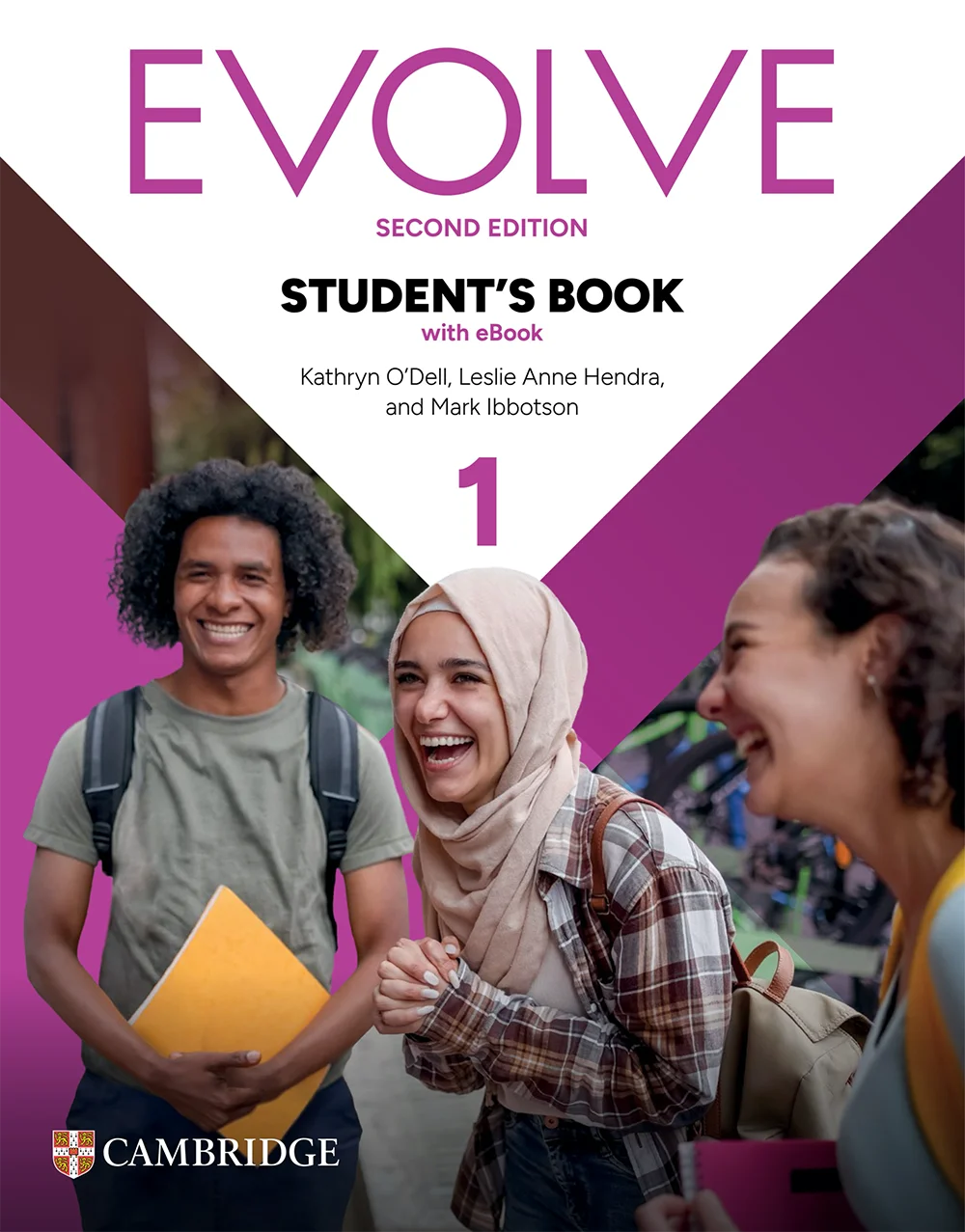
Evolve 2nd Edition 1 Student’s Book
Who is suitable for “Evolve Second Edition”?
1) Adults and young adults (primary target)
- The series is positioned as a general English course for adult and young adult learners.
2) Learners who want to speak more confidently (speaking-first focus)
It’s a strong fit for students who:
- feel “stuck” at grammar/vocabulary but hesitate to speak
- need real-life conversation, discussion, and interactive tasks
- want structured speaking practice (often labeled as “Time to Speak” in course descriptions)
3) Programs that need a full pathway from beginner to advanced
- Good for schools/centers that want one consistent course line across multiple terms because it runs CEFR A1 → C1 (6 levels).
4) Learners who benefit from blended learning (print + digital)
It suits students who will actually use digital practice because the Digital Pack is typically described with:
- eBook + audio/video + interactive workbook
- online access via Cambridge’s platform
This helps homework completion and teacher monitoring in organized programs.
5) Busy learners who prefer clear structure and “just enough” grammar
A good fit when learners want practical language and progress without getting lost in heavy linguistic theory—common in:
- private language centers
- university English support programs
- workplace English courses (general communication)
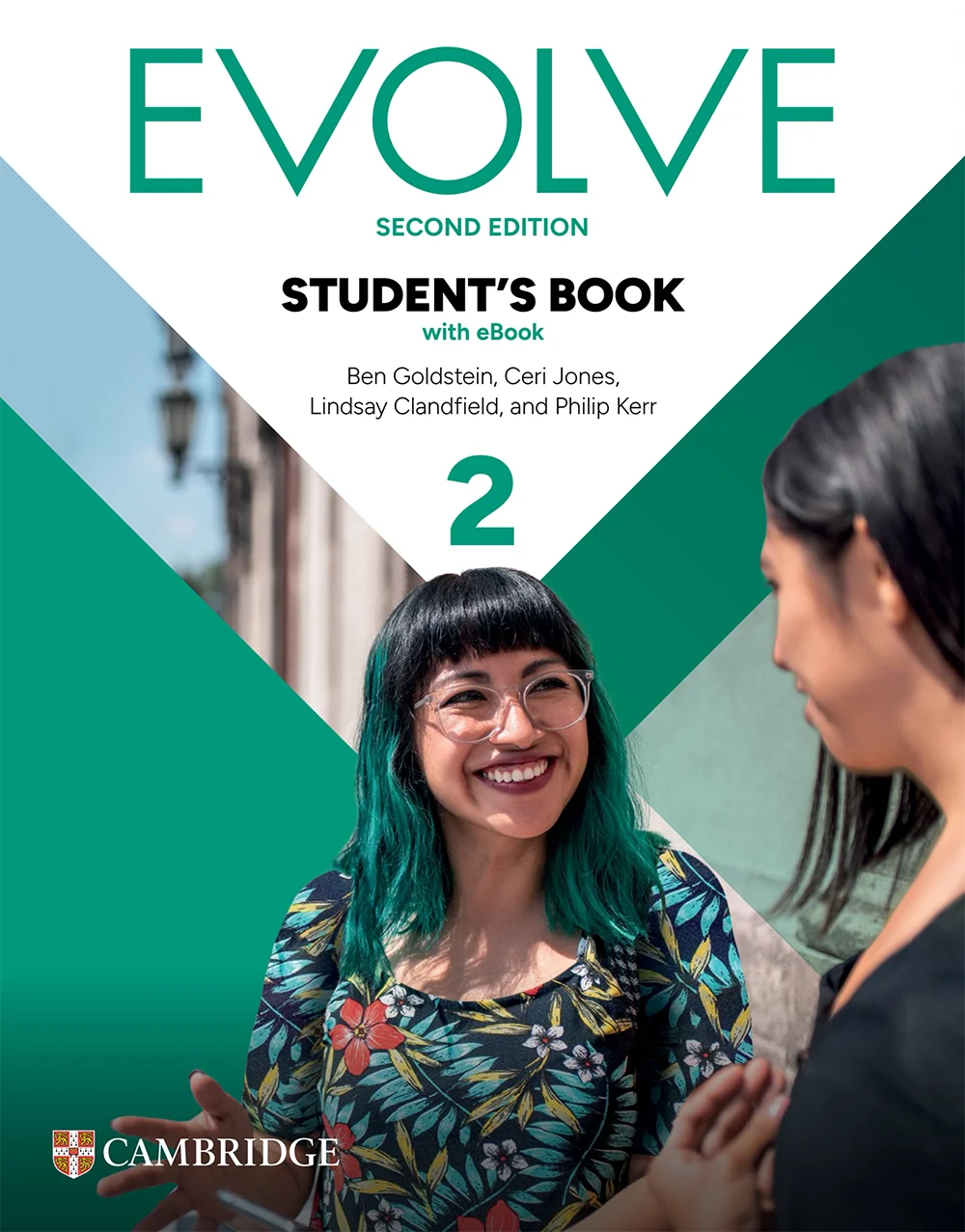
Evolve 2nd Edition 2 Student’s Book
The benefits of “Evolve Second Edition”
1) It reliably builds speaking confidence (not only knowledge)
The course is explicitly designed to get learners speaking with confidence, and each unit includes a dedicated “Time to Speak” lesson built around immersive, collaborative tasks. These tasks typically use decision-making and problem-solving to create the kind of purposeful interaction where fluency develops fastest.
Why this matters: Speaking confidence rises when learners have repeated, structured opportunities to plan → speak → adjust → speak again, rather than doing speaking as an occasional “end-of-unit extra.”
2) Student-centred content increases motivation and persistence
Course descriptions highlight peer models and content informed by real students, which tends to improve relevance and reduce the “textbook distance” adult learners often feel.
Why this matters: Motivation is not a soft factor—attendance, homework completion, and willingness to take risks in speaking correlate strongly with perceived relevance.
3) Clear, scalable pathway from A1 to C1
Evolve Second Edition is a six-level course that takes learners from beginner to advanced (CEFR A1–C1).
Program benefit: This continuity makes it easier to standardize outcomes across classes, manage teacher transitions, and keep learner expectations consistent term to term.
4) Strong blended-learning ecosystem (with measurable progress)
Student’s Books with Digital Pack are commonly described as including an eBook, audio, video, and an interactive digital workbook that helps teachers track student performance, often with an 18-month access code.
This ecosystem runs through Cambridge One, making it easier to assign practice, monitor completion, and intervene early when students fall behind.
5) Digital work supports flipped and differentiated teaching
Catalog descriptions for Evolve’s digital options note that Digital Workbooks provide interactive unit activities and can include grammar videos and vocabulary presentations—useful for flipped lessons and self-paced review.
Teacher benefit: You can move lower-level input (watch/read/preview) outside class and protect class time for the highest-value activity: guided interaction.
6) More efficient lesson delivery with classroom presentation tools
The Presentation Plus workflow (via Cambridge’s teacher guidance) is meant to streamline classroom delivery—supporting on-screen lessons and reducing friction when moving between audio, video, and activities.
Practical effect: Less “teacher admin time” during class = more time for feedback, pairwork monitoring, and speaking cycles.
7) Balanced skills coverage—without losing the “communication-first” spine
While the course emphasizes speaking, product descriptions also note it covers all skills and focuses on efficient progress—so learners aren’t developing fluency at the expense of listening, reading, writing, or language control.
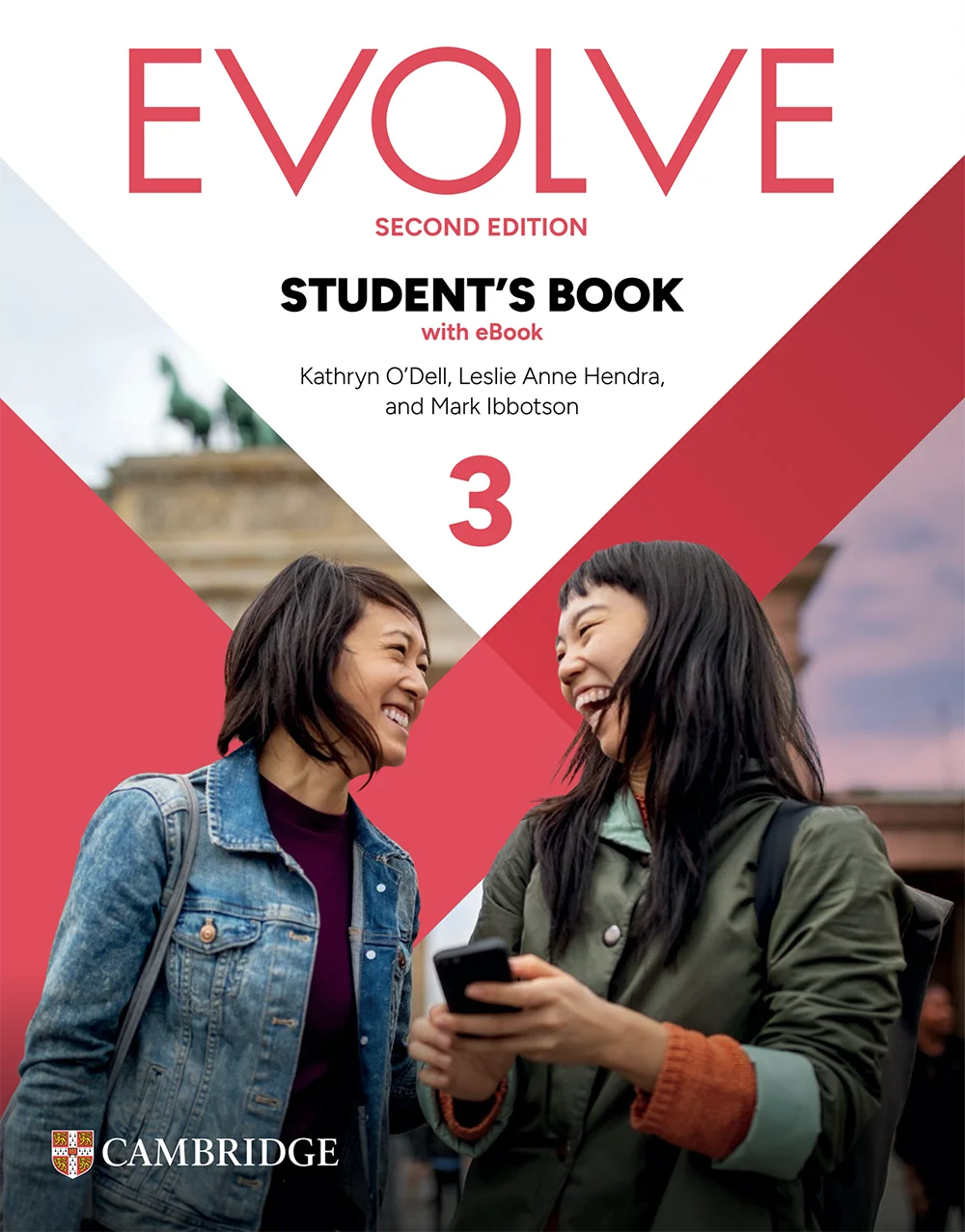
Evolve 2nd Edition 3 Student’s Book
Effective learning strategies for “Evolve Second Edition”
1) Treat “Time to Speak” as the core assessment moment
Every unit includes a dedicated “Time to Speak” lesson focused on sustained speaking and confidence-building.
To maximize its impact, run it as a repeatable performance cycle, not a one-off activity:
- Round 1 (2–4 min): students attempt the task with minimal interruption
- Micro-feedback (60–90 sec): teacher notes one strength + one target form (grammar chunk / vocab / pronunciation)
- Round 2 (2–4 min): same task, new partner, with the target form required
- Round 3 (optional, 1–2 min): “best version” recording or mini presentation
This structure builds fluency because learners retrieve language under time pressure, then immediately re-use it with sharper control.
2) Use spaced retrieval for vocabulary and grammar (the “30–3–30” rule)
A strong 2025 pattern is short, frequent retrieval rather than long review sessions.
30–3–30 routine (no extra materials needed):
- 30 seconds at the start of class: students recall 5–8 key items from last lesson (no notes)
- 3 minutes mid-class: quick “say it differently” reformulations (same meaning, new wording)
- 30 seconds at the end: exit recall (one useful phrase + one mistake they corrected)
Spacing + retrieval are consistently linked to stronger retention than cramming, and recent EFL research also connects spaced retrieval with gains in oral fluency indicators.
3) Repeat tasks—but interleave them
Many teachers “repeat” speaking tasks by doing the same format back-to-back. Better: repeat with spacing and variation, because learners must re-plan and retrieve more flexibly.
A simple schedule:
- Day 1: Task A (first attempt)
- Day 2: Task B
- Day 3: Task A again (new topic twist, new partner)
Task repetition schedules have been studied as a route to improved fluency, and interleaving (mixing tasks) often produces more robust learning than blocked repetition.
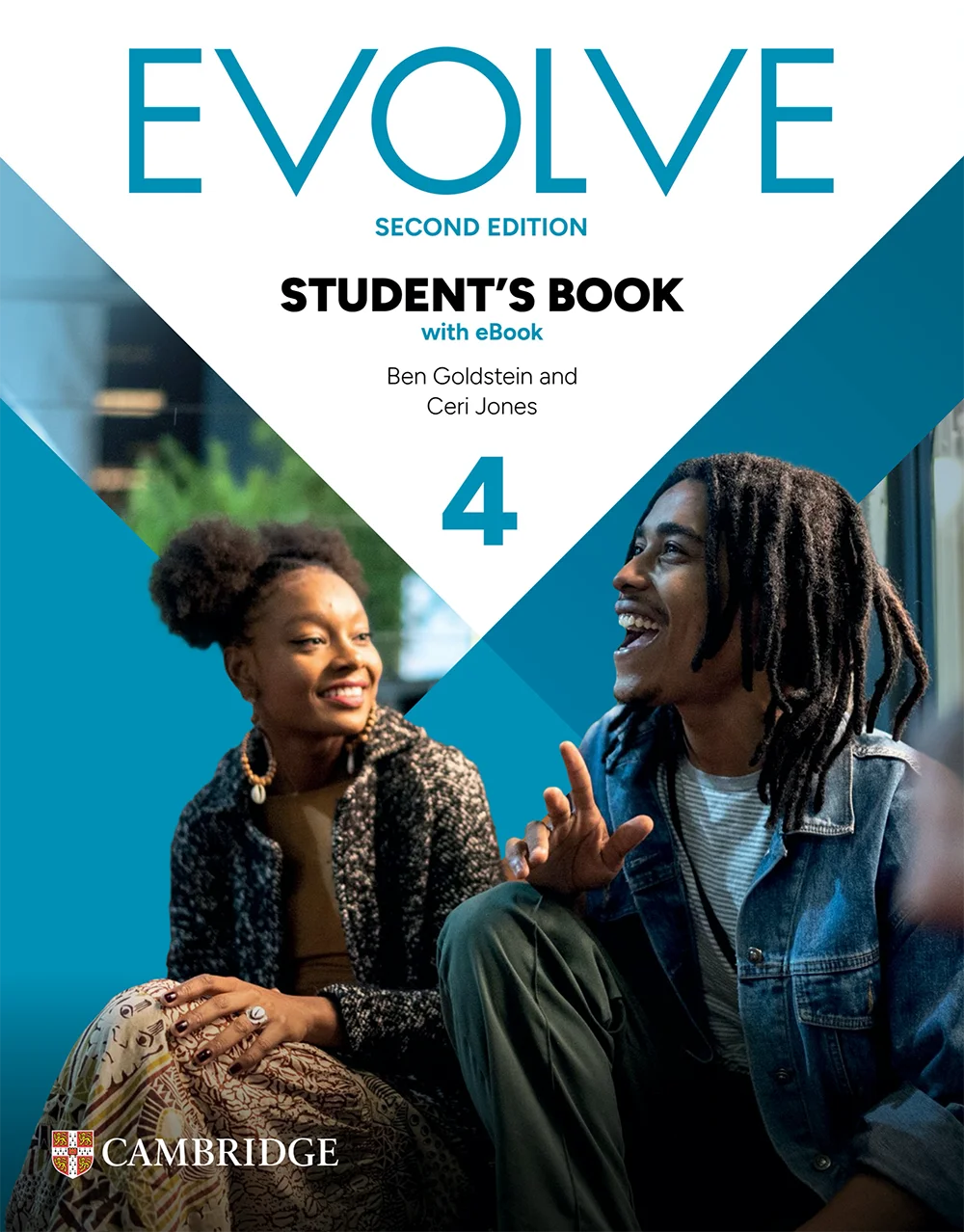
Evolve 2nd Edition 4 Student’s Book
4) Build automaticity with “chunks,” not single words
Adult learners speak more smoothly when they can deploy ready-made chunks (e.g., “From my point of view…” “What I mean is…” “I see your point, but…”).
Strategy: 2–2–2 chunk training
- Pick 2 chunks from the unit
- Use them in 2 different contexts (roleplay + discussion)
- Require them in 2 output modes (speaking + short writing / chat response)
This turns passive recognition into usable speech, which is the real bottleneck for most learners.
5) Convert correction into “feedforward”
Correction works best when it changes the next performance.
During speaking, collect 6–10 examples:
- 3 strong sentences (keep them!)
- 3 common errors (fix them)
- 2 missed opportunities (better vocabulary / discourse markers)
Then do:
- Recast + choice: give 2 improved options
- Student selects: “Which is closer to what you meant?”
- Re-speak: students repeat the message in their own words
That last step (re-speak) is where learning sticks.
6) Use the digital pack as a diagnostic tool, not “homework busywork”
Many Evolve packages describe an interactive digital workbook that lets teachers track learner performance, typically via Cambridge One access.
Make it powerful by focusing on patterns, not scores:
- Identify the top 2 error types per unit (e.g., past forms, articles, word stress)
- Design a 6-minute in-class “fix loop”:
- 2 min: error awareness (spot and correct)
- 2 min: guided production (sentence frames)
- 2 min: free production (mini speaking task requiring the form)
If you’re using Presentation Plus through Cambridge’s desktop/app workflow, it also reduces lesson friction (audio/video/exercises), which protects valuable class time for interaction.
7) Make speaking measurable with a tiny rubric
Keep it simple and visible. For each “Time to Speak” task, rate 0–2 on:
- Clarity (can I understand you easily?)
- Interaction (do you respond and build?)
- Range (do you use unit language/chunks?)
Students improve faster when they know what “better” looks like.
8) Weekly structure that works (blended or face-to-face)
A practical rhythm many programs succeed with:
- Class 1: input + guided practice + short speaking
- Between classes: digital practice (target 15–20 minutes, not more)
- Class 2: “fix loop” + “Time to Speak” cycle (repeat + improve)
- End of week: 60–90 second recorded response (best version)
This aligns with how fluency actually develops: repeated, increasingly confident performances with light but consistent accountability.