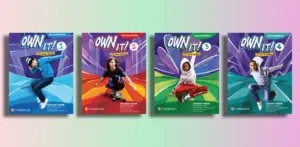
Own it! 2nd Edition
Level 1 (A1)
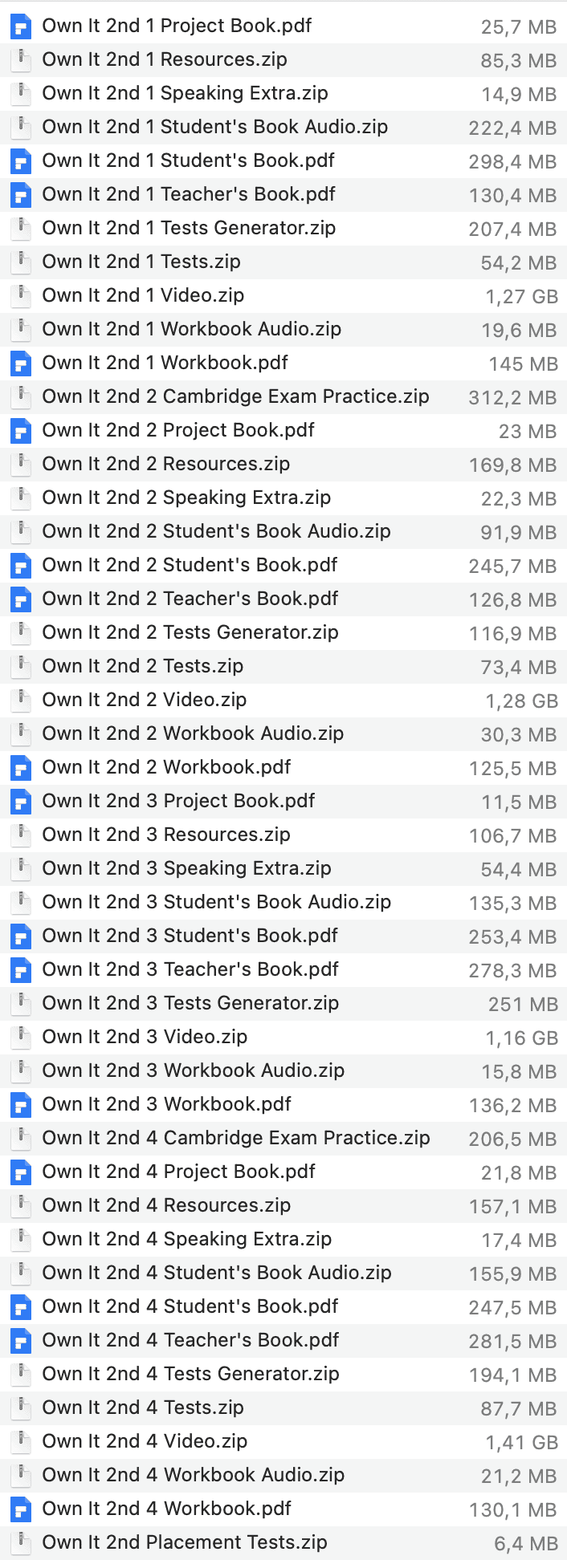
Own It 2nd 1 Project Book.pdf – Sample: Click
Own It 2nd 1 Resources.zip
Own It 2nd 1 Speaking Extra.zip
Own It 2nd 1 Student’s Book Audio.zip
Own It 2nd 1 Student’s Book.pdf – Sample: Click
Own It 2nd 1 Teacher’s Book.pdf – Sample: Click
Own It 2nd 1 Tests Generator.zip
Own It 2nd 1 Tests.zip
Own It 2nd 1 Video.zip
Own It 2nd 1 Workbook Audio.zip
Own It 2nd 1 Workbook.pdf – Sample: Click
Level 2 (A2)
Own It 2nd 2 Cambridge Exam Practice.zip
Own It 2nd 2 Project Book.pdf – Sample: Click
Own It 2nd 2 Resources.zip
Own It 2nd 2 Speaking Extra.zip
Own It 2nd 2 Student’s Book Audio.zip
Own It 2nd 2 Student’s Book.pdf – Sample: Click
Own It 2nd 2 Teacher’s Book.pdf – Sample: Click
Own It 2nd 2 Tests Generator.zip
Own It 2nd 2 Tests.zip
Own It 2nd 2 Video.zip
Own It 2nd 2 Workbook Audio.zip
Own It 2nd 2 Workbook.pdf – Sample: Click
Level 3 (A2+)
Own It 2nd 3 Project Book.pdf – Sample: Click
Own It 2nd 3 Resources.zip
Own It 2nd 3 Speaking Extra.zip
Own It 2nd 3 Student’s Book Audio.zip
Own It 2nd 3 Student’s Book.pdf – Sample: Click
Own It 2nd 3 Teacher’s Book.pdf – Sample: Click
Own It 2nd 3 Tests Generator.zip
Own It 2nd 3 Video.zip
Own It 2nd 3 Workbook Audio.zip
Own It 2nd 3 Workbook.pdf – Sample: Click
Level 4 (B1)
Own It 2nd 4 Cambridge Exam Practice.zip
Own It 2nd 4 Project Book.pdf – Sample: Click
Own It 2nd 4 Resources.zip
Own It 2nd 4 Speaking Extra.zip
Own It 2nd 4 Student’s Book Audio.zip
Own It 2nd 4 Student’s Book.pdf – Sample: Click
Own It 2nd 4 Teacher’s Book.pdf – Sample: Click
Own It 2nd 4 Tests Generator.zip
Own It 2nd 4 Tests.zip
Own It 2nd 4 Video.zip
Own It 2nd 4 Workbook Audio.zip
Own It 2nd 4 Workbook.pdf – Sample: Click
Own It 2nd Placement Tests.zip
| Name | Price | Buy |
|---|---|---|
| Own it 2nd Edition 1 PDFs, Resources | $10 | |
| Own it 2nd Edition 2 PDFs, Resources | $10 | |
| Own it 2nd Edition 3 PDFs, Resources | $10 | |
| Own it 2nd Edition 4 PDFs, Resources | $10 | |
| Own it 2nd Edition PDFs, Resources - All 4 Levels | Original price was: $40.$35Current price is: $35. |
Own it! Second Edition
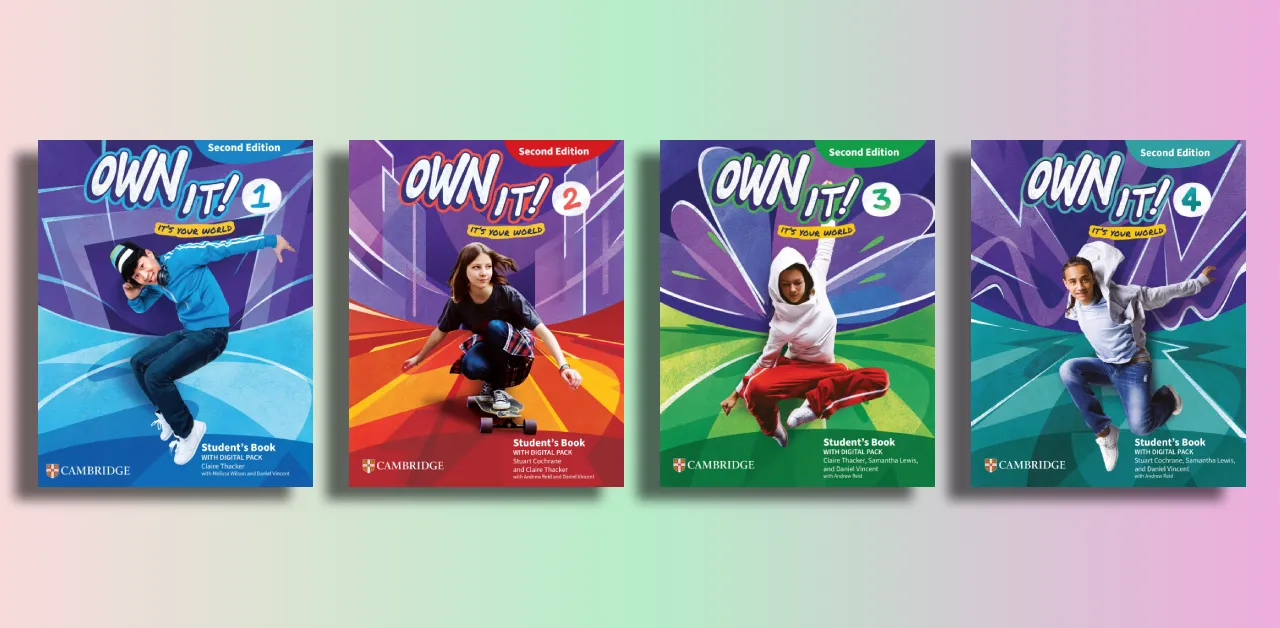
Overview of the “Own it! Second Edition”
Contents
| ✅ Coursebook: | Own it! 2nd Edition |
| ✅ Publisher: | Cambridge University Press |
| ✅ English type: | British English |
| ✅ For: | Secondary, Junior High School |
| ✅ 6 Level: | A1, A2, B1 |
| ✅ Publication year: | 2026 |
In secondary English classrooms, “engagement” is not a soft add-on—it is the gateway to durable language growth. Adolescents learn best when tasks feel socially meaningful, cognitively challenging, and personally relevant. Own It! Second Edition is designed around that reality: it aims to build confident, independent learners through global themes, collaborative projects, and explicit support for learner autonomy, while also strengthening the language system (grammar, vocabulary, pronunciation) in a structured way.
As a four-level lower-secondary course mapped across CEFR A1+ to B1+, the series positions language learning as a tool for agency—helping learners “own” their progress, reflect on strategies, and use English for authentic purposes beyond textbook-only routines.
What Own It! Second Edition Is (and Who It’s For)
Own It! Second Edition is a four-level English course aimed at lower secondary learners, designed for roughly 80–90 teaching hours per level with options to extend further when programs require more time on task.
This makes it a strong fit for:
- Teen learners (roughly 11–15) who need motivation, identity-relevant content, and structured routines.
- Schools seeking a course that balances communication + accuracy, without sacrificing rigor.
- Teachers who want a course with built-in support for projects, collaboration, and independent learning habits.
The Second Edition Focus: From “Learning English” to “Learning How to Learn”
A useful way to evaluate any modern course is to ask: Does it teach language and also teach learners how to become better learners? The Second Edition explicitly leans into:
- Critical and creative thinking
- Collaboration
- Learner autonomy
From a research perspective, these three are not buzzwords. They correlate with measurable classroom outcomes:
- Better task persistence (students stick with challenging input and feedback)
- Higher-quality peer interaction (more negotiation of meaning, more uptake)
- Stronger self-regulation (goal-setting, planning, monitoring errors, revising work)
In other words, the design intention is that language development is accelerated by how students engage with language—not only how much they study.
Pedagogical Design: Why Global Topics and Projects Matter
1) Global topics as motivation architecture
Teen learners respond when content connects to the real world: social media, identity, community issues, everyday choices, and future possibilities. The course frames units through globally relevant themes to increase:
- personal relevance (“this is about my life”),
- social relevance (“this matters in my world”),
- and communicative pressure (“I need language to express my view”).
2) Collaborative projects as language “use” (not just practice)
Projects create a practical need for English: planning, negotiating roles, presenting outcomes, and reflecting. This is aligned with what classroom research consistently shows: interaction-rich tasks increase opportunities for noticing gaps, receiving feedback, and refining output.
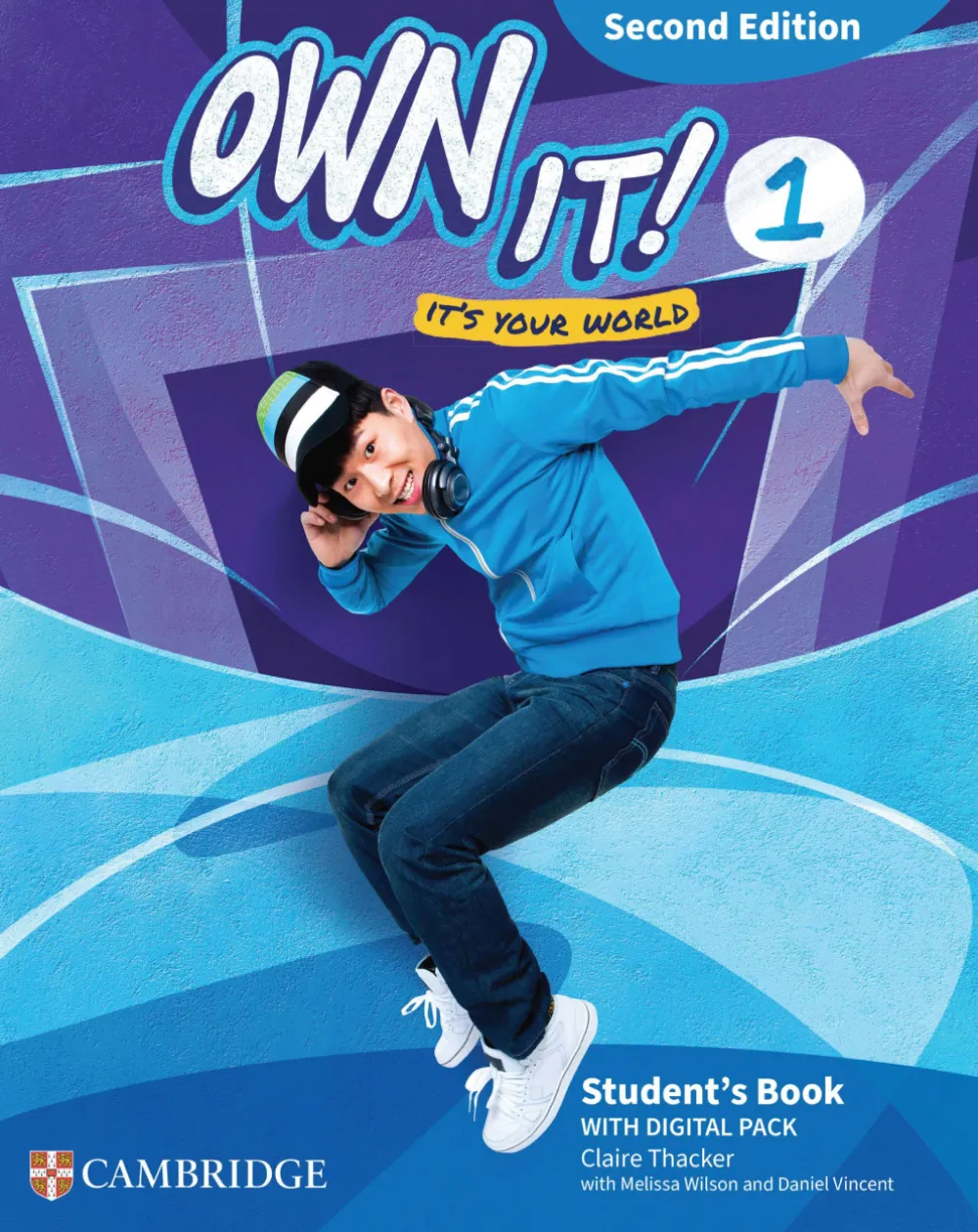
Own It! Second Edition 1 Student’s Book
Skills Development: Communication With Control
A common weakness in some teen courses is an over-focus on either “fluency” (with weak accuracy) or “form” (with low engagement). Own It! Second Edition is positioned to integrate:
- Skills work (listening, speaking, reading, writing)
- Language building (grammar, vocabulary, pronunciation)
- Strategy support (how to approach tasks, reflect, improve)
This integrated approach matters because language proficiency is not one skill; it’s an interlocking system. Learners need repeated cycles of:
1) input → 2) guided noticing → 3) controlled practice → 4) meaningful use → 5) feedback → 6) improved performance.
CEFR Pathway: A1+ to B1+ Across Four Levels
The series is explicitly described as spanning A1+ to B1+ across four levels.
From a curriculum-planning view, this is a practical range for:
- supporting mixed-ability groups,
- bridging the shift from primary English to more demanding secondary expectations,
- and building readiness for school-based assessment and wider competence development.
What Makes Own It! Second Edition Strong for Today’s Secondary Classrooms
Strength 1: Learner identity and voice
- Teen learners want to be seen as capable decision-makers. A course that repeatedly asks them to think, choose, and collaborate can shift classroom culture from compliance to participation.
Strength 2: Autonomy as a teachable skill
- Autonomy is often assumed; here it is treated as a target—built through routines: reflection, goal-setting, revising work, and monitoring progress.
Strength 3: Transfer beyond the classroom
- The “future-ready” framing aligns with what schools increasingly want: language proficiency plus communication skills, collaboration, and flexible thinking.
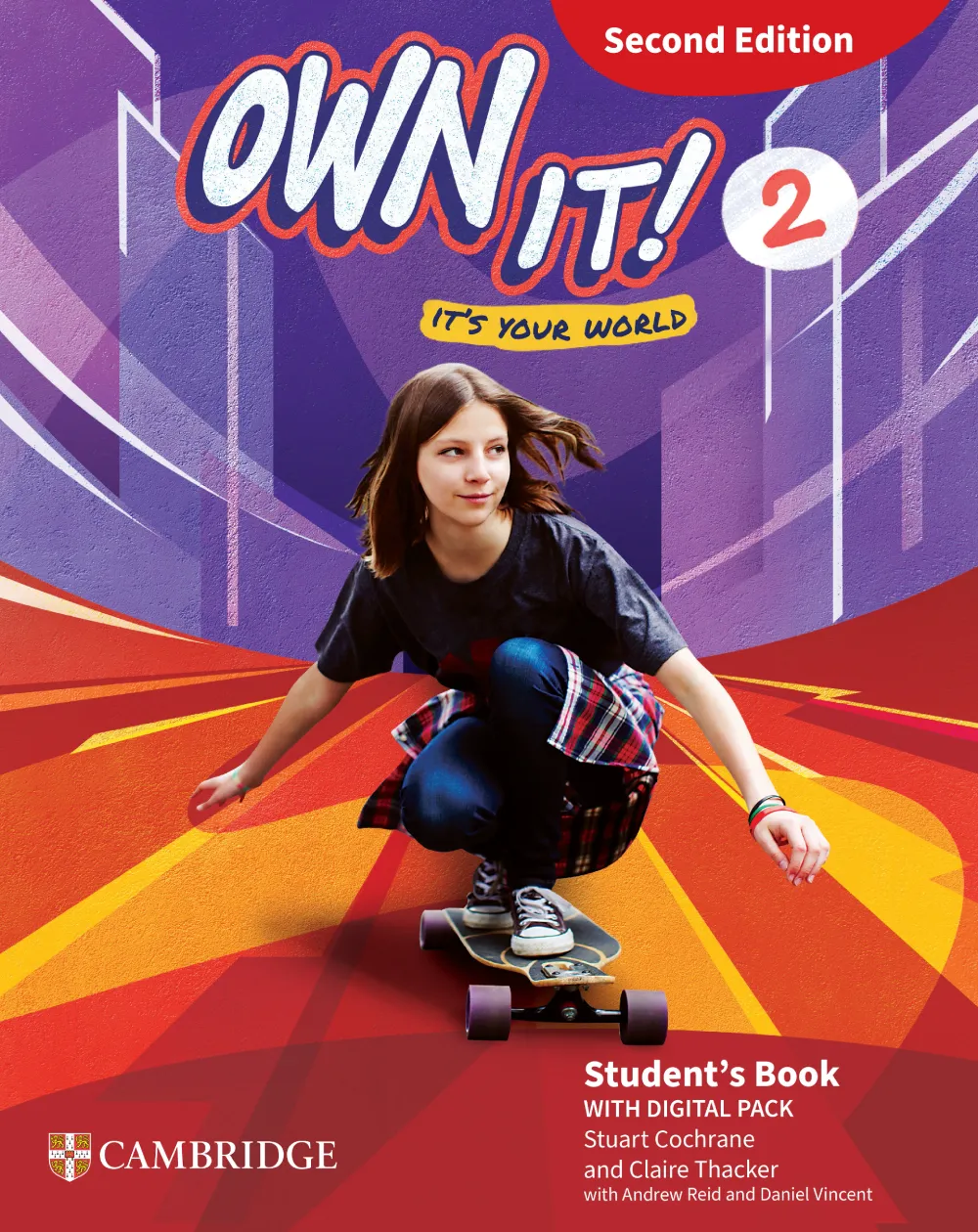
Own It! Second Edition 2 Student’s Book
Who is suitable for “Own It! Second Edition”?
Own It! Second Edition is most suitable for:
- Lower-secondary / middle-school learners (roughly ages 11–15) who need engaging topics and clear structure to stay motivated.
- Students at CEFR A1+ to B1+ (across the series), including mixed-ability classes where some learners need extra scaffolding while others need stretch.
- Teen learners who learn best through interaction—pair work, group work, projects, and class discussions—rather than silent, worksheet-only study.
- Learners who need confidence-building speaking support, with guided practice that helps them participate more comfortably in real classroom communication.
- Schools/teachers aiming to build “future-ready” skills alongside English: collaboration, critical/creative thinking, and learner autonomy (goal-setting, reflection, self-improvement).
- Programs that want an “all-in-one” course path (skills + grammar/vocabulary + projects), suitable for a typical timetable of around 80–90 hours per level (often extendable).
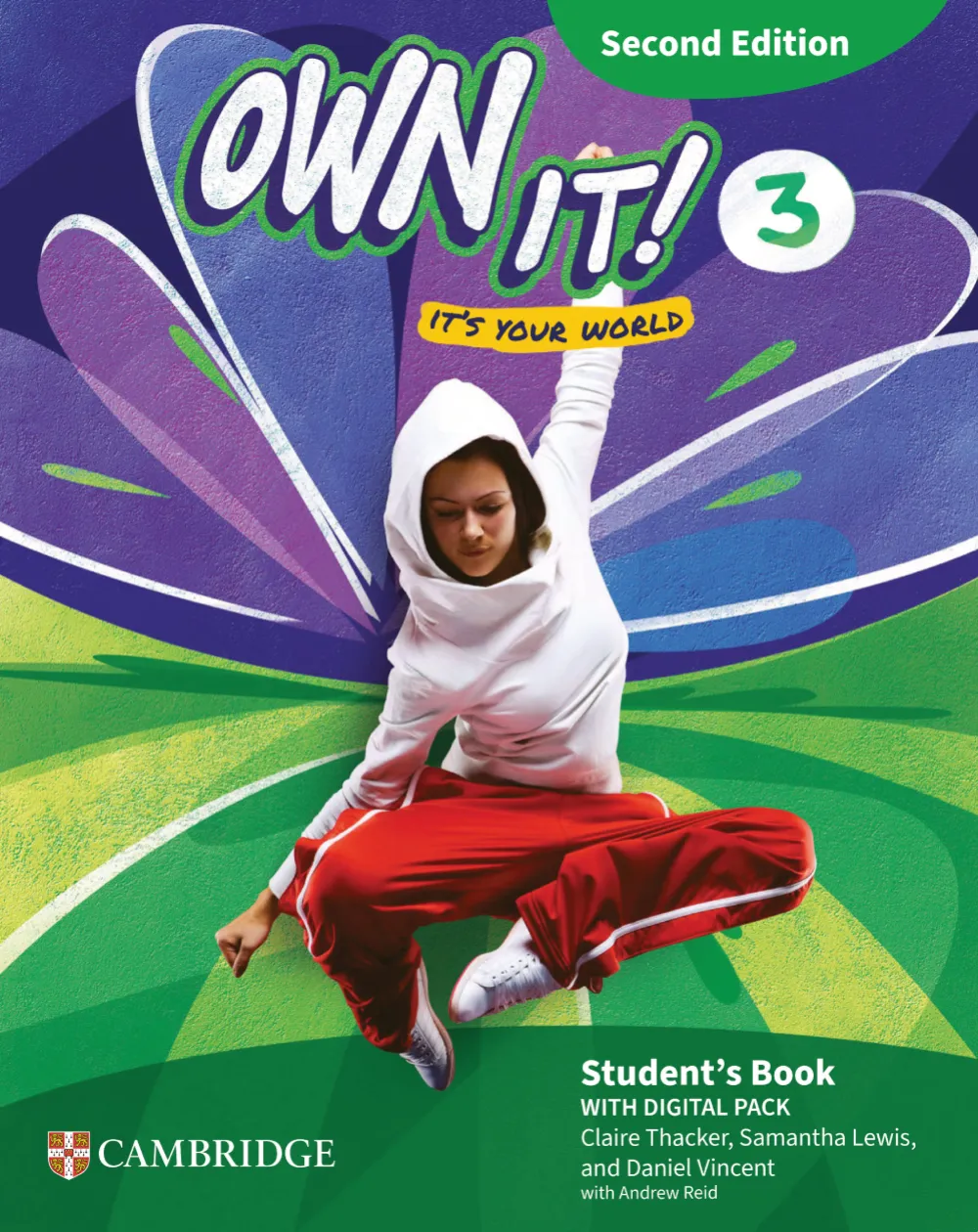
Own It! Second Edition 3 Student’s Book
The benefits of “Own It! Second Edition”
1) Builds confident, future-ready communicators
- The course is designed to help teens gain confidence and become more future ready, using meaningful speaking tasks and real-world communication.
2) Strong focus on life competencies (not only language)
- It puts clear emphasis on critical & creative thinking, collaboration, and learner autonomy—skills that directly improve classroom participation and long-term progress.
3) Global, cross-curricular topics that actually engage teens
- Units use vibrant global themes so learners feel the content is relevant—this tends to increase motivation and discussion quality.
4) Project-based learning with video support
- The Second Edition adds new video-based projects, giving students a clear purpose for language use (plan → collaborate → present), which boosts fluency and teamwork.
5) “Seamless learning + assessment” approach
- The course is positioned with an integrated learning-and-assessment flow, helping teachers track progress while keeping lessons communicative and practical.
6) Supported by digital tools/resources
- It’s supported by powerful digital tools/resources, which can extend practice beyond class and make lesson delivery smoother.
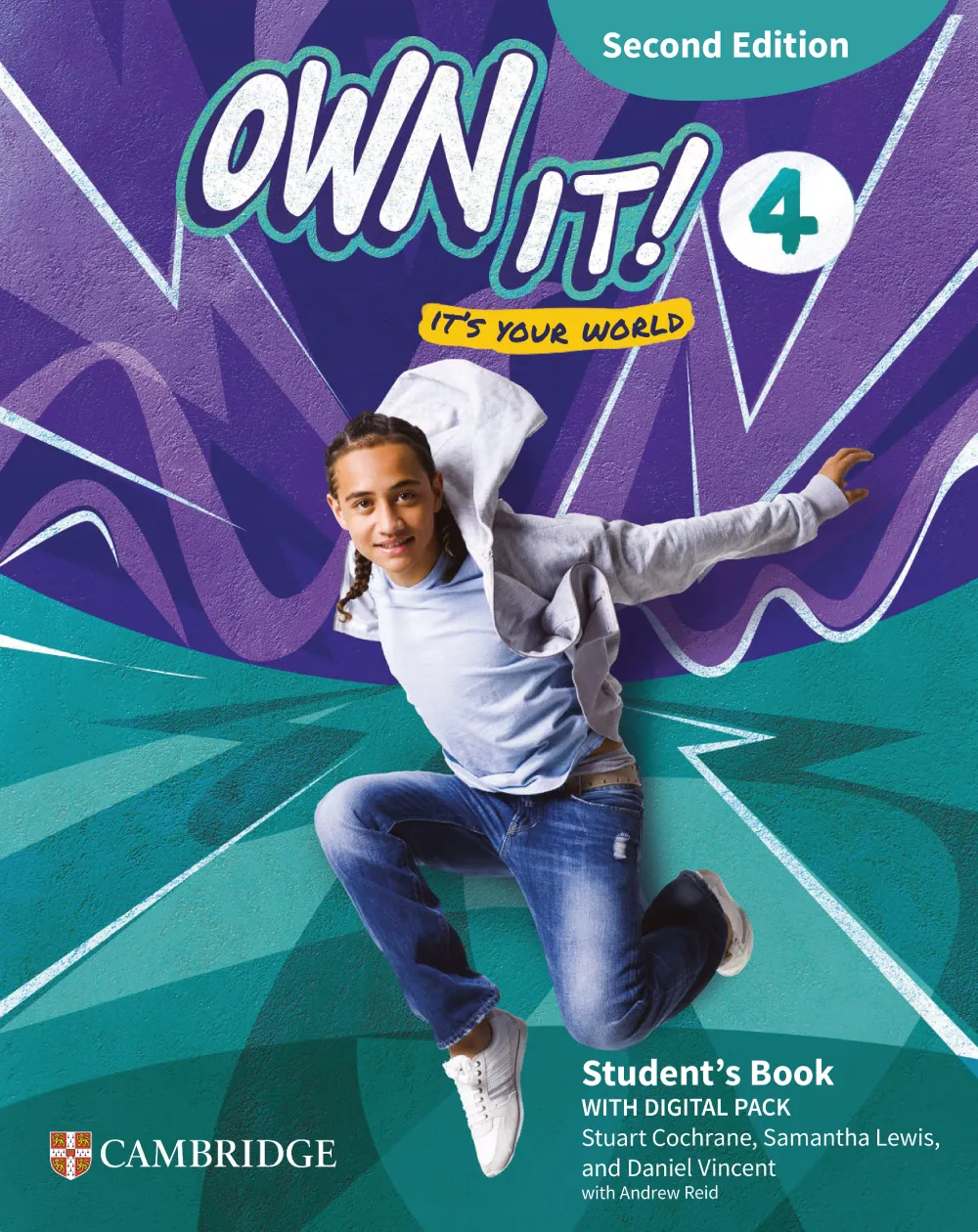
Own It 2nd Edition 4 Student’s Book
Effective learning strategies for “Own It! Second Edition”
1) Use a “Speak–Record–Improve” loop (weekly)
Goal: build confident speaking + measurable progress.
How (10–15 minutes, 1–2x/week):
- Do the unit speaking task in pairs.
- Students record 45–60 seconds (phone/Voice Memos).
- They listen once and fix 3 things only:
1) one pronunciation issue, 2) one grammar issue, 3) one vocabulary upgrade.
- Re-record once.
Why it works: repetition + feedback creates fast fluency gains without pressure.
2) Turn every vocabulary set into spaced review
Goal: long-term memory, not “learn today, forget tomorrow.”
Routine:
- Day 1: learn + use in a short speaking task
- Day 3: 3-minute quick quiz (matching / gap-fill / definitions)
- Day 7: “use 5 words in 3 sentences” + mini dialogue
- Day 14: include them in the next project or writing
This is the single most efficient upgrade for retention.
3) Learn grammar through “Noticing → Short practice → Real use”
Don’t stay long in controlled exercises.
Use a 3-step cycle:
- Noticing: highlight patterns from the text/audio (“What do you see?”)
- Short practice: 5–8 focused items only
- Real use: one speaking/writing task that forces the target form
This keeps accuracy improving while staying communicative.
4) Make projects lighter, but more frequent
Projects are powerful—but only when manageable.
Strategy: split into micro-milestones:
- Lesson A: plan + roles (2 minutes: who does what)
- Lesson B: language bank + draft
- Lesson C: rehearse + final output
- Lesson D (optional): reflection + improvements
Outcome: better collaboration, less chaos, higher-quality language use.
5) Use “Role Cards” for group speaking (prevents silence)
In teen groups, 1–2 students often dominate.
Give each role a job:
- Leader: keeps time, asks 2 questions
- Vocabulary coach: requires 3 unit words used
- Accuracy coach: listens for 2 grammar targets
- Reporter: summarizes the group result
This increases participation and pushes “use of unit language.”
6) Build autonomy with a 60-second reflection routine
At the end of class, students write:
- ✅ One thing I can do now
- 🔁 One thing I need to practice
- 🎯 One small goal for next lesson
Autonomy improves when reflection is short, consistent, and specific.
7) Upgrade listening with “Listen twice, different purpose”
Instead of listening once and checking answers:
- 1st listen: gist (What’s the topic? mood? main idea?)
- 2nd listen: details (numbers, reasons, examples)
- Optional 3rd: language mining (2 useful phrases to steal)
This mirrors how strong listeners process real-world audio.
8) Make writing faster with “Sentence frames + one upgrade rule”
For each writing task:
- Provide 5–8 sentence starters (frames)
- Add one rule: “Upgrade 3 sentences” by adding
- a linker (however, because, although), or
- an adjective/adverb, or
- a second clause
Teens write more fluently when the structure is clear.
9) Create a weekly “mini-test” that feels like a game
5 minutes at the start of class:
- 3 vocab questions
- 1 grammar item
- 1 speaking prompt (30 seconds)
Low stress + high frequency = big progress.