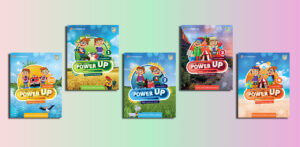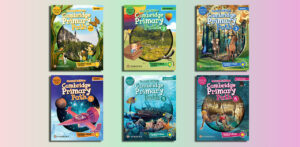
Power Up Second Edition
Level 1
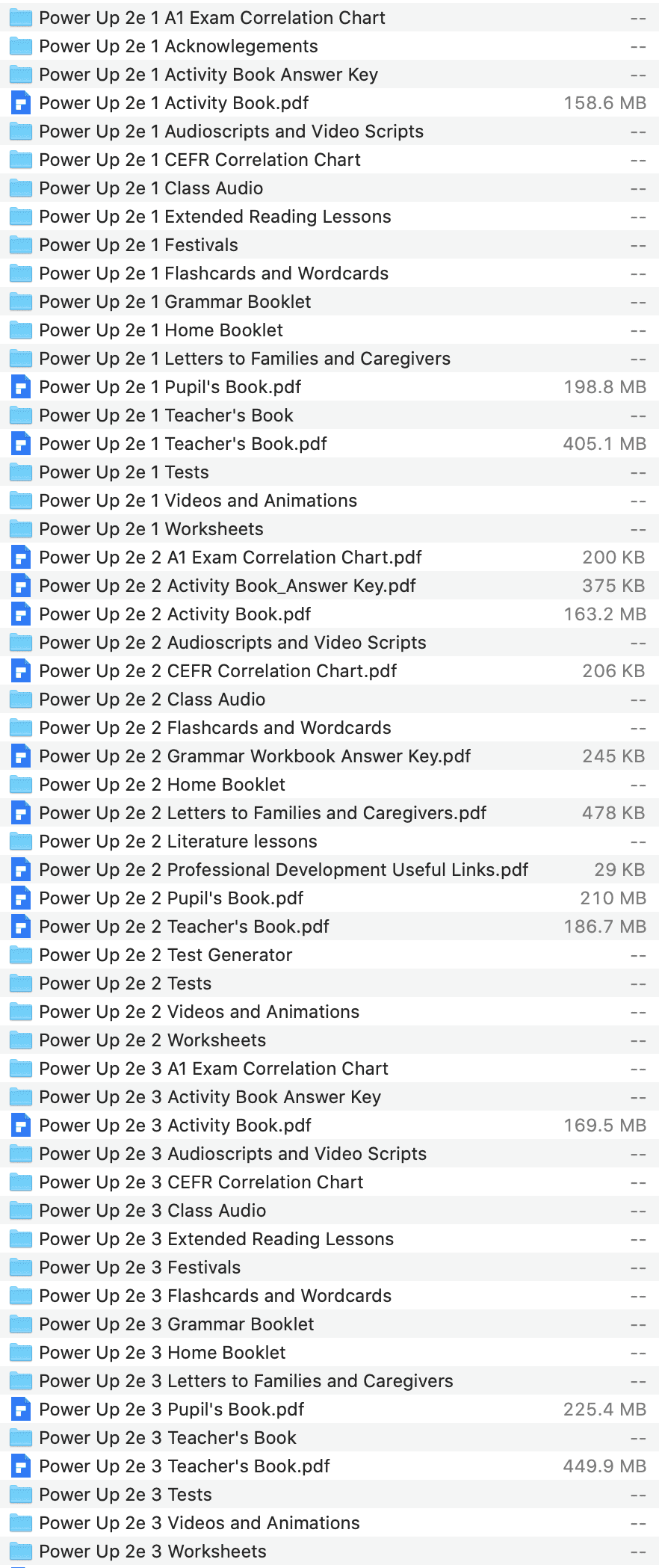
Power Up 2e 1 A1 Exam Correlation Chart
Power Up 2e 1 Acknowlegements
Power Up 2e 1 Activity Book Answer Key
Power Up 2e 1 Activity Book.pdf – Sample: Click
Power Up 2e 1 Audioscripts and Video Scripts
Power Up 2e 1 CEFR Correlation Chart
Power Up 2e 1 Class Audio
Power Up 2e 1 Extended Reading Lessons
Power Up 2e 1 Festivals
Power Up 2e 1 Flashcards and Wordcards
Power Up 2e 1 Grammar Booklet
Power Up 2e 1 Home Booklet
Power Up 2e 1 Letters to Families and Caregivers
Power Up 2e 1 Pupil’s Book.pdf – Sample: Click
Power Up 2e 1 Teacher’s Book – Sample: Click
Power Up 2e 1 Teacher’s Book.pdf
Power Up 2e 1 Tests
Power Up 2e 1 Videos and Animations
Power Up 2e 1 Worksheets
Level 2
Power Up 2e 2 A1 Exam Correlation Chart.pdf
Power Up 2e 2 Activity Book_Answer Key.pdf
Power Up 2e 2 Activity Book.pdf – Sample: Click
Power Up 2e 2 Audioscripts and Video Scripts
Power Up 2e 2 CEFR Correlation Chart.pdf
Power Up 2e 2 Class Audio
Power Up 2e 2 Flashcards and Wordcards
Power Up 2e 2 Grammar Workbook Answer Key.pdf
Power Up 2e 2 Home Booklet
Power Up 2e 2 Letters to Families and Caregivers.pdf
Power Up 2e 2 Literature lessons
Power Up 2e 2 Professional Development Useful Links.pdf
Power Up 2e 2 Pupil’s Book.pdf – Sample: Click
Power Up 2e 2 Teacher’s Book.pdf – Sample: Click
Power Up 2e 2 Test Generator
Power Up 2e 2 Tests
Power Up 2e 2 Videos and Animations
Power Up 2e 2 Worksheets
Level 3
Power Up 2e 3 A1 Exam Correlation Chart
Power Up 2e 3 Activity Book Answer Key
Power Up 2e 3 Activity Book.pdf – Sample: Click
Power Up 2e 3 Audioscripts and Video Scripts
Power Up 2e 3 CEFR Correlation Chart
Power Up 2e 3 Class Audio
Power Up 2e 3 Extended Reading Lessons
Power Up 2e 3 Festivals
Power Up 2e 3 Flashcards and Wordcards
Power Up 2e 3 Grammar Booklet
Power Up 2e 3 Home Booklet
Power Up 2e 3 Letters to Families and Caregivers
Power Up 2e 3 Pupil’s Book.pdf – Sample: Click
Power Up 2e 3 Teacher’s Book – Sample: Click
Power Up 2e 3 Teacher’s Book.pdf
Power Up 2e 3 Tests
Power Up 2e 3 Videos and Animations
Power Up 2e 3 Worksheets
Level 4
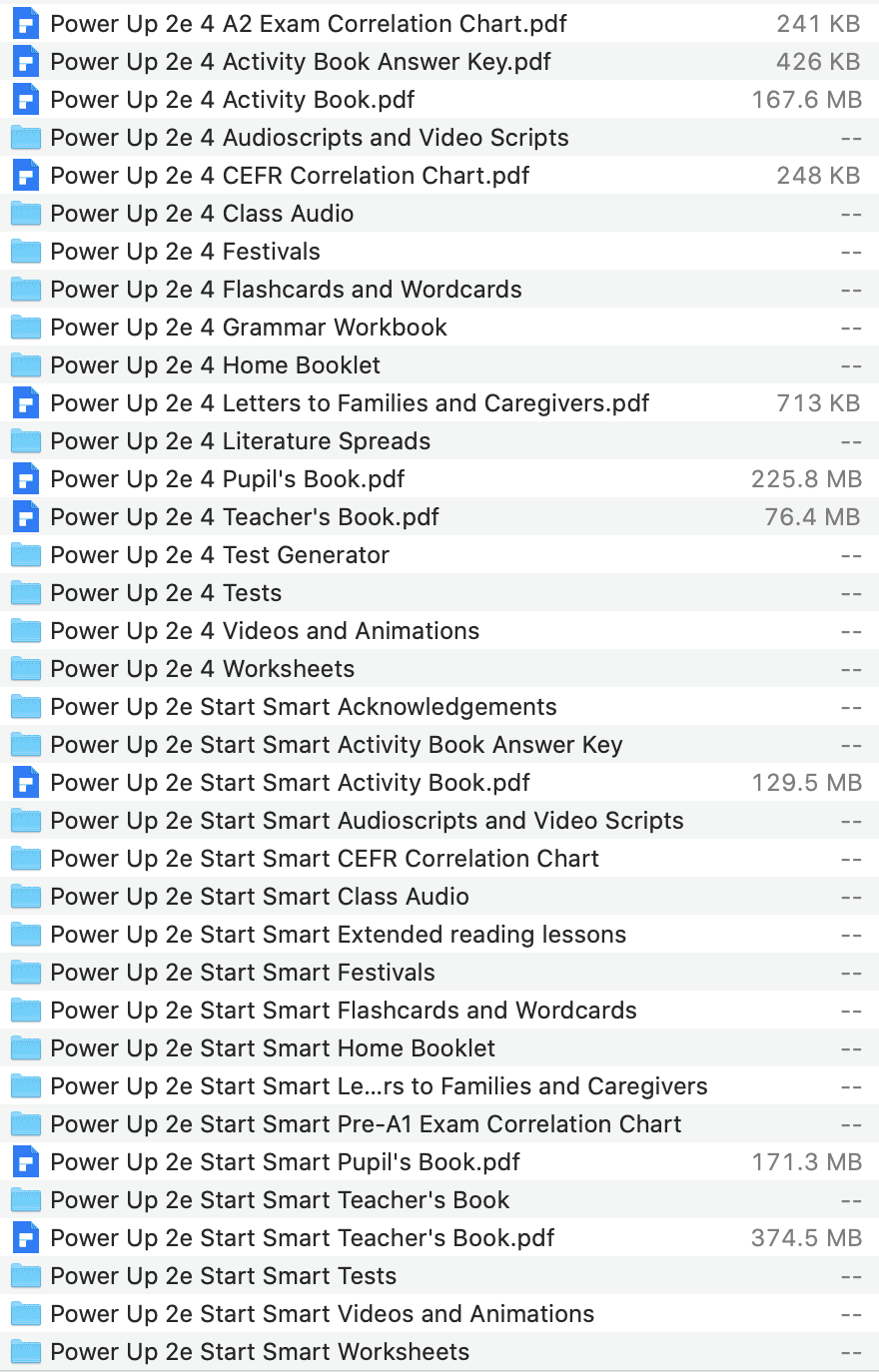
Power Up 2e 4 A2 Exam Correlation Chart.pdf
Power Up 2e 4 Activity Book Answer Key.pdf
Power Up 2e 4 Activity Book.pdf – Sample: Click
Power Up 2e 4 Audioscripts and Video Scripts
Power Up 2e 4 CEFR Correlation Chart.pdf
Power Up 2e 4 Class Audio
Power Up 2e 4 Festivals
Power Up 2e 4 Flashcards and Wordcards
Power Up 2e 4 Grammar Workbook
Power Up 2e 4 Home Booklet
Power Up 2e 4 Letters to Families and Caregivers.pdf
Power Up 2e 4 Literature Spreads
Power Up 2e 4 Pupil’s Book.pdf – Sample: Click
Power Up 2e 4 Teacher’s Book.pdf – Sample: Click
Power Up 2e 4 Test Generator
Power Up 2e 4 Tests
Power Up 2e 4 Videos and Animations
Power Up 2e 4 Worksheets
Level Start Smart
Power Up 2e Start Smart Acknowledgements
Power Up 2e Start Smart Activity Book Answer Key
Power Up 2e Start Smart Activity Book.pdf – Sample: Click
Power Up 2e Start Smart Audioscripts and Video Scripts
Power Up 2e Start Smart CEFR Correlation Chart
Power Up 2e Start Smart Class Audio
Power Up 2e Start Smart Extended reading lessons
Power Up 2e Start Smart Festivals
Power Up 2e Start Smart Flashcards and Wordcards
Power Up 2e Start Smart Home Booklet
Power Up 2e Start Smart Leters to Families and Caregivers
Power Up 2e Start Smart Pre-A1 Exam Correlation Chart
Power Up 2e Start Smart Pupil’s Book.pdf – Sample: Click
Power Up 2e Start Smart Teacher’s Book – Sample: Click
Power Up 2e Start Smart Teacher’s Book.pdf
Power Up 2e Start Smart Tests
Power Up 2e Start Smart Videos and Animations
Power Up 2e Start Smart Worksheets
๏ Power Up, 1st Edition 2018: Click here
| Name | Price | Buy |
|---|---|---|
| Power Up 2e Start Smart PDFs, Resources | $10 | |
| Power Up 2e 1 PDFs, Resources | $10 | |
| Power Up 2e 2 PDFs, Resources | $10 | |
| Power Up 2e 3 PDFs, Resources | $10 | |
| Power Up 2e 4 PDFs, Resources | $10 | |
| Power Up 2e PDFs, Resources - All 5 Levels | Original price was: $50.$40Current price is: $40. |
| Name | Price | Buy |
|---|---|---|
| Power Up 1 PDFs, Resources | $5 | |
| Power Up 2 PDFs, Resources | $5 | |
| Power Up 3 PDFs, Resources | $5 | |
| Power Up 4 PDFs, Resources | $5 | |
| Power Up 5 PDFs, Resources | $5 | |
| Power Up 6 PDFs, Resources | $5 | |
| Power Up Start Smart PDFs, Resources | $5 | |
| Power Up PDFs, Resources - All 7 Levels | Original price was: $35.$25Current price is: $25. | |
| Power Up 1 Presentation Plus Windows | $6 | |
| Power Up 2 Presentation Plus Windows | $6 | |
| Power Up 3 Presentation Plus Windows | $6 | |
| Power Up 4 Presentation Plus Windows | $6 | |
| Power Up 5 Presentation Plus Windows | $6 | |
| Power Up 6 Presentation Plus Windows | $6 | |
| Power Up Start Smart Presentation Plus Windows | $6 | |
| Power Up Presentation Plus Windows - All 7 Levels | Original price was: $42.$35Current price is: $35. | |
| Power Up 1 Presentation Plus Mac | $6 | |
| Power Up 2 Presentation Plus Mac | $6 | |
| Power Up 3 Presentation Plus Mac | $6 | |
| Power Up 4 Presentation Plus Mac | $6 | |
| Power Up 5 Presentation Plus Mac | $6 | |
| Power Up 6 Presentation Plus Mac | $6 | |
| Power Up Presentation Plus Mac - All 6 Levels | Original price was: $36.$30Current price is: $30. |
Power Up 1st Edition Presentation Plus Demo (Offline iTools)
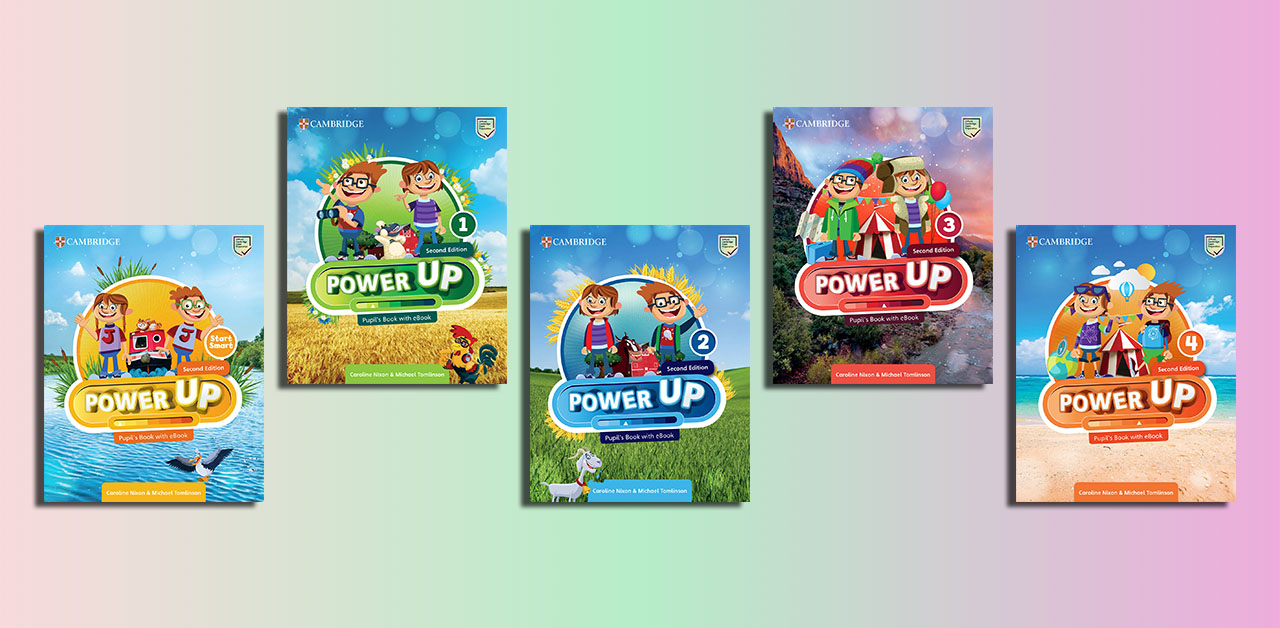
Overview of the “Power Up Second Edition”
Contents
| ✅ Coursebook: | Power Up, Secon Edition |
| ✅ Authors: | Michael Tomlinson, Caroline Nixon |
| ✅ Publisher: | Cambridge University Press |
| ✅ 7 Levels: | A1, A2, B1 |
| ✅ For: | Primary School |
| ✅ Publication year: | 2025 |
Power Up Second Edition is a primary English course that helps young learners build confident communication skills through a clear, lesson-by-lesson pathway and highly engaging classroom routines. It combines strong language development (vocabulary, grammar, pronunciation, and the four skills) with child-friendly, practical learning goals—so pupils don’t just “study English,” they use it to complete meaningful tasks, collaborate with classmates, and reflect on their progress.
At the heart of the course is a story-led approach with recurring characters and unit themes that feel relevant to children. This continuity makes lessons easier to follow, supports classroom motivation, and helps learners remember and recycle language naturally across the year.
What learners learn
Core language (step-by-step)
Learners are guided from presentation to controlled practice and then to freer use of language. Across units, they develop:
- Vocabulary in familiar, age-appropriate topics (school, family, hobbies, daily life, places, etc.)
- Grammar introduced in manageable chunks and recycled frequently
- Pronunciation and speaking confidence through guided practice and classroom interaction
- Listening, reading, writing tasks that steadily increase in length and challenge
This structured progression is especially helpful for primary learners because it keeps outcomes clear and success achievable.
How learning happens in each unit
A typical unit builds towards a purposeful outcome. You’ll often see a cycle like this:
- Language input in context (story, dialogue, or theme-based lesson)
- Guided practice (meaning-focused tasks, short skills work, accuracy building)
- Skills development (listening/reading strategies; speaking and writing support)
- A “mission” or final task where learners apply what they’ve learned in a collaborative, real-communication activity
- Reflection / self-check to help learners notice progress and set small goals
This structure supports both teachers (clear pacing) and learners (clear purpose).
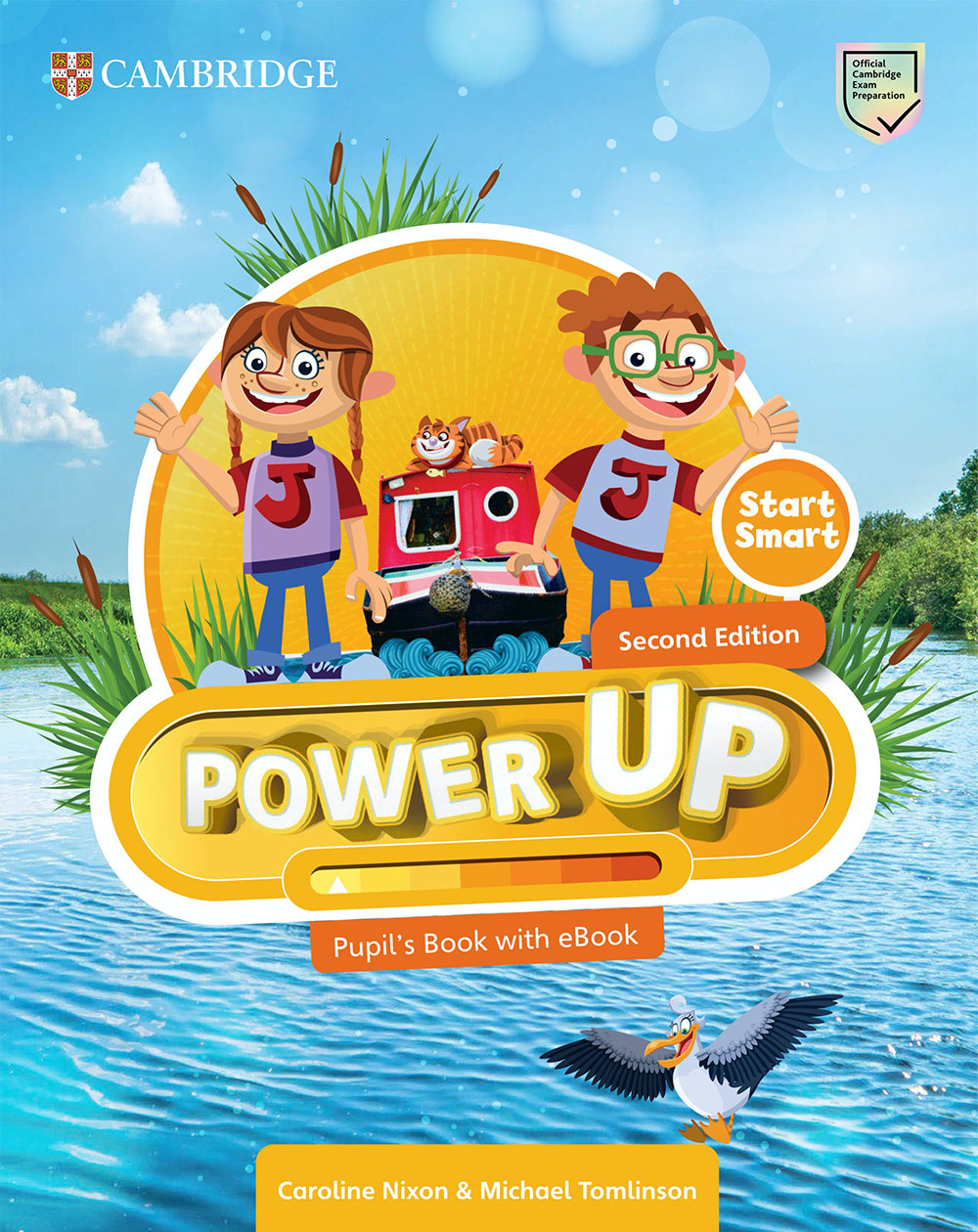
Power Up Second Edition Start Smart Pupil’s Book
Missions: purposeful communication for young learners
A standout feature of Power Up is the “mission” idea—tasks that encourage learners to use English to do something (plan, present, create, solve, or share). Missions are designed to:
- increase speaking time in class
- build collaboration and teamwork
- give learners a sense of achievement at the end of each unit
- connect English to real classroom communication, not only workbook exercises
Skills beyond language
While English is the focus, the course also supports broader classroom growth through:
- Thinking and problem-solving tasks (age-appropriate critical and creative thinking)
- Learning-to-learn habits (noticing mistakes, checking answers, building routines)
- Social skills (pair/group work, turn-taking, listening to others)
- Cross-curricular links that keep content varied and meaningful
These elements help learners become more independent and confident over time.
Exam and assessment support
Power Up Second Edition is commonly used in schools that want learners to progress toward Cambridge English pathways. It supports exam readiness in a gradual, low-pressure way by:
- building strong foundations in the four skills
- developing familiar classroom task types (listening for detail, short reading comprehension, guided writing)
- providing regular review and consolidation so learners progress steadily
For teachers, this approach makes assessment feel like part of learning, not a separate “test-only” track.
Why teachers choose it
- Clear, reliable unit structure that’s easy to teach and easy for children to follow
- High engagement through characters, stories, and purposeful tasks
- Regular recycling so learners remember language and build accuracy naturally
- Balanced skills work that supports real progress in listening, reading, speaking, and writing
- Practical classroom management through predictable routines and consistent lesson flow
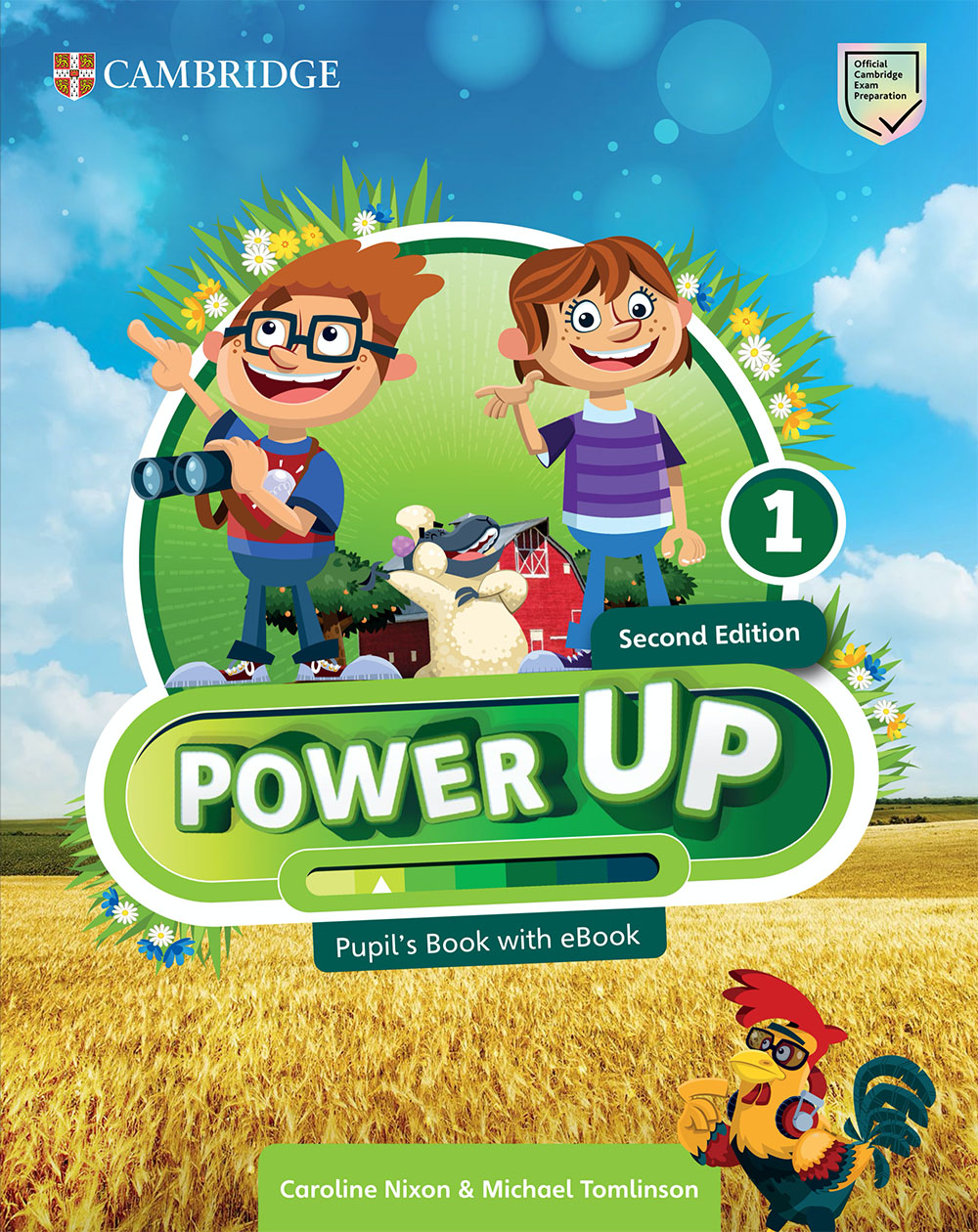
Power Up Second Edition 1 Pupil’s Book
Who is suitable for “Power Up Second Edition”?
“Power Up Second Edition” is suitable for:
- Primary school learners (young children in elementary/primary grades) who are learning English as a second/foreign language.
- Beginners to lower-intermediate primary levels, starting from a Starter/entry level (Start Smart) and progressing through multiple levels to build a complete primary pathway.
- Schools and English centers that want a structured, step-by-step course with clear unit routines, lots of guided practice, and steady skills development.
- Classes that need more speaking and collaboration, because the course uses missions/tasks that encourage pair work, group work, and real classroom communication.
- Learners preparing for Cambridge English Qualifications (young learners), since the course supports a gradual, low-pressure exam pathway while still keeping lessons fun and age-appropriate.
- Mixed-ability classrooms, where teachers benefit from extra practice and predictable lesson flow to support both slower and faster learners.
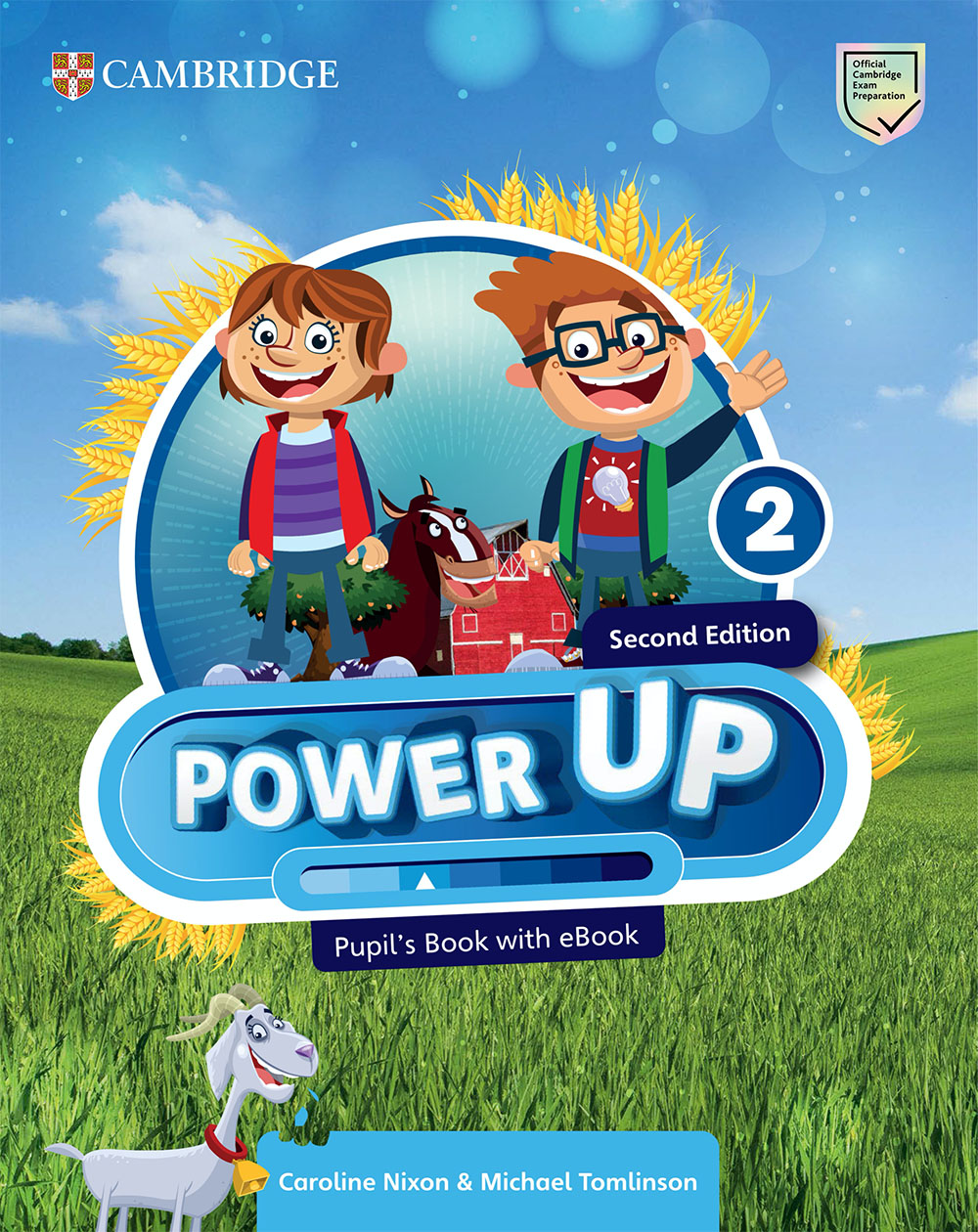
Power Up Second Edition 2 Pupil’s Book
The benefits of “Power Up Second Edition”
For learners (kids)
- Builds real communication confidence: Regular pair/group interaction plus “mission” tasks encourage children to use English, not just repeat it.
- Step-by-step progress that feels achievable: Clear lesson routines and frequent recycling help learners remember language and feel successful.
- Balanced 4-skill development: Listening, speaking, reading, and writing are developed steadily with age-appropriate support.
- Stronger “learning habits”: Reflection and self-check moments help children notice progress, set small goals, and become more independent.
- More motivation through stories and characters: Familiar characters and themes make lessons easier to follow and more engaging.
- Broader skills beyond language: Activities develop collaboration, creativity, problem-solving, and classroom responsibility—useful across subjects.
For teachers
- Easy-to-teach structure: Predictable unit flow reduces planning time and helps with pacing across weeks.
- Built-in consolidation: Regular review and practice make it easier to manage mixed-ability classes and prevent learning gaps.
- Clear outcomes through missions: End-of-unit tasks give you a natural “performance moment” to check learning in a positive way.
- Flexible delivery with print + digital: Audio/video and digital practice support smoother lesson delivery and homework routines.
- Assessment-friendly: Ongoing checks and review points help teachers track progress without relying only on big tests.
For schools and parents
- Consistent long-term pathway: A levelled series (including a Starter entry point) supports multi-year primary planning.
- Exam-readiness without pressure: Skills and task familiarity build gradually, helping learners feel prepared while keeping lessons fun.
- Better engagement = better retention: When children enjoy the lessons and see purpose in tasks, attendance, participation, and retention tend to improve.
- If you tell me your learners’ age range and current level, I can suggest the most suitable starting level (Start Smart / Level 1 / Level 2, etc.) and the best component set to use.
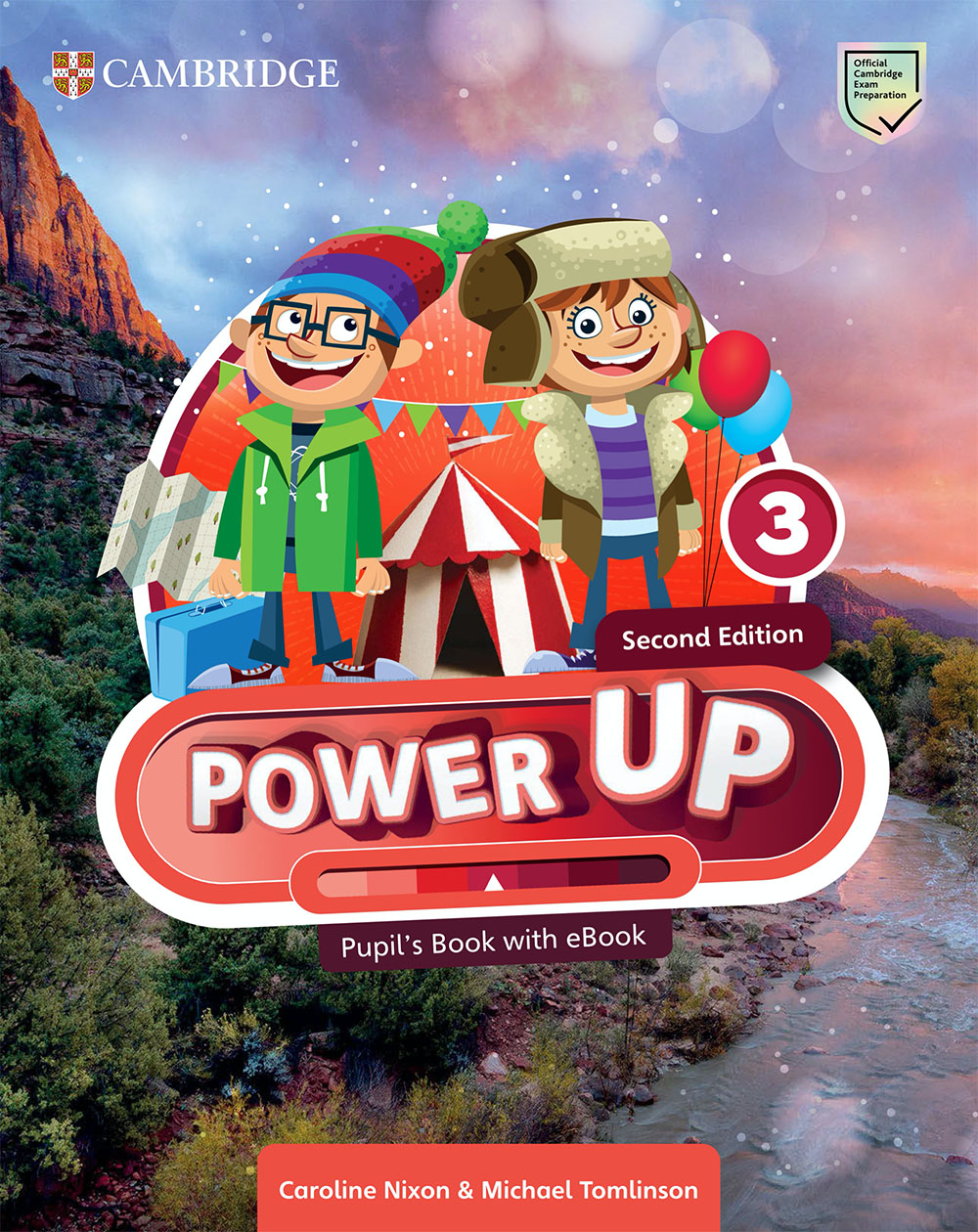
Power Up Second Edition 3 Pupil’s Book
Effective learning strategies for “Power Up 2nd Edition”
1) Use the “Mission” as the weekly goal
- Start each unit by telling learners: “This is our mission. This is what we will be able to do.”
- Break the mission into small steps (vocabulary → grammar → skills → mini speaking tasks → mission).
- End each week with a short mission rehearsal (2–3 minutes per pair/group) so the final task feels easy.
2) Teach vocabulary in 3 stages (fast + memorable)
Before class (1–2 minutes): show pictures/flashcards and elicit meaning.
In class:
- Say–Point–Repeat (choral + individual)
- Add TPR (actions) for verbs and classroom language
After class: 5-word mini review: learners write 5 words + 1 sentence (very short, consistent routine).
3) Make speaking automatic with “micro-speaking”
Every lesson, include 2–3 short speaking bursts:
- 10–20 seconds per student/pair
- Use simple frames:
- “I like ___ because ___.”
- “I can ___.”
- “Let’s ___.” / “We need to ___.”
This increases speaking time without losing control of the class.
4) Use “I do – We do – You do” for grammar
- I do: teacher models 2–3 examples on the board.
- We do: class completes 2 examples together (guided).
- You do: pairs do 3–5 items, then check quickly.
Keep grammar short but frequent—primary learners need repetition more than long explanations.
5) Listening: train “first listen = gist, second = details”
- 1st listen: “What is it about?” (choose picture / circle topic)
- 2nd listen: answer questions / fill gaps
- 3rd (optional): shadowing (repeat key lines) for pronunciation + confidence
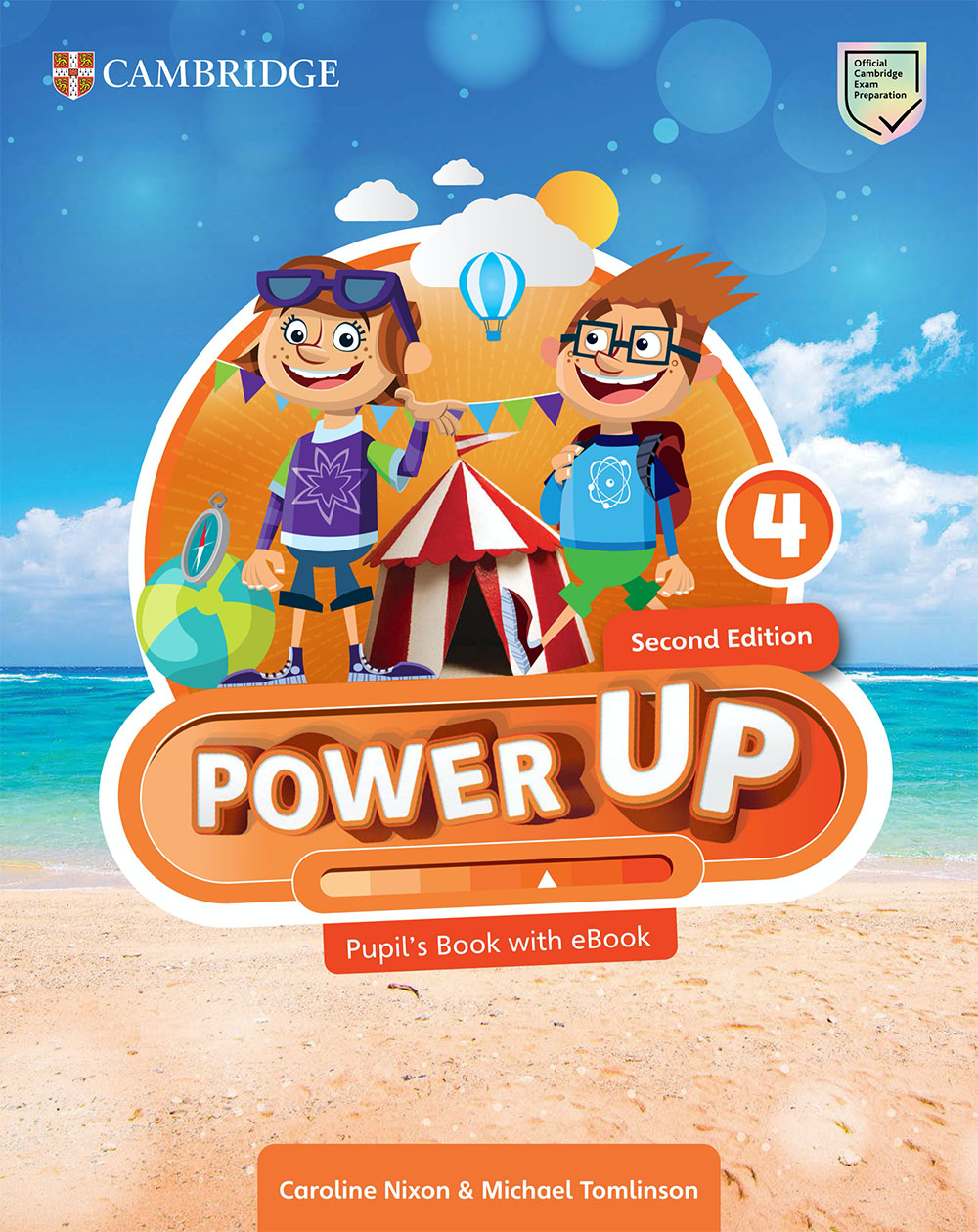
Power Up Second Edition 4 Pupil’s Book
6) Reading: use “Look – Predict – Read – Prove”
- Look: titles/pictures
- Predict: “What will happen?”
- Read: silent reading
- Prove: “Which line shows the answer?”
This prevents guessing and builds exam-style habits gently.
7) Writing: use “sentence frames” + very short drafting
Primary writing works best when learners have support:
- Give a frame first: “My favourite ___ is ___. I ___ every ___.”
- Let them write 2–4 sentences (quality > quantity).
- Add a checklist: capital letters, full stop, spelling of 3 key words.
8) Use the Activity Book strategically (not “extra homework”)
Best pattern:
- In-class: do the first 1–2 items together so learners understand.
- Homework: assign only what reinforces today’s lesson (5–10 minutes).
- Next lesson: quick check with pairs + 1 minute correction on the board.
9) Build a strong review routine (spaced repetition)
Use a simple cycle:
- Start of every lesson (3 minutes): review last lesson’s 6–8 words
- End of every lesson (2 minutes): exit ticket (1 question or 1 sentence)
- End of unit: mission performance + short self-check
10) Make reflection simple and positive
Use quick reflection (especially after mission stages):
- “Today I can ___.”
- “One word I remember is ___.”
- “Next time I will ___.”
This builds independence without making class feel “serious.”
11) Differentiate with “Must / Should / Could”
To handle mixed levels:
- Must: core task for everyone
- Should: extra sentence / extra question
- Could: challenge (add reason, add example, add dialogue)
Fast finishers stay engaged without pressuring others.
12) Parent support (home practice that actually works)
Recommend:
- Audio replay 3 times/week (3–5 minutes only)
- 5-word review + 1 sentence (twice/week)
- Read aloud 5 lines (2–3 times/week)
Short, consistent routines beat long study sessions.