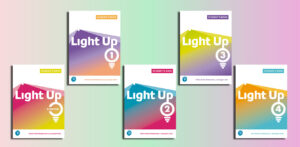
Light Up (PDFs Resources)
Level 1
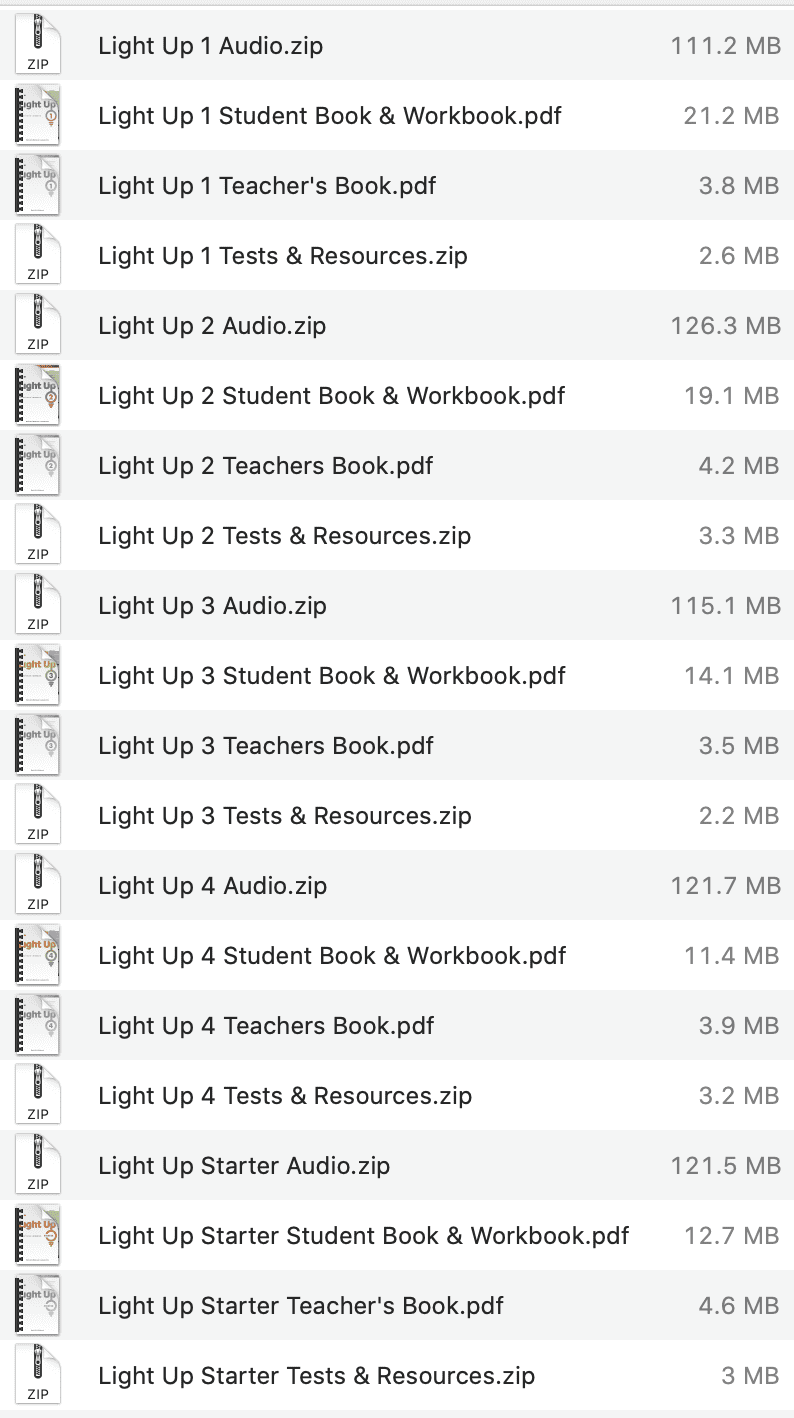
Light Up 1 Audio.zip
Light Up 1 Student Book & Workbook.pdf – Sample: Click
Light Up 1 Teacher’s Book.pdf
Light Up 1 Tests & Resources.zip
Level 2
Light Up 2 Audio.zip
Light Up 2 Student Book & Workbook.pdf – Sample: Click
Light Up 2 Teachers Book.pdf
Light Up 2 Tests & Resources.zip
Level 3
Light Up 3 Audio.zip
Light Up 3 Student Book & Workbook.pdf – Sample: Click
Light Up 3 Teachers Book.pdf
Light Up 3 Tests & Resources.zip
Level 4
Light Up 4 Audio.zip
Light Up 4 Student Book & Workbook.pdf – Sample: Click
Light Up 4 Teachers Book.pdf
Light Up 4 Tests & Resources.zip
Level Starter
Light Up Starter Audio.zip
Light Up Starter Student Book & Workbook.pdf – Sample: Click
Light Up Starter Teacher’s Book.pdf
Light Up Starter Tests & Resources.zip
| Name | Price | Buy |
|---|---|---|
| Light Up 1 PDFs, Resources | $7 | |
| Light Up 2 PDFs, Resources | $7 | |
| Light Up 3 PDFs, Resources | $7 | |
| Light Up 4 PDFs, Resources | $7 | |
| Light Up Starter PDFs, Resources | $7 | |
| Light Up PDFs, Resources - All 5 Levels | Original price was: $35.$30Current price is: $30. |
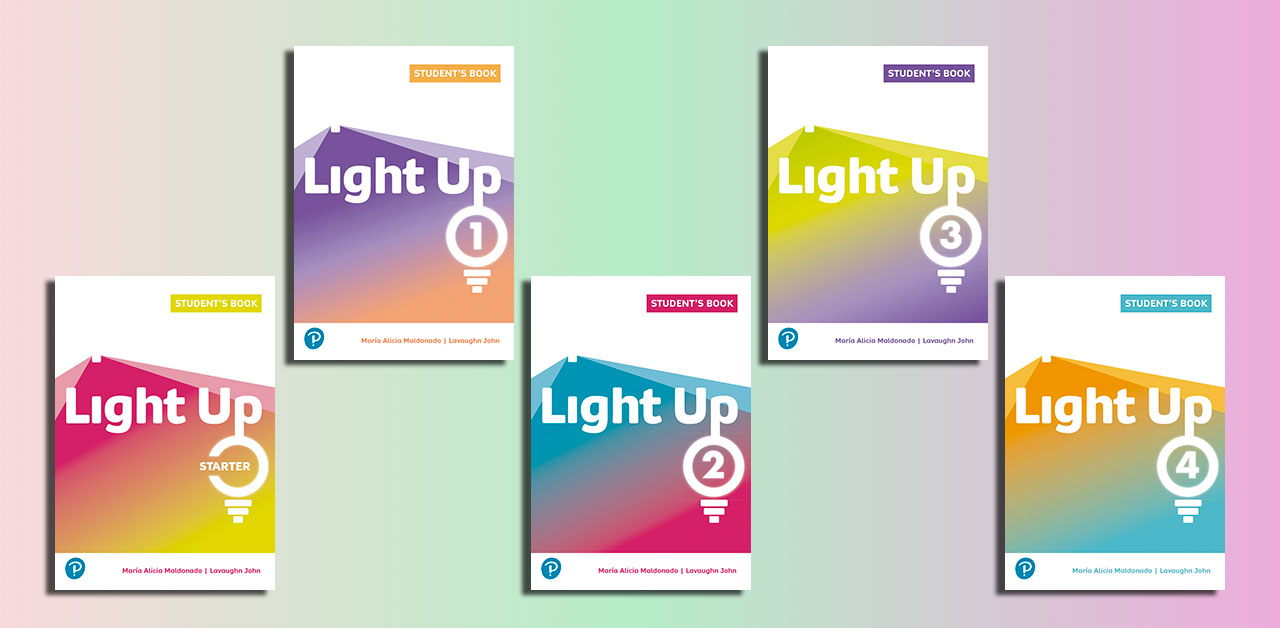
Overview of the “Light Up” by Pearson
Contents
| ✅ Coursebook: | Light Up |
| ✅ Publisher: | Pearson |
| ✅ Author: | Maria Alicia Maldonado, Lavaughn John |
| ✅ For: | Secondary, Junior High School |
| ✅ 6 Levels: | A1, A2 |
| ✅ English type: | British English |
| ✅ Publication year: | 2019 |
Light Up is a five-level, British English secondary course from Pearson designed for students aged roughly 10–16 who are working from below A1 up to around A2+/early B1 on the CEFR / Global Scale of English. It belongs to Pearson’s “Goal-Getters” strand for secondary and is particularly suited to schools that want strong language development integrated with 21st-century skills and social-emotional learning.
Course concept and aims
Light Up is built on a cognitive-functional view of language: grammar, vocabulary and pronunciation (stress, intonation and rhythm) are always presented together and linked to meaning in context. Any change in meaning implies a change in grammar or prosody, and students are guided to notice how intonation and rhythm affect what speakers really mean.
The series sees communication as the primary purpose of language. Activities are designed so that learners use English to solve problems, exchange ideas and carry out projects, rather than just manipulate isolated structures. Grammar is important only insofar as it helps learners express themselves clearly and appropriately.
The overarching goal is comprehensive education: helping teenagers grow not just as language learners, but as autonomous, reflective and empathetic individuals who can collaborate with others and understand their own strengths and weaknesses.
Levels, age and proficiency
- 5 levels: Starter, 1, 2, 3, 4
- British English
- Recommended age range: 10–16 years
- Recommended intensity: 1–3 hours a week
- Global Scale of English / CEFR coverage: from below A1 up to A2+/early B1
This makes Light Up ideal for lower to mid-secondary classes that need a gradual, supportive path through beginner and pre-intermediate stages.
Light Up 1 Student Book & Workbook
Key pedagogical pillars
From the Teacher’s Book methodological rationale and Pearson’s catalogue, Light Up rests on four main pillars:
21st-century skills development
- Collaboration, communication, critical thinking and creativity are systematically built into tasks and unit projects.
- Students learn to divide responsibilities, negotiate roles and reflect on how individual effort affects group results.
Meaningful use of language
- Each unit leads to a step-by-step project that ends in a group outcome (presentation, poster, survey, etc.), giving learners a real reason to use English.
- Topics are relevant to teenagers’ lives, encouraging personalisation and genuine communication.
Learner autonomy and reflection
- Self-assessment is built into the Workbook and “My learning record” pages; students regularly evaluate what they can do with the language.
- Tasks in class and on MyEnglishLab support learners to work at their own pace and to see assessment as part of learning, not just a final score.
Comprehensive and inclusive education
- Light Up explicitly addresses Social and Emotional Learning (SEL), Comprehensive Sexuality Education (ESI), inclusion and values, helping students develop intra- and interpersonal skills.
- Teacher guidance includes an Inclusive Classroom (IC) section with tips for supporting different learning needs and ensuring respectful discussion of diverse viewpoints.pearsonssha.
What you find in the course
Student’s Book + Workbook in a single volume
- Units with integrated grammar, vocabulary and skills
- “Self-check” pages and My learning record for self-assessment
- Pronunciation work on stress, intonation and rhythm
- Games and extra practice activities
Teacher’s Book (96 pages at some levels)
- Full methodological rationale and course overview
- Step-by-step lesson plans and extra activities
- Answer keys and audio scripts
- Diagnostic, unit and progress tests (A/B versions)
Assessment package
- A diagnostic test based on GSE learning objectives
- Unit tests and cumulative progress tests
- Guidance on both formative and summative assessment, including peer and self-assessment routines.
Light Up 2 Student Book & Workbook
Who is suitable for “Light Up”?
“Light Up” is best suited to teenage learners at lower–mid secondary level who need a gentle, well-scaffolded path from beginner English up to solid pre-intermediate.
1. Age & type of learner
- Designed as a secondary / teen course and grouped in Pearson’s Goal-Getters strand for secondary.
- Listed in international catalogues and third-party guides as an English course for children/teens around 13–15 years old.
So it’s ideal for:
- Lower and middle secondary school students
- Typical ages about 12–16, with a core focus on 13–15 depending on the school system
2. English level
- 5 levels: Starter, 1, 2, 3, 4
- Global Scale of English (GSE): roughly 10–46
- CEFR coverage: from below A1 up to around A2+/just below B1
That means Light Up suits:
- False beginners / elementary learners who have had a little English but lack confidence
- A1–A2 learners who need systematic consolidation
- Classes aiming to reach strong A2 / early B1 by the upper levels
It’s not designed as a high-level B1+ / B2 exam course, but as a general English, skills-rich programme for lower levels.
Light Up 3 Student Book & Workbook
3. Learning context
Light Up fits well in:
- Mainstream secondary schools needing 1–3 hours of English per week and a complete, coherent course across several grades.
- Language centres running teen general-English programmes (especially where classes are mixed-ability and you need lots of support and recycling).
- Inclusive classrooms, where some students progress more slowly; the Teacher’s Book gives explicit strategies to support different learning speeds and avoid embarrassment for weaker learners.
It’s especially suitable where schools want to integrate:
- 21st-century skills (collaboration, communication, critical thinking, creativity)
- Social-emotional learning, values and respect for different viewpoints, not just grammar and vocabulary.
4. Learner needs & goals
Light Up is a strong match for students who:
- Need clear, structured input with lots of recycling of grammar and vocabulary
- Benefit from project-based tasks and group work rather than only traditional exercises
- Need help developing confidence in speaking and listening, not just reading/writing
- Will respond well to topics about teen life, free time, school, technology and global culture
- Need support to become more autonomous and reflective learners (self-assessment, “My learning record”, etc.).
Light Up 4 Student Book & Workbook
The benefits of “Light Up”
1. Strong 21st-century skills focus
Light Up systematically develops the four “Cs”:
- Collaboration – students work together on step-by-step projects and shared tasks, learning to divide roles and understand how individual effort affects group results.
- Communication – every unit pushes meaningful listening, speaking, reading and writing, including pair- and group-work with clear communicative goals and real information exchange.
- Critical thinking – learners must read contexts, images and intonation, interpret hints and discuss their ideas before making decisions.
- Creativity – projects frequently require original solutions, presentations, videos or posters where answers are not in the book, encouraging learners to “find their own way out”.
This makes Light Up much more than a grammar course: it prepares teens for real-world study, work and life.
2. Meaningful, project-based language use
A core benefit is that students use English for real communication, not just exercises:
- Each unit leads to a step-by-step project with a concrete group outcome (presentation, survey, poster, mini-video, etc.).
- Language is presented and recycled in realistic contexts connected to teen life (school, friends, technology, free time), so it feels useful and relevant.pearsonssha.
- After every listening or reading, learners move into pair/group tasks with clear goals, so they actually say and write something meaningful.
This approach builds confidence: students see that English is a tool to do things – present ideas, solve problems, share opinions – rather than just a school subject.
3. Development of learner autonomy
Light Up is designed to help students take charge of their own learning:
- Guided discovery activities and “Pay attention!” boxes train learners to notice patterns and figure out rules instead of memorising them.
- My Learning Record pages let students self-assess with “Very well / I can manage / I need to revise” instead of only numerical grades, encouraging honest reflection and goal-setting.
- The integrated Workbook plus MyEnglishLab audio access allow learners to practise at their own pace at home, turning homework into a chance for independent study.
Benefit: learners gradually become more self-regulated and reflective, which is crucial for success in higher grades and exams.
4. Comprehensive education: SEL, values and inclusion
Light Up explicitly supports whole-person development, not just language:
- The series builds intra- and interpersonal skills by prompting reflection on social and emotional aspects (SEL), values, inclusion, identity and relationships.
- Teacher’s materials include work on Comprehensive Sexuality Education (ESI) and inclusive classroom (IC) practices, helping teachers handle sensitive topics respectfully and support different learning needs.
- Culture awareness and language awareness sections help students compare English and their own language/culture, encouraging tolerance and respect for different perspectives.
Result: classes become a space where teens practise empathy, respect and responsible behaviour while learning English.
5. Clear structure, recycling and support for mixed-ability classes
From a teaching and learning standpoint, Light Up is very supportive and organised:
- A spiral syllabus means key grammar and vocabulary come back in new contexts, so weaker students get second and third chances to master them.
- Regular Round Off pages every two units give built-in review and qualitative self-assessment of language in context.
- Extra games pages let fast-finishers keep practising while the teacher supports learners who need more help, reducing frustration and boredom in mixed-ability groups.
Benefit: teachers can keep the whole class moving together, and students experience steady, structured progress rather than random activities.
6. Strong skills and writing development
Light Up treats all skills seriously, with special strengths in listening/speaking and writing:
- Listening & speaking sections integrate lexis, grammar and phonology before tasks, and always require students to react and speak, not just tick options.
- Writing is approached as a process: learners see model texts, get tips, draft, receive feedback, edit and finally share their writing with the class.
This builds real communicative competence: students don’t just know rules; they can actually hold conversations and produce texts in English.
7. Integrated ICT and digital literacy
Projects often involve using technology, which is a big benefit for modern learners:
- Students are guided to use ICT safely for researching, creating slideshows, videos, infographics, surveys and more.
- Online components (e.g. MyEnglishLab or digital books via the Pearson English Portal) add interactive practice, automatic feedback and easy progress tracking.
This strengthens digital literacy and makes the course ideal for blended or hybrid teaching.
8. Complete, ready-to-use package for schools
For institutions, Light Up is attractive because it’s a fully resourced programme:
- Each level includes Student’s & Workbook, audio, Teacher’s Book, tests, answer key and assessment guide, plus extra resources.
- The series is aligned with the Global Scale of English (GSE) and CEFR from <A1 to below B1, giving a clear proficiency path across several school years.
Benefit: schools can adopt one coherent course for ages roughly 10–16 at lower levels, with consistent methodology, assessment and digital support.
Light Up Starter Student Book & Workbook
Effective learning strategies for “Light Up”
1. Follow the unit “rhythm” instead of cherry-picking pages
Light Up is designed as a step-by-step path: Activate → Vocabulary/Grammar → Skills → Project → Round Off → My learning record.
To make the syllabus work for you:
- Always start from the Activate/lead-in
- Spend a few minutes on the pictures, questions and short tasks at the start of the lesson.
- Get students predicting vocabulary and grammar from context, not from a list.
- Keep the sequence in each lesson
- Present new language in context, then move to controlled practice, then freer practice (e.g. Your turn!).
- Avoid skipping straight to exercises at the end of the page; you’ll lose the cognitive-functional flow the course is built on.
- Use Round Off every two units as a mini review cycle
- Treat Round Off pages like small “revision hubs”: students recycle language across tasks instead of isolated tests.
Result: learners see how ideas and language build from lesson to lesson, and weaker students benefit from the built-in recycling.
2. Turn projects into the “engine” of learning
Each unit has a Go for it! section leading to a final project (poster, survey, presentation, etc.).Scribd+1 Use this as the central goal, not a “maybe if we have time”.
How to maximise projects:
- Pre-project planning
- At the start of the unit, show the project page briefly and ask: “What will we need to talk/write about here?”
- Build a board list of functions (describe, compare, invite, give opinions, etc.).
- Language tracking during the unit
- Every time a useful phrase appears, label it “FOR OUR PROJECT” and add it to a project poster on the wall.
- Encourage students to add their own phrases they like.
- Group roles on project day
- Assign clear roles: language checker, designer, presenter, time-keeper.
- Tell them you will assess both language and collaboration/communication, linking directly to Light Up’s 21st-century skills focus.
- Short reflection after the project
- Two or three questions:
- What language helped you most?
- How did your group organise the work?
- What will you improve next time?
- Two or three questions:
Result: projects become real communicative events, not decorations, and students feel a clear purpose for each unit.
3. Use My learning record & Self-check as real tools, not decoration
At the end of each unit, Light Up gives a My learning record grid plus a Self-check page in the Workbook. These are designed for learner autonomy and even include functions and social-emotional skills, not just grammar.
Practical routine:
- Step 1 – Quiet self-assessment (5–7 minutes)
- Students read the “I can…” statements and mark:
- 😊 = very well
- 😐 = I can manage
- 😟 = I need to reviseStudocu+1
- Students read the “I can…” statements and mark:
- Step 2 – Micro-targets (2–3 minutes)
- Each student chooses ONE item marked 😟 and writes a mini-goal:
- “I will practise listening for key words in Unit 3 audio again today.”
- “I will rewrite my story using sequencing words.”
- Each student chooses ONE item marked 😟 and writes a mini-goal:
- Step 3 – Pair share (optional)
- In pairs, they compare one strength and one goal. This uses English and builds metacognition.
- Step 4 – Use Self-check as revision, not as a test
- Let them use notes and the Student’s Book while doing the Self-check page.
- The aim is to notice gaps before any formal test.
Result: students learn to monitor themselves, and you get clear signals on what to review, instead of guessing.
4. Exploit pronunciation alerts & audio to connect sound + meaning
Light Up’s rationale is to integrate syntax, lexis and prosody (stress, intonation, rhythm) to build meaning.pdfcoffee.com+1 The course already gives Pronunciation alerts and audio in every unit.
Turn this into a simple routine:
- Before listening or dialogue practice
- Ask students to listen only for intonation or stress once (e.g., rising/falling questions, stressed adjectives).
- Quick question: “Does the voice go up or down here?” rather than immediate comprehension questions.
- Shadowing, not just repeating
- Play short lines and have students speak along with the audio (shadowing).
- This encourages natural rhythm, not “robotic” repetition.
- Link pronunciation to communication
- Show how changing stress changes meaning:
- I didn’t say you could go. vs I didn’t say you could go.
- Connect this to functional aims in the unit: apologising, inviting, telling a story, etc.
- Show how changing stress changes meaning:
Result: learners sound more natural and understand more in real conversations, reinforcing the course’s communicative goal.
5. Use the inclusive & SEL guidance to support every learner
The Teacher’s Book emphasises Social and Emotional Learning (SEL), Comprehensive Sexuality Education (ESI) and Inclusive Classroom (IC) tips—there are even suggestions to avoid embarrassing slower students and to develop self- and interpersonal awareness.
Practical ideas:
- Flexible grouping
- Sometimes group mixed-ability (peer support), sometimes similar-ability (safe practice for weaker learners).
- Rotate roles in group work so shy students can start as “secretary” or “time-keeper”, then later try “speaker”.
- Value-based questions in context
- When a reading touches on friendship, diversity, or personal goals, add one or two short reflection tasks:
- “Do you agree with this character? Why / why not?”
- “How would you react in this situation?”
- When a reading touches on friendship, diversity, or personal goals, add one or two short reflection tasks:
- Normalise mistakes
- Use My learning record to show grammar accuracy is one part of progress; functions and attitudes also matter.
Result: the emotional climate of the classroom improves, which directly supports language risk-taking and participation.
6. A simple study plan for students using Light Up
You can share this with learners (and parents):
- Every lesson day
- Re-read the main dialogue or text at home and listen to the audio again.
- Underline 5–10 useful chunks and say them aloud three times.
- Vocabulary notebook / app
- Write new words in phrases, not alone:
- ❌ interesting
- ✅ an interesting film, very interesting for me
- Add translations and one personal sentence.
- Write new words in phrases, not alone:
- Weekly review
- On the weekend, do:
- one Round Off page or similar tasks, and
- look back at My learning record to see one thing that improved.
- On the weekend, do:
- Project preparation
- Before project lessons, think of personal ideas in L1 first (brainstorm), then try to express them with vocabulary from the unit.
Result: students make steady progress and arrive to class “warmed up”, so class time can focus on communication.