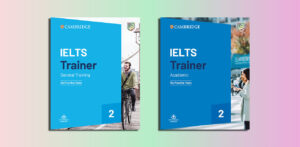
IELTS Trainer 2 (PDFs, Resources)
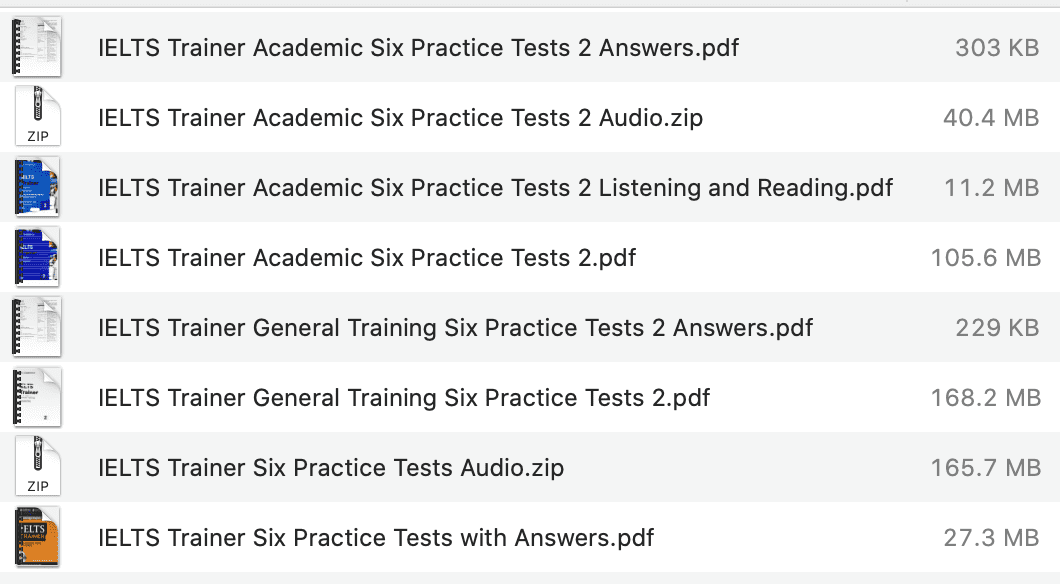
IELTS Trainer Academic Six Practice Tests 2 Answers.pdf
IELTS Trainer Academic Six Practice Tests 2 Audio.zip
IELTS Trainer Academic Six Practice Tests 2 Listening and Reading.pdf – Sample: Click
IELTS Trainer Academic Six Practice Tests 2.pdf – Sample: Click
IELTS Trainer General Training Six Practice Tests 2 Answers.pdf
IELTS Trainer General Training Six Practice Tests 2.pdf – Sample: Click
IELTS Trainer Six Practice Tests Audio.zip
IELTS Trainer Six Practice Tests with Answers.pdf – Sample: Click
| Name | Price | Buy |
|---|---|---|
| IELTS Trainer 2 (PDFs, Resources) | $8 |

Overview of the “IELTS Trainer 2” by Cambridge
Contents
| ✅ Coursebook: | IELTS Trainer |
| ✅ Publisher: | Cambridge University Press |
| ✅ English type: | International English |
| ✅ For: | Exam, IELTS |
| ✅ Levels: | B1, B2, C1 |
| ✅ Publication year: | 2019 |
“IELTS Trainer 2” is the second installment in Cambridge’s IELTS Trainer series and actually refers to two companion books:
- IELTS Trainer 2 Academic: Six Practice Tests
- IELTS Trainer 2 General Training: Six Practice Tests
Both are official Cambridge University Press exam-preparation books, each providing six full IELTS practice tests that closely mirror the real exam in format, difficulty and timing. They are written by Cambridge exam specialists such as Amanda French, Miles Hordern, Anethea Bazin, Miles Hordern, Katy Salisbury and others.
1. Overall structure of IELTS Trainer 2
Both Academic and General Training versions share the same overall layout:
Introduction
- Overview of the IELTS exam (Academic or General).
- Explanation of the book’s structure and how to use it.
- Description of test format, task types and scoring system.
Training and Exam Practice – Tests 1 & 2
- Two full tests with step-by-step guidance.
- “Training” exercises before you do each paper (Listening, Reading, Writing, Speaking).
- Tips, strategy boxes, and common mistake warnings based on real candidate performance.
- Extra grammar, vocabulary and writing practice targeting typical problem areas.
Full Practice Tests – Tests 3–6
- Four complete tests presented with minimal guidance, simulating the real test experience.
- Timed practice so learners can build stamina and refine exam technique.
Answer key, audio scripts and sample answers
- Detailed answer keys for Listening and Reading with explanations of why answers are right or wrong.
- Full listening audioscripts.
- Model Writing answers at different band levels to show what a good response looks like.
- Downloadable audio files for all Listening tests (via Cambridge resources).
This structure lets learners move from guided training to independent exam practice within the same book.
2. Academic vs General Training versions
Although the framework is the same, the content is tailored to each module:
IELTS Trainer 2 Academic
- Designed for those aiming for university study or professional registration.
- Reading texts are longer, more academic, taken from books, journals and magazines.
- Writing Task 1 focuses on describing graphs, charts, processes, or maps; Task 2 is an academic-style essay.
- Language focus tends to be more formal and academic.
IELTS Trainer 2 General Training
- Targeted at candidates migrating for work, training or immigration.
- Reading texts are more everyday (notices, advertisements, workplace documents, magazines).
- Writing Task 1 is a letter (formal, semi-formal or informal); Task 2 is a general-discussion essay.
- Strong emphasis on practical day-to-day language and workplace scenarios.
In both versions, Listening and Speaking follow the same structure as the real IELTS exam, and the book also reflects updated Listening terminology (e.g. “Part 1” instead of “Section 1”) and recent format tweaks from 2020 onwards.
3. Level and target users
IELTS Trainer 2 is not for complete beginners. Cambridge and many reviewers recommend it for learners who already have:
- A solid intermediate level of English (around IELTS 4.5–5.0+).
- A basic familiarity with the IELTS format and task types.
- A target band score in the range of 6.0–7.0 (often 6.0–6.5).
It is particularly useful for:
- Students in the final 2–3 months before their real exam.
- Learners who have finished a skills-building course and now need full-test practice.
- Teachers who want ready-made, exam-style tests with detailed guidance and answer explanations.
4. Key strengths of IELTS Trainer 2
Six high-quality, authentic-style tests
- The tests are written by Cambridge exam experts, so the difficulty, timing, and question design are very close to real exam papers—sometimes slightly tougher, which makes the real test feel more manageable.
Deep exam training in the first two tests
- Tests 1–2 double as a mini-course: you learn how to think like the test – analysing the question, predicting information, scanning/skimming effectively, and structuring Writing answers clearly.
Focus on typical learner errors
- Extra grammar, vocabulary, and Writing tasks are based on analysis of real candidate scripts, so they target the mistakes IELTS students actually make.
Excellent answer key and explanations
- Unlike many simple “test collections”, IELTS Trainer 2 gives clear explanations in the answer key and audioscripts. This helps self-study learners understand why they missed a question and how to avoid that mistake next time.
Updated and still relevant
- Even though both volumes were released in 2019, they were designed to match recent exam trends and remain widely recommended for candidates preparing now.
5. How learners typically use IELTS Trainer 2
A common, effective way to use the books is:
Diagnostic pass with a guided test
- Do Test 1 (Training + Exam Practice) under relaxed conditions to see your current level. Carefully read all tips and explanations.
Intensive skill-building with Tests 1–2
- Work slowly through the “Training and Exam Practice” sections, repeating tricky task types, studying model answers and underlining useful language.
Timed practice with Tests 3–6
- Take each test under real exam timing (including transfer time, break, etc.), then mark it and analyse every mistake using explanations and audioscripts.
Writing and Speaking recycling
- Reuse Writing questions to draft improved answers, and practice Speaking test topics with a teacher, partner, or recording app—using the Trainer prompts as realistic mock tests.
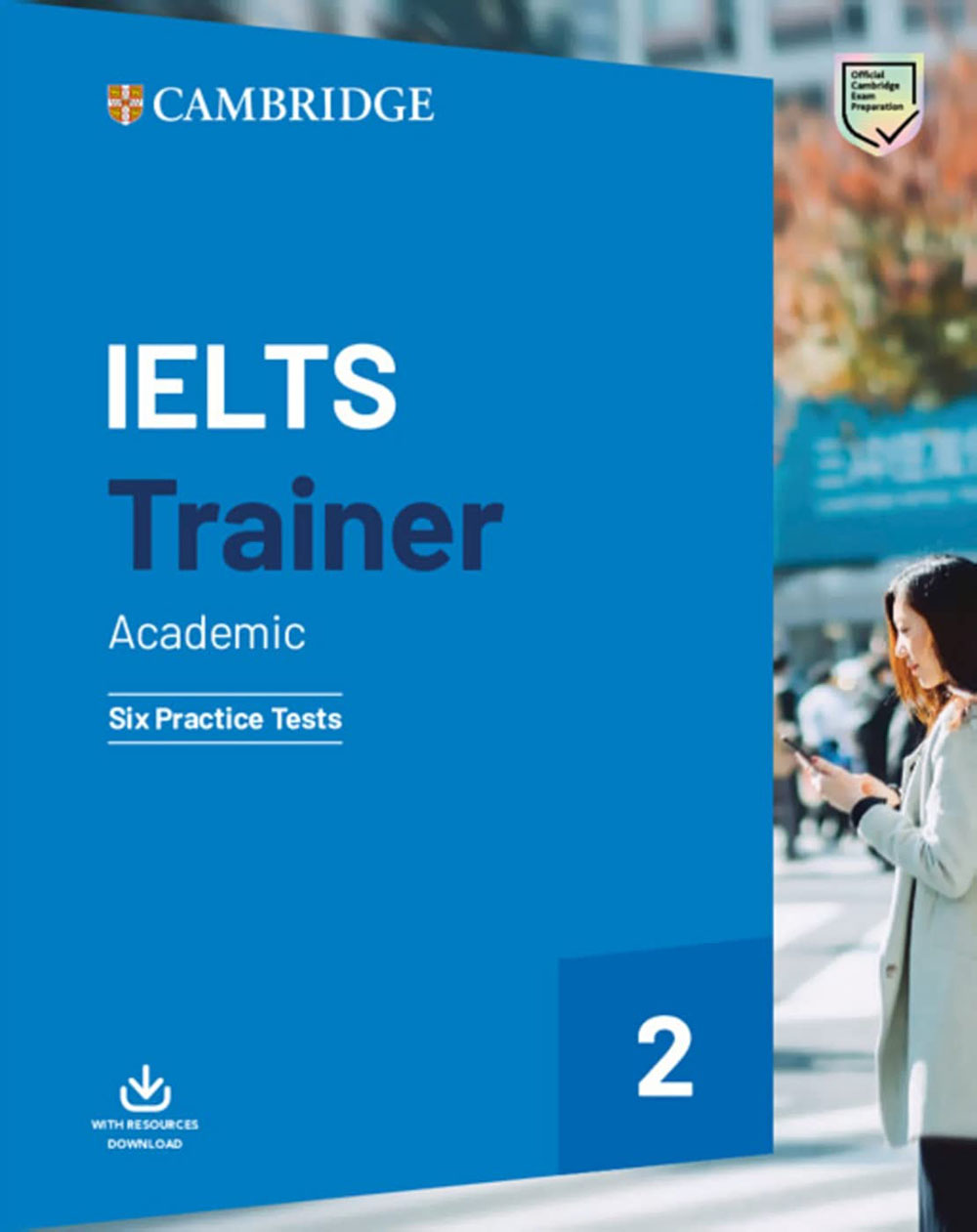
IELTS Trainer Academic Six Practice Tests 2
Who is suitable for “IELTS Trainer 2”?
“IELTS Trainer 2” is best suited for learners who already have some English base and want serious, exam-style practice rather than “first steps” IELTS training.
1. Level of English & Target band
- Learners around B1–B2 level (roughly IELTS 4.5–6.0+).
- Candidates aiming for about Band 6.0–7.0 in the real exam.
- Students who can already understand basic texts and conversations and now need to refine skills, accuracy and timing.
2. Type of candidate
- Academic route:
- Students planning to study at college/university or apply for professional registration → use IELTS Trainer 2 Academic.
- Migration / work route:
- Candidates taking IELTS for immigration, training courses, or employment → use IELTS Trainer 2 General Training.
3. Study situation
Learners who:
- Have 2–3 months before the exam and want structured full-test practice.
- Have finished a general IELTS or skills-based course and now need realistic practice tests.
- Prefer books with detailed tips, strategies, and answer explanations, not just test papers.
4. Teachers & classes
- IELTS teachers who want:
- Ready-made mock tests for classroom use.
- Extra training activities, tips and model answers to teach exam technique.
- Reliable, Cambridge-style test material close to the real exam.
5. Who it’s not ideal for
- Complete beginners or learners below B1 who still struggle with basic grammar and everyday communication.
- Students who have never seen the IELTS format and need a very gentle introduction (they may need a more basic skills book first).
The benefits of “IELTS Trainer 2”
Here are the main benefits of using “IELTS Trainer 2” (Academic or General Training):
1. Six full, authentic-style practice tests
You get six complete IELTS tests that closely mirror the real exam in format, question types, difficulty and timing. This helps you build stamina, get used to the pressure, and avoid surprises on test day.
2. Guided training in the first two tests
Tests 1–2 are not just blank tests. They include:
- Step-by-step advice on how to tackle each paper (Listening, Reading, Writing, Speaking)
- 100+ tips and dozens of “advice boxes”
- Extra training activities before and after the tasks
This turns the first part of the book into a mini course on exam strategy, not just a collection of papers.
3. Focus on typical candidate mistakes
The grammar, vocabulary and writing practice activities are based on real student exam scripts, so they target the errors IELTS candidates most often make (wrong tenses, weak linking, poor overview, etc.). That means your practice time is spent on the problems that actually lower scores in real exams.
4. Clear answer keys, audioscripts and explanations
IELTS Trainer 2 comes with:
- Downloadable audio for all Listening tests
- Full audioscripts
- Answer keys with clear explanations
This makes it much easier for self-study learners to check their work, understand why an answer is right or wrong, and gradually fix their weaknesses.
5. Suitable level and realistic progression
The book is designed mainly for learners around IELTS 4.5+ aiming for band 6.0–6.5 or higher.
- You start with supported practice (Tests 1–2 with guidance).
- Then you move to independent exam practice (Tests 3–6 under real timing).
This progression helps you diagnose your level, train skills, then test yourself in conditions close to the real exam.
6. Works for both Academic and General pathways
IELTS Trainer 2 is available in two versions: Academic and General Training. The overall training style is the same, but Reading and Writing texts are adapted to each module (academic texts vs everyday/workplace texts, reports vs letters, etc.), so you can prepare for exactly the test you’re taking.
7. Reliable Cambridge-quality content
The series is published by Cambridge University Press & Assessment, the same institution behind official IELTS materials and Cambridge IELTS test books. That reputation is why many teachers and schools recommend IELTS Trainer 2 as a trustworthy, exam-standard resource.
8. Flexible for class or self-study
Because it has:
- Teacher’s notes (in many editions)
- Tips and training activities
- Full keys and scripts
…it can be used effectively in class with a teacher or at home for self-study. Teachers can build full mock exams from it; students can use it to structure their final 4–8 weeks of preparation.
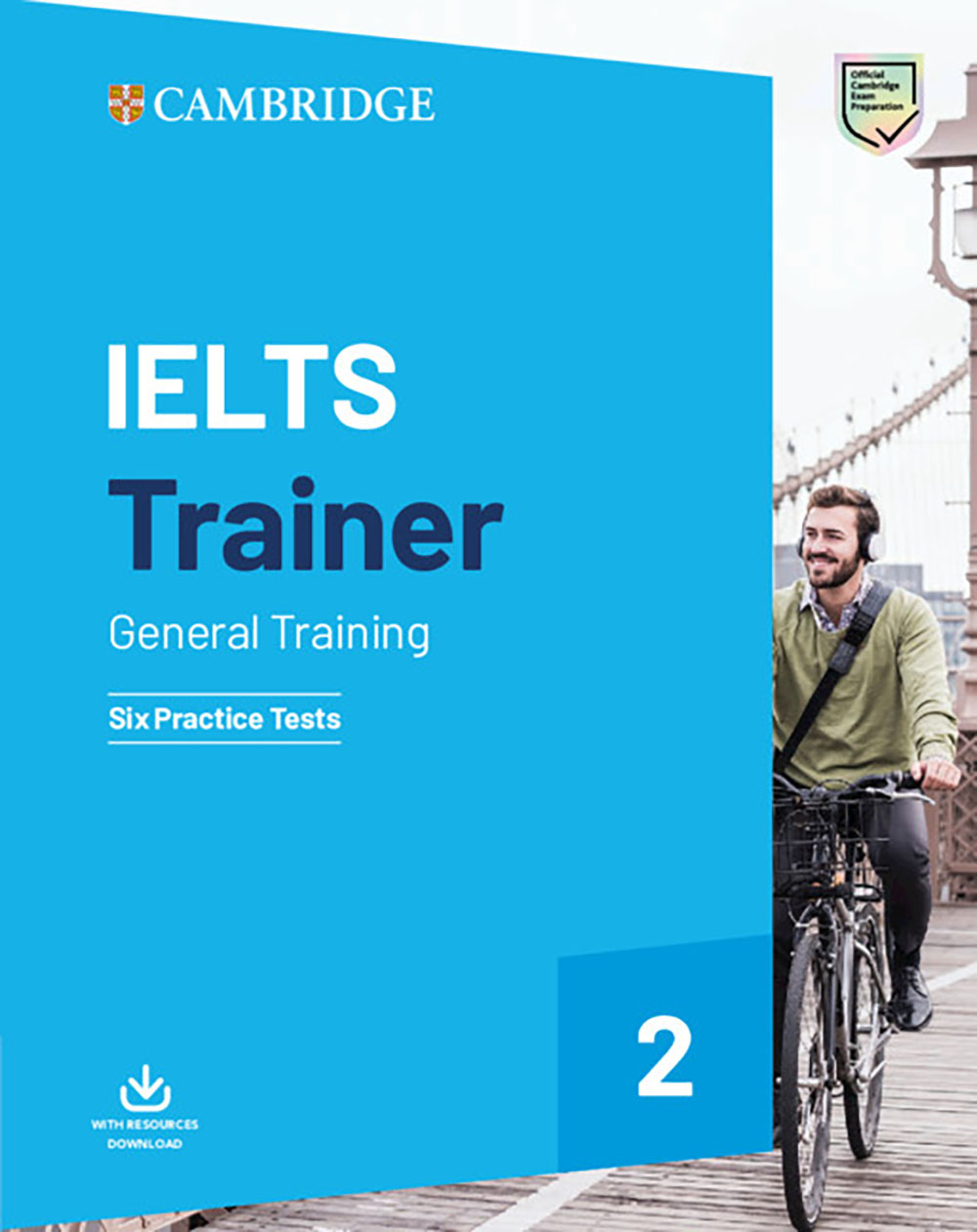
IELTS Trainer General Training Six Practice Tests 2
Effective learning strategies for “IELTS Trainer”
1. Start with a “diagnostic” guided test
- Begin with Test 1 (Training + Exam Practice), not a random test in the middle.
- Do it under almost exam conditions, then carefully read all the tips, explanations and audioscripts.
- Use this first test to discover your weak skills: Listening detail, Reading speed, Writing Task 1/2 structure, Speaking fluency, etc.
2. Treat Tests 1–2 as a mini-course
For the two “Training and Exam Practice” tests:
- Read every strategy box and tip before you start each section.
- Do the extra grammar/vocabulary and Writing activities – don’t skip them; they are based on typical IELTS mistakes.
- After checking answers, underline useful phrases (especially for Writing and Speaking) and keep a notebook of:
- Linking words (however, in contrast, as a result…)
- Academic or everyday phrases (depending on Academic/GT)
- Good topic vocabulary (education, work, environment, health…)
3. Use Tests 3–6 as full mock exams
- Do each test in one sitting when possible: Listening → Reading → Writing, and add Speaking practice separately.
- Time yourself exactly like the real exam (no pausing audio, no extra minutes).
- After each test:
- Mark your answers with the answer key.
- Use the audioscripts to see why you missed Listening questions.
- For Reading, note which question types you lose marks on (Matching headings, T/F/NG, Matching features, etc.).
4. Analyse your mistakes systematically
Create a simple error log with four columns:
- Paper – Task type – Your mistake – What to change next time
Examples:
- Reading – True/False/Not Given – I guessed too fast – Next time: underline key words and check each sentence in the text.
- Writing Task 2 – Task response – I didn’t answer all parts – Next time: spend 3 minutes planning and checking the question words.
Review this log every few days so you don’t repeat the same errors in the next test.
5. Recycle Writing tasks for improvement
Don’t just write once and move on:
- Choose a Writing Task 1 or 2 from the book.
- Write your answer under timed conditions (20 mins for Task 1, 40 mins for Task 2).
- Compare with the model answers and band-descriptor style comments (if given).
- Rewrite the same essay once more, focusing on:
- Clear structure (intro → body → conclusion)
- Better linking words
- More precise vocabulary and fewer grammar mistakes
This “write → compare → rewrite” loop is one of the fastest ways to push your Writing band up.
6. Turn Listening and Speaking into daily practice
With the Listening and Speaking material in IELTS Trainer:
- Listening
- After checking answers, listen again while reading the audioscript and highlight synonyms (e.g. “big problem” → “major issue”).
- Shadow short parts of the script (repeat immediately after the speaker) to improve pronunciation and rhythm.
- Speaking
- Use the Speaking questions from each test as a question bank.
- Record yourself answering Part 2 (long turn) for 1–2 minutes.
- Check: Did you speak for the full time? Did you organise your ideas clearly?
7. Combine book work with band descriptors
Whenever possible, read or print the official IELTS band descriptors for Writing and Speaking (public version) and keep them beside you. As you use IELTS Trainer:
- After a Writing or Speaking practice, quickly self-assess using the descriptors (Task Response, Coherence and Cohesion, Lexical Resource, Grammar).
- This trains you to think the way an examiner thinks, making your practice more focused.
8. Plan a realistic schedule
For most learners, a simple plan is:
- Weeks 1–2:
- Test 1 & 2 (Training + Exam Practice) slowly and carefully.
- Extra time for analysing mistakes and building vocabulary.
- Weeks 3–6:
- One full test (Test 3–6) every 7–10 days under exam conditions.
- 2–3 shorter sessions between tests to review errors, rewrite essays, and repeat difficult Listening/Reading parts.
This way you use all six tests deeply, not just “once and forget”.