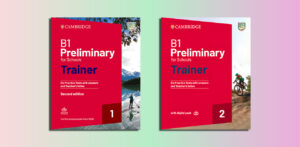
B1 Preliminary for Schools Trainer (PDFs, Resources)
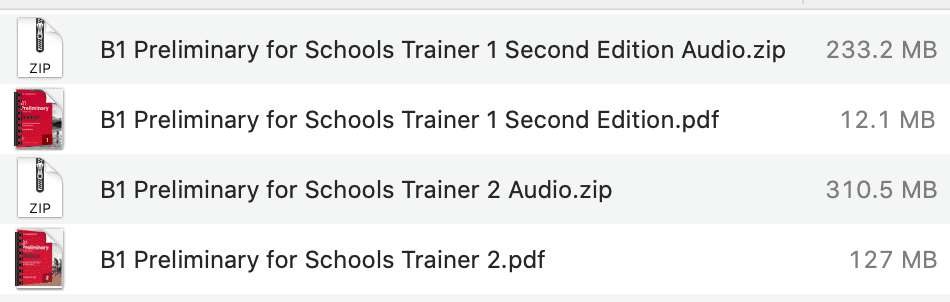
B1 Preliminary for Schools Trainer 1 Second Edition Audio.zip
B1 Preliminary for Schools Trainer with answers and Teacher’s Note 1 Second Edition.pdf – Sample: Click
B1 Preliminary for Schools Trainer 2 Audio.zip
B1 Preliminary for Schools Trainer with answers and Teacher’s Note 2.pdf – Sample: Click
| Name | Price | Buy |
|---|---|---|
| B1 Preliminary for Schools Trainer (PDFs, Resources) | $8 |
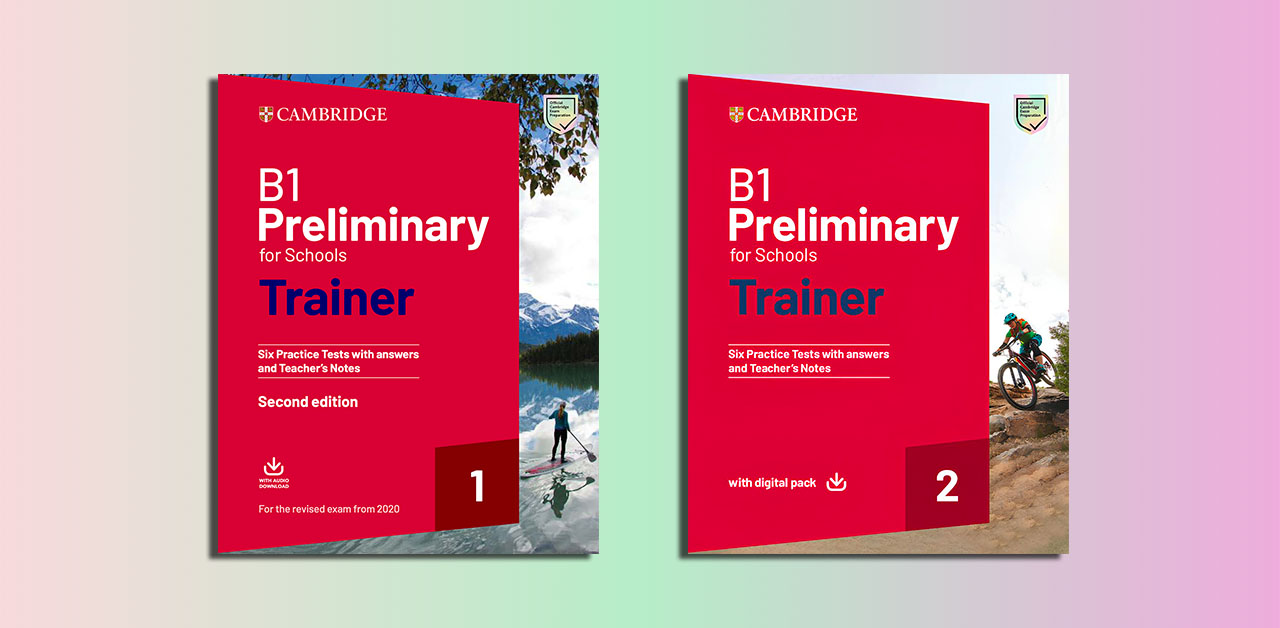
Overview of the “B1 Preliminary for Schools Trainer” by Cambridge
Contents
| ✅ Coursebook: | B1 Preliminary for Schools Trainer |
| ✅ Publisher: | Cambridge University Press |
| ✅ English type: | British English |
| ✅ For: | Exam, PET, Secondary, Junior High School, High School |
| ✅ Levels: | B1 |
| ✅ Publication year: | 2024 |
B1 Preliminary for Schools Trainer (PET Trainer) from Cambridge is a specialised exam-preparation course for teenagers who are getting ready for the B1 Preliminary for Schools (PET for Schools) exam, revised from 2020. It combines six full practice tests with step-by-step training, expert tips and detailed answer keys, helping students understand the exam, improve their skills and build real confidence.
What is B1 Preliminary for Schools Trainer?
This Trainer is an official Cambridge resource designed for B1 level students (CEFR) in secondary schools and language centres. It reflects the updated exam format from 2020, so every task type, question style and timing matches the real B1 Preliminary for Schools exam. Learners practise with authentic materials while teachers get a ready-to-use solution for focused exam preparation.
Key features of the book
Six complete practice tests
- All four papers: Reading, Writing, Listening and Speaking.
- Same layout and difficulty as the official exam.
Guided tests for step-by-step training
- The first two tests include:
- Exam orientation pages explaining each part.
- Strategy boxes with Tips, Advice and Remember notes.
- Training activities that focus on key skills and typical problem areas.
Realistic exam practice
- Tests 3–6 provide full exam papers with no extra guidance, so students experience what the real exam feels like and can track their progress over time.
Grammar and vocabulary support
- Extra exercises targeting common B1 Preliminary errors, based on real candidate scripts, help learners fix frequent mistakes in tense use, prepositions, word choice and spelling.
Detailed answer key and model writing
- Clear explanations for right and wrong options.
- Sample answers for the Writing paper, with comments that show what a good B1 performance looks like.
Downloadable audio
- All Listening tracks are provided as downloadable audio from Cambridge, making it easy to use the material in class or for self-study at home.
How this Trainer helps students succeed
B1 Preliminary for Schools Trainer is built to improve both language skills and exam technique:
- Students understand the exam format clearly before they start doing full tests.
- Strategy boxes show them how to manage time, avoid distractors, plan a short email or story, and check their work efficiently.
- Regular practice across six tests builds stamina and confidence, reducing stress on exam day.
- Teachers can use scores from each test to diagnose weaknesses and plan targeted revision lessons.
Because the topics match teen interests (school life, free time, friends, technology, travel), students stay motivated and find it easier to speak and write about familiar themes.
Why choose B1 Preliminary for Schools Trainer for your course?
- Official Cambridge quality, fully updated for the 2020 exam format.
- Six full practice tests plus guided training in the first two tests.
- Strong focus on real candidate errors, with practical tips to avoid them.
- Clear answer key, model Writing answers and downloadable audio, ideal for both classroom use and self-study.
Used regularly, B1 Preliminary for Schools Trainer gives learners a structured, reliable path from classroom practice to real exam success in Cambridge B1 Preliminary for Schools.
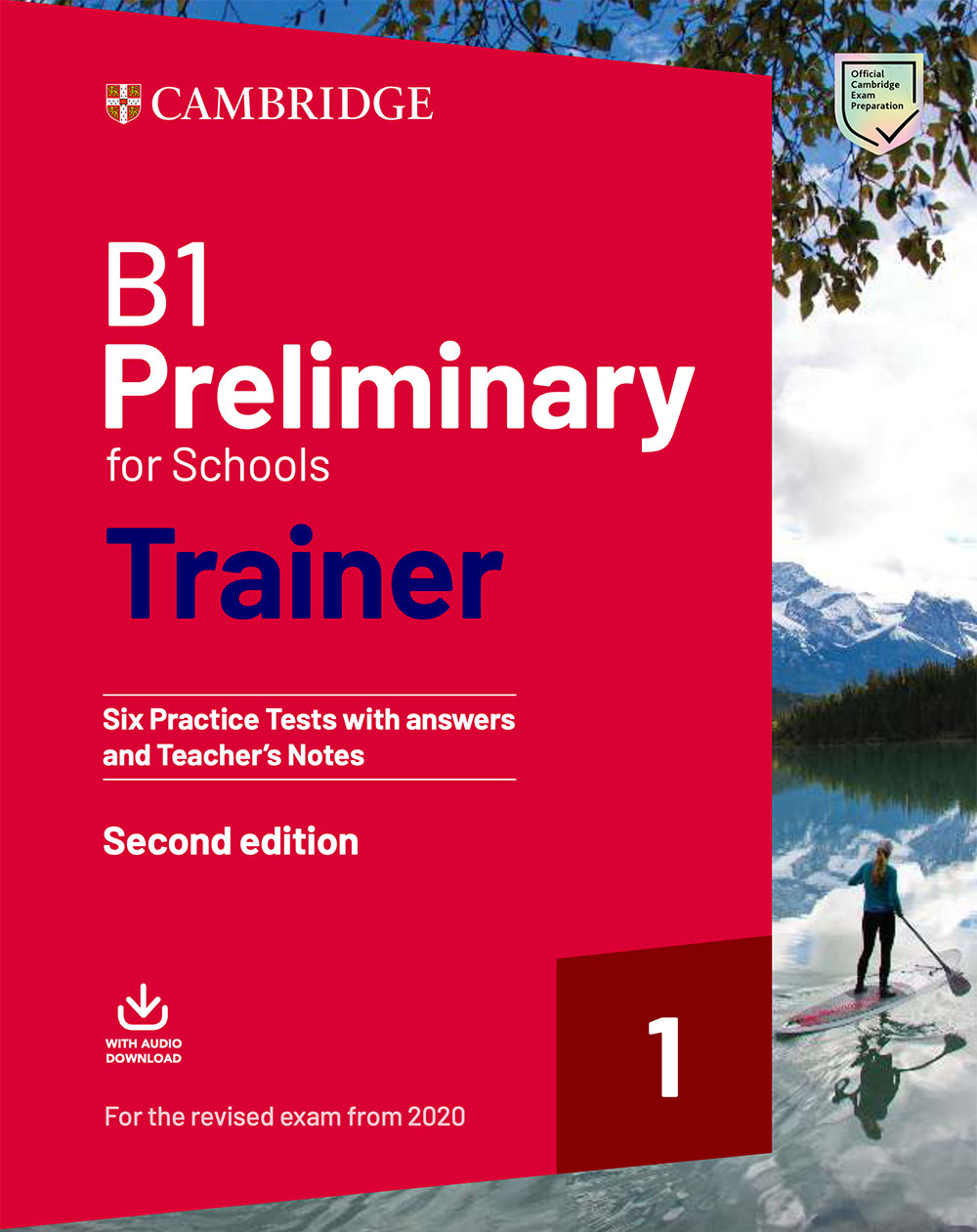
B1 Preliminary for Schools Trainer with answers and Teacher’s Note 1 Second Edition
Who is suitable for “B1 Preliminary for Schools Trainer”?
Teen learners preparing for the PET exam
- Students typically aged 12–17 (sometimes from about 9–14 and up, depending on the edition and school context).
- Learners at A2+ to B1 level on the CEFR who want to take the Cambridge B1 Preliminary for Schools exam in the near future.
Students needing structured exam coaching
- Those who feel nervous about the exam and need clear explanations of each paper (Reading, Writing, Listening, Speaking), plus step-by-step strategies rather than just doing random practice tests.
- Learners who often make similar grammar or vocabulary mistakes and need targeted practice based on real candidate errors.
School and language centre classes
- Secondary schools, bilingual schools and language centres looking for a complete PET coursebook that combines training and six full practice tests aligned with the revised 2020 exam.
- Classes that follow a Cambridge pathway (e.g. A2 Key for Schools → B1 Preliminary for Schools → B2 First for Schools) and need a solid B1 exam-prep stage.
Teachers who want ready-made exam materials
- Teachers who need photocopiable-style tests, teacher’s notes, answer keys and downloadable audio, so they can run realistic mock exams and provide focused feedback without creating everything from scratch.
Self-study learners and private students
- Motivated teens working with a tutor or on their own who want:
- Authentic exam practice.
- Clear answer keys and model Writing answers to check their progress.
In summary, B1 Preliminary for Schools Trainer is ideal for teenage learners at A2+/B1 level, and for teachers or schools who need a structured, exam-focused resource to prepare students thoroughly for the Cambridge B1 Preliminary for Schools (PET for Schools) exam.
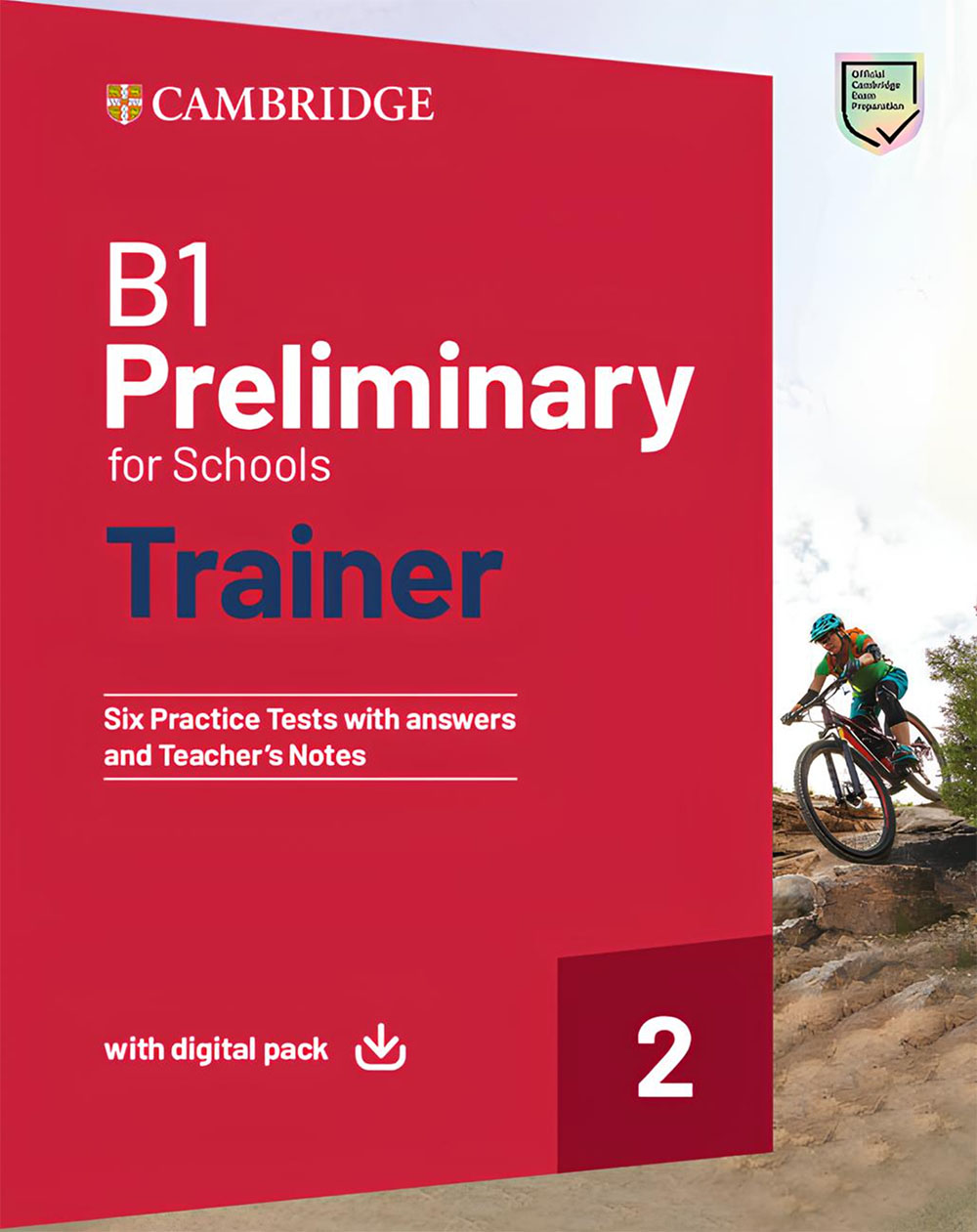
B1 Preliminary for Schools Trainer with answers and Teacher’s Note 2
The benefits of “B1 Preliminary for Schools Trainer”
1. Full, realistic exam experience
- Provides six complete practice tests that follow the revised 2020 B1 Preliminary for Schools exam format in content, layout and difficulty.
- Helps students become fully familiar with task types, timing and instructions before the real exam.
2. Step-by-step training, not just tests
- The first two tests are guided: they include exam orientation, training activities and extra practice before learners attempt the full paper.
- Tips, Advice and Remember boxes (over 40 tips, 24 advice boxes and 12 remember boxes) clearly show how to read questions carefully, avoid traps, plan writing and manage time in each paper.
- Students learn effective exam strategies instead of only repeating practice papers.
3. Focus on typical candidate problems
- Extra grammar and vocabulary exercises are based on real errors from B1 Preliminary for Schools candidates’ scripts, so they target the mistakes learners actually make in the exam.
- This helps students:
- Correct fossilised errors.
- Improve accuracy in writing and speaking.
- Gain more marks in Reading and Listening where grammar and lexis matter.
4. Clear feedback and easy marking
- Comes with a detailed explanatory key that explains why each answer is right or wrong, making it easy for teachers and self-study learners to correct work.
- Includes model answers for the Writing paper with comments, so students can see what a good B1 script looks like and how to reach a higher band.
5. Flexible use in class and at home
- Designed for both classroom use and self-study, with editions with answers (for independent learners or homework) and without answers (for controlled use in class).
- Downloadable audio makes it simple to run full Listening papers in class or allow students to practise at home.
6. Confidence building for teenagers
- Topics, visuals and tasks are tailored to teenage learners, so students find it easier to engage with the content and express their ideas in Speaking and Writing.
- The combination of guided training (Tests 1–2) and full exam practice (Tests 3–6) gradually builds exam confidence, reduces anxiety and helps learners feel ready for test day.
7. Strong support for teachers and schools
- Offers a complete, ready-to-use exam-preparation package: tests, guidance, tips, grammar/vocabulary practice, answer keys, teacher’s notes and audio.
- Saves preparation time and provides a reliable resource aligned with the official Cambridge B1 Preliminary for Schools exam.
Overall, B1 Preliminary for Schools Trainer gives both teachers and students a clear, structured pathway from everyday classroom work to successful performance in the B1 Preliminary for Schools exam.
Effective learning strategies for “B1 Preliminary for Schools Trainer”
1. Start with a diagnostic test
- Use Test 3 or 4 as an initial “mock exam” without coaching.
- Time each paper exactly like the real exam.
- Record scores for each part (Reading, Writing, Listening, Speaking).
- Identify patterns:
- Losing time in Reading?
- Many grammar mistakes in Writing?
- Struggling with Listening Part 3 or 4?
This gives a clear starting point and helps you choose which skills to focus on when you move to the guided Tests 1–2.
2. Use the guided tests as a mini course
For Tests 1 and 2, don’t rush:
- Before each part, read the Exam orientation page carefully:
- Underline key information: number of questions, time limit, marking.
- Do the training activities first, then the exam task.
- After each section:
- Check answers with the answer key.
- Highlight the questions you got wrong and ask why they were wrong.
- Write short notes (in your own language or in English) about the main tip you learned for that part.
Treat the guided tests as a strategy course, not just a test.
3. Create a personal “Exam Strategy Notebook”
Keep a separate notebook or digital document only for exam tips:
- After each lesson with the Trainer, write:
- The exam part (e.g. Reading Part 3 – multiple matching).
- One or two key strategies (e.g. “Read the questions first; underline key words; scan for names and numbers”).
- One example from the book where this strategy helped you.
- Review this notebook before every new practice test and before the real exam.
This turns the Trainer into a personalised handbook that you can quickly revise from.
4. Work on one paper at a time
Instead of always doing a whole test in one go, sometimes focus on a single paper:
- Reading:
- Do one part at a time.
- After checking answers, find the sentence or phrase in the text that proves each correct answer.
- Write a short note: “The answer is B because in line 7 it says…”.
- Writing:
- Analyse the model answers.
- Highlight useful phrases (linkers, opening/closing expressions, opinion phrases).
- Rewrite your own answer using 3–5 of those phrases.
- Listening:
- Listen once and answer.
- Check answers; then listen again while reading the transcript (if available) to see why each answer is correct.
- Underline the words or expressions that gave you the answer.
- Speaking:
- Use the sample tasks and photos in the book to practise with a partner.
- Record yourself on your phone, then listen to check:
- Pronunciation clarity.
- Range of vocabulary.
- Use of linkers (and, but, because, so, however, although, first, finally, etc.).
5. Focus on typical mistakes
When you do the grammar and vocabulary exercises in the Trainer:
- Keep a page titled “My common mistakes”.
- Every time you see a mistake that you also make (tenses, prepositions, word order, spelling), write it down in a two-column format:
| Wrong | Correct |
|---|---|
| He don’t like | He doesn’t like |
| interested on | interested in |
- Review this list regularly and try to use the correct versions in your Writing and Speaking tasks.
6. Time management practice
For each paper, practise under real exam timing:
- Use the first attempts to discover your natural speed.
- If you’re always short of time:
- In Reading, practise skimming and scanning. Don’t read every word.
- In Writing, plan quickly (2–3 minutes), then write, leaving 3–5 minutes at the end to check spelling and grammar.
- In Listening, avoid stopping on one question; keep listening and guess if necessary.
Repeat the same test (after a break of a few days) to see whether your timing has improved.
7. Turn answer keys into mini lessons
Don’t just check “right / wrong”:
- For wrong answers, ask yourself:
- Did I misunderstand the vocabulary?
- Did I misread the question?
- Did I ignore a key detail like “never”, “only”, “most”?
- For Writing, compare your answer with the model answer:
- Highlight three things the model does better (organisation, range of vocabulary, accuracy, linking).
- Rewrite or improve your answer immediately using those ideas.
This transforms simple correction into active learning.
8. Combine book work with real-life English
To maximise the Trainer’s impact:
- After practising a topic (e.g. “free time” or “technology”),
- Watch a short video, read a blog or listen to a podcast on the same topic.
- Note 5–10 new phrases that you could use in Speaking or Writing.
- Add these phrases to your exam notebook and use them in later writing tasks from the Trainer.
The richer your vocabulary and ideas, the easier the exam feels.
9. Use regular mock exams to track progress
Every few weeks:
- Choose one of the later tests (e.g. Test 5 or 6).
- Do all four papers in exam conditions over one or two days.
- Compare your scores with earlier mock exams.
If your scores improve and you feel more confident with the format and timing, you’re on the right track. If one paper stays weak, go back to the guided parts and tips for that paper and repeat targeted practice.
10. Work with a teacher or partner when possible
Although the Trainer can be used for self-study, you learn more when you:
- Ask a teacher to:
- Mark your writing in more detail.
- Give you personalised speaking feedback.
- Suggest extra practice based on your errors.
- Practise Speaking with a partner using the exam-style tasks in the book.
- Alternate examiner/candidate roles.
- Time each part and keep the interaction natural.
Used in this way, B1 Preliminary for Schools Trainer becomes more than a book of tests: it becomes a complete training system that develops your skills, exam strategies, confidence and overall English level on your path to success in the Cambridge B1 Preliminary for Schools exam.