Download, NE Build & Grow
Download Phonics Show PDF Resources
Phonics Show (PDFs, Resources)
Level 1
Phonics Show 1 Flashcards.zip
Phonics Show 1 Student’s Book Answer Keys.pdf
Phonics Show 1 Student’s Book Audio.zip
Phonics Show 1 Student’s Book.pdf – Sample: Click
Phonics Show 1 Teacher’s Guide.pdf
Phonics Show 1 Tests.zip
Phonics Show 1 Workbook Answer Keys.pdf
Phonics Show 1 Workbook.pdf – Sample: Click
Level 2
Phonics Show 2 Flashcards.zip
Phonics Show 2 Student’s Book Answer Keys.pdf
Phonics Show 2 Student’s Book Audio.zip
Phonics Show 2 Student’s Book.pdf – Sample: Click
Phonics Show 2 Teacher’s Guide.pdf
Phonics Show 2 Tests.zip
Phonics Show 2 Workbook Answer Keys.pdf
Phonics Show 2 Workbook.pdf – Sample: Click
Level 3
Phonics Show 3 Student’s Book Answer Keys.pdf
Phonics Show 3 Student’s Book Audio.zip
Phonics Show 3 Student’s Book.pdf – Sample: Click
Phonics Show 3 Teacher’s Guide.pdf
Phonics Show 3 Tests.zip
Phonics Show 3 Workbook Answer Keys.pdf
Phonics Show 3 Workbook.pdf – Sample: Click
Level 4
Phonics Show 4 Flashcards.zip
Phonics Show 4 Student’s Book Answer Keys.pdf
Phonics Show 4 Student’s Book Audio.zip
Phonics Show 4 Student’s Book.pdf – Sample: Click
Phonics Show 4 Teacher’s Guide.pdf
Phonics Show 4 Tests.zip
Phonics Show 4 Workbook Answer Keys.pdf
Phonics Show 4 Workbook.pdf – Sample: Click

| Name | Price | Buy |
|---|---|---|
| Phonics Show 1 PDFs, Resources | $4 | |
| Phonics Show 2 PDFs, Resources | $4 | |
| Phonics Show 3 PDFs, Resources | $4 | |
| Phonics Show 4 PDFs, Resources | $4 | |
| Phonics Show PDFs, Resources - All 4 Levels | Original price was: $16.$12Current price is: $12. |
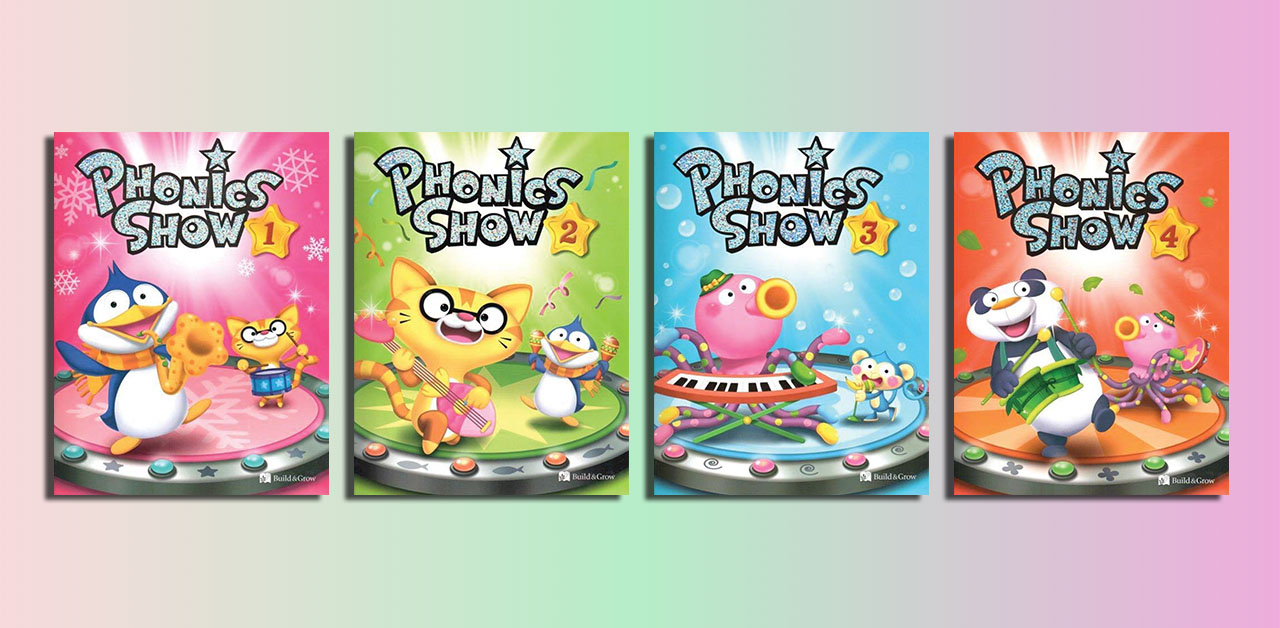
Overview of the “Phonics Show” by NE Build & Grow
Contents
| ✅ Coursebook: | Phonics Show |
| ✅ Authors: | Shawn Despres, Clara Cho, Shawn Chung |
| ✅ Publisher: | NE Build & Grow |
| ✅ English type: | International English |
| ✅ For: | Phonics, Kindergarten |
| ✅ Publication year: | 2011 |
“Phonics Show” by NE Build & Grow is a four-level phonics series designed to help young learners move confidently from recognizing basic letter sounds to reading and writing simple words and sentences in English. Developed by NE Build & Grow, the ELT publishing brand of Neungyule Education in Korea, the series is aimed primarily at kindergarten and low-beginner primary students and is used in many countries as a complete foundation course in phonics.
Overall approach and methodology
Phonics Show follows a balanced literacy approach. Each level systematically builds:
- Phonemic awareness (hearing and manipulating sounds)
- Phonics (letter–sound correspondence and spelling patterns)
- Oral language (speaking and listening through chants and dialogues)
- Decoding skills (sounding out and blending)
- Vocabulary and basic comprehension (simple words, phrases, and short texts)
Lessons combine clear, step-by-step phonics instruction with colorful illustrations, songs, chants, and game-like activities. This makes it easier for very young learners to stay engaged while repeatedly practicing the target sound or pattern.
Structure and level progression
Phonics Show is organized into four levels, each one gradually increasing in difficulty and text length:
- Level 1 – Focuses on the alphabet and basic single letter sounds. Students learn to recognize and produce the sounds of individual consonants and vowels, trace and write letters, and read very simple CVC words and picture-supported vocabulary.
- Level 2 – Introduces more systematic blending and segmenting. Learners practice combining familiar sounds to read and spell short words and begin working with simple word families and basic short-vowel patterns.
- Level 3 – Expands to more complex phonics patterns such as consonant blends, digraphs, and common spelling patterns. Students read slightly longer word lists and short sentences, helping them move from isolated phonics to connected text.
- Level 4 – Consolidates earlier phonics and introduces more challenging patterns and longer words. There is greater emphasis on fluency, reading short passages, and applying phonics knowledge to support understanding of meaning.
Across the series, each unit typically includes:
- Presentation of the target sound or pattern
- Model words and pictures
- Chants or songs for repetition and rhythm
- Listening and pointing tasks
- Guided reading and spelling practice
- Review and cumulative practice so students meet previously learned sounds again in new contexts
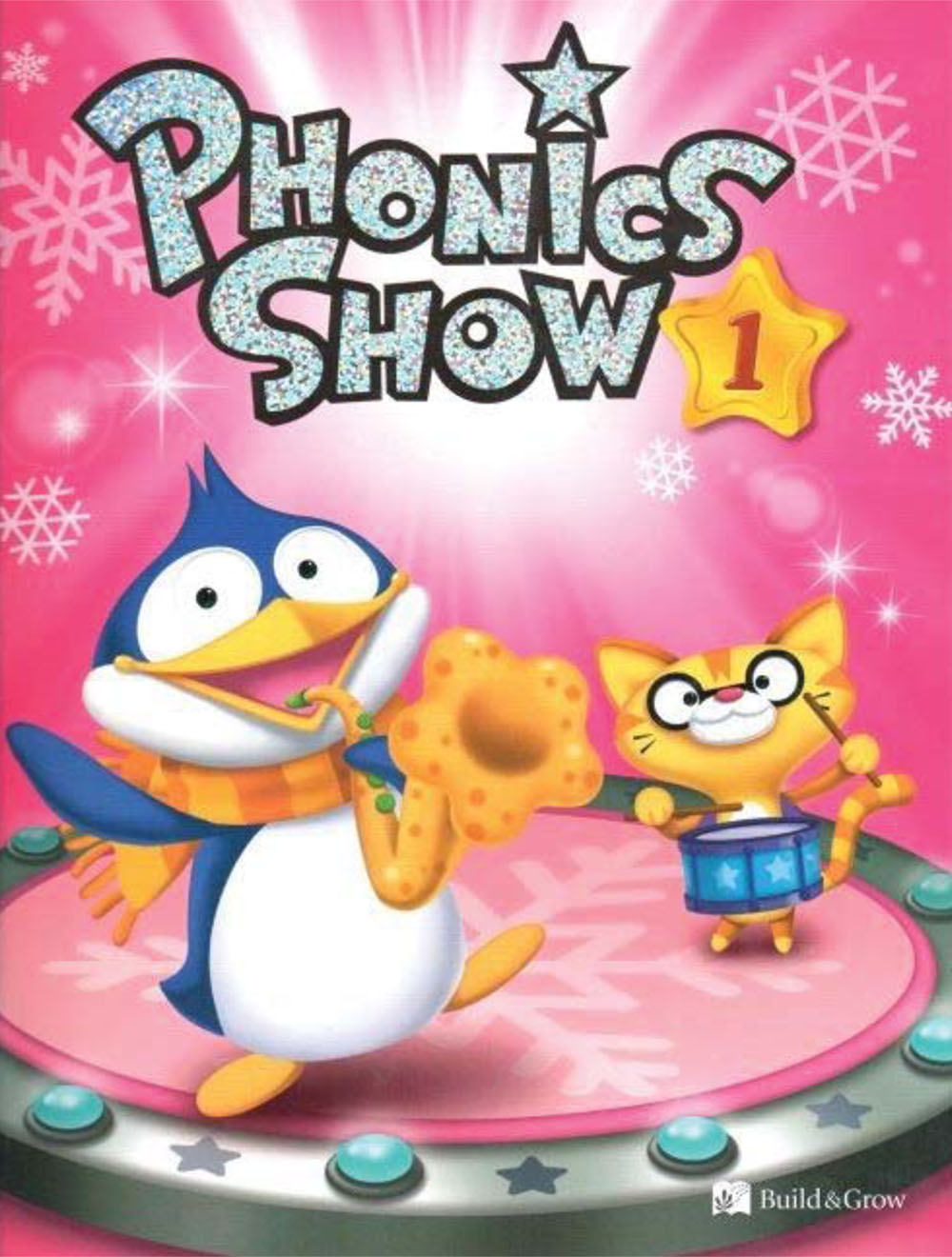
Phonics Show 1 Student’s Book
Who is suitable for “Phonics Show”?
“Phonics Show” by NE Build & Grow is designed for young learners who are beginning their journey into English reading and writing. It suits a wide range of early learners and learning contexts, especially where a structured, phonics-based approach is needed.
1. Kindergarten Learners (Ages 4–6)
Phonics Show is ideal for preschool and kindergarten students who are just starting to recognize letters, sounds, and basic English vocabulary. Its colorful visuals, chants, songs, and simple activities match the developmental stage of young children and help build early phonemic awareness in a fun, low-stress way.
2. Primary Students at the Beginner or Low-Beginner Level
Children in Grades 1–3 who have little or no prior exposure to English can use the series effectively. The step-by-step progression—starting from the alphabet and moving to blends, digraphs, and decoding—helps older beginners catch up quickly and build confidence.
3. Students Who Need a Strong Foundation Before Moving to Reading Textbooks
Learners preparing for coursebooks such as Kids’ English, Primary English, or starter-level communicative series benefit from Phonics Show because it equips them with essential decoding skills, enabling smoother transitions to reading sentences and short texts.
4. Learners in Language Centers or After-School Programs
Because each unit is structured with clear targets, predictable routines, chants, and cumulative reviews, it fits well in language centers, private academies, and extracurricular English programs focusing on literacy skills.
5. Students Who Struggle With Letter–Sound Connections
Children who find reading difficult or who confuse letters and sounds can benefit from Phonics Show’s systematic reinforcement, multi-sensory tasks (listening, tracing, chanting, writing), and repeated exposure to core phonics patterns.
6. EFL/ESL Learners Needing Visual and Audio Support
The combination of bright illustrations, audio tracks, and simple phonics readers makes the series suitable for learners in non-English-speaking environments who need strong, explicit modeling of sounds and pronunciation.
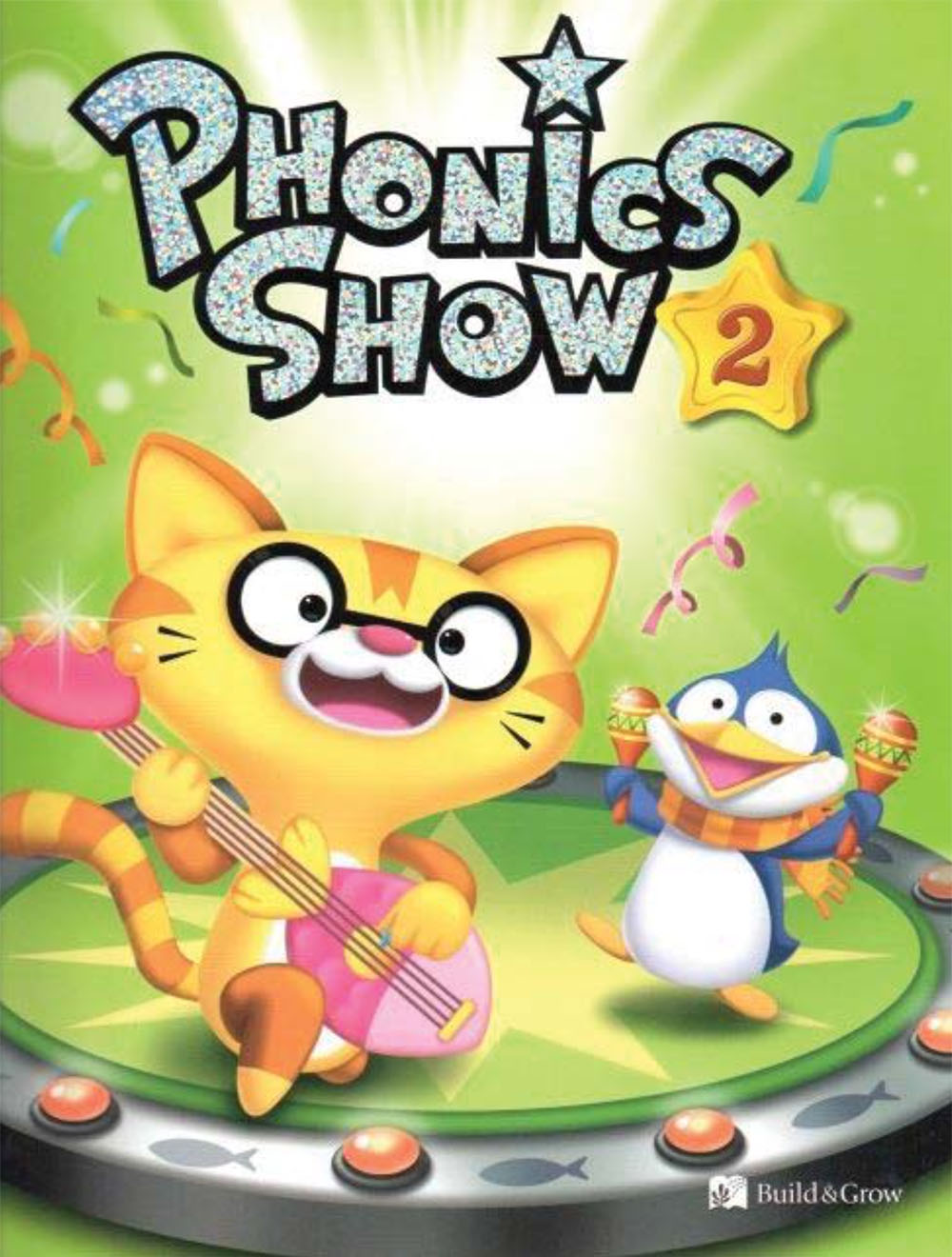
Phonics Show 2 Student’s Book
The benefits of “Phonics Show”
Below are the key benefits of “Phonics Show” by NE Build & Grow, designed to help young learners build a strong, confident foundation in English reading and writing.
1. Systematic, Step-by-Step Phonics Instruction
Phonics Show follows a clear, structured sequence from letter recognition to complex phonics patterns. Each level gradually builds decoding skills, helping learners understand how sounds connect to letters and how letters blend into words.
2. Strong Development of Phonemic Awareness
Through chants, songs, clapping activities, and listening tasks, children learn to hear, identify, and manipulate sounds—an essential skill that supports smooth progression into reading and spelling.
3. Multi-Sensory Learning for Better Retention
The course incorporates visuals (pictures, colors), auditory input (songs, audio), and kinesthetic tasks (tracing, writing, pointing). This multi-sensory approach helps young learners remember sounds and patterns more effectively.
4. Engaging Activities That Keep Young Learners Motivated
Bright illustrations, fun chants, interactive games, and simple writing tasks make lessons enjoyable. This reduces stress and encourages students to participate actively, even if they are new to English.
5. Early Reading Confidence
After learning each sound or pattern, students immediately apply it to read short words and simple sentences. This fast reinforcement helps children feel successful early and motivates them to continue learning.
6. Effective Cumulative Review
Previously learned sounds reappear in later units through controlled reading passages, word lists, and review pages. This continuous recycling ensures long-term retention and prevents learning gaps.
7. Smooth Transition to Higher-Level English Courses
Learners who complete Phonics Show develop essential skills—decoding, blending, segmenting, and basic spelling—that prepare them for beginner coursebooks, graded readers, or primary-level English programs.
8. Ideal for Both Classrooms and Language Centers
Teachers benefit from structured units, clear teaching steps, visual aids, audio resources, and optional readers. This makes it easy to deliver effective phonics instruction in schools, after-school programs, or private academies.
9. Supports Struggling Readers
Children who have difficulty recognizing letters or blending sounds benefit from the series’ slow progression, repetition, and multi-modal activities. It helps improve accuracy, confidence, and reading fluency.
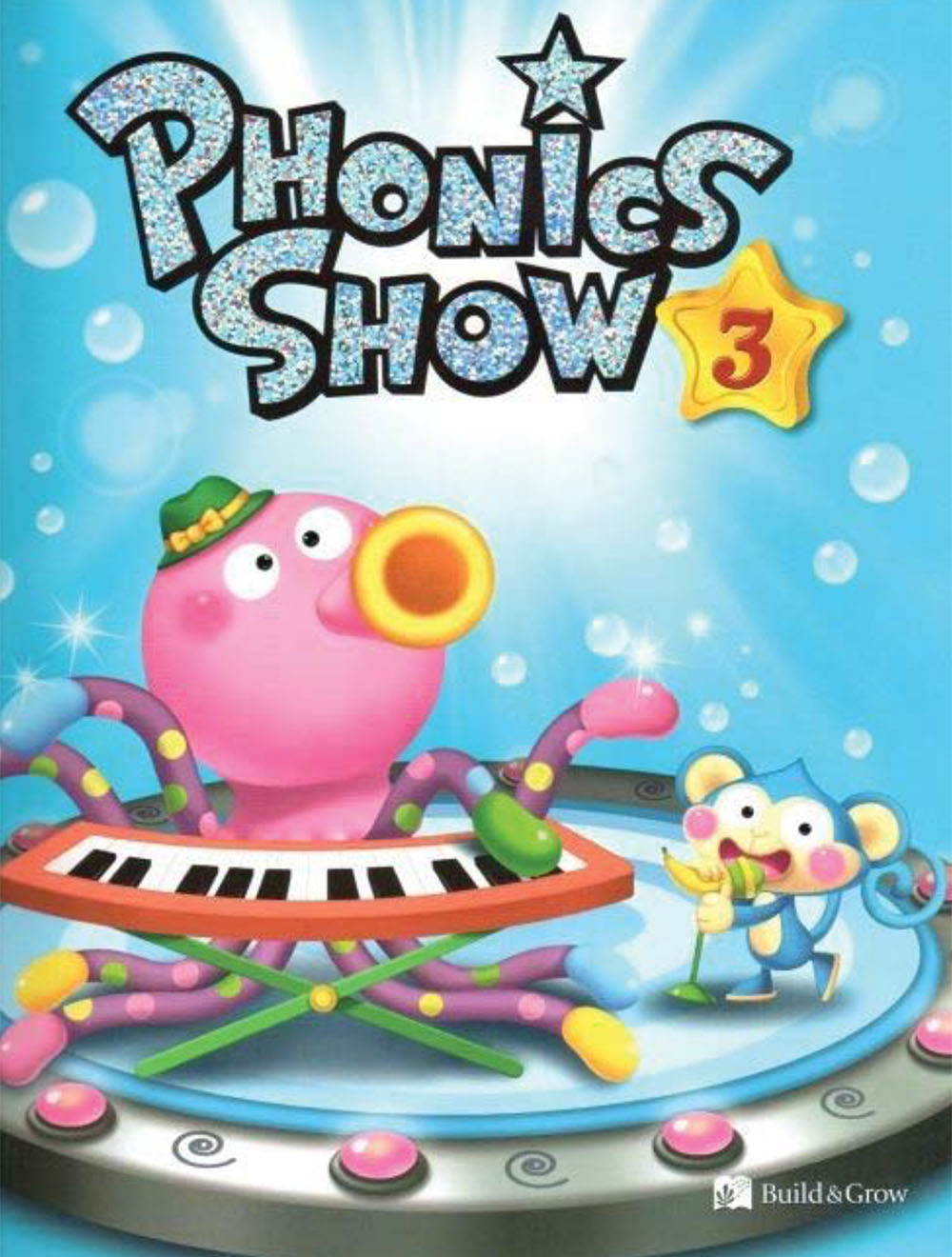
Phonics Show 3 Student’s Book
Effective learning strategies for “Phonics Show”
1. Follow the Sound–Word–Sentence Sequence
Phonics Show is designed in a clear progression:
learn the sound → practice with model words → read short sentences.
Make sure each lesson follows this order. Students should master the sound first before moving to blending and reading.
2. Use Multi-Sensory Practice Every Lesson
Young learners remember best when they use multiple senses. Combine:
- Listening: chants, songs, audio tracks
- Speaking: repeating sounds and model words
- Seeing: picture cues, letter shapes
- Writing: tracing and copying letters/words
- Movement: pointing, clapping syllables, air-writing
This helps sounds “stick” and reduces confusion between similar letters.
3. Encourage Daily Short Practice
Frequent, short sessions (10–15 minutes) are more effective than long lessons.
Daily routines can include:
- Reviewing 3–5 sounds
- Blending a few CVC words
- Reading a short phonics reader or sentence strip
Consistent exposure builds automatic recognition.
4. Model Mouth Shapes and Pronunciation Clearly
Young learners often struggle with English sounds because they are not used to the mouth positions.
Use slow, exaggerated modeling when teaching:
- /b/ vs /p/
- /i/ vs /ɪ/
- /f/ vs /v/
Show the teeth, lips, and tongue position; let students mirror you.
5. Practice Blending and Segmenting Every Lesson
Blending is the core skill of reading. Use activities such as:
- Teacher says: /c/ – /a/ – /t/ → students say cat
- Teacher shows a picture (sun) → students segment /s/ – /ʌ/ – /n/
- Use finger blending: slide fingers together to “blend” sounds
This builds decoding fluency fast.
6. Use the Workbook Immediately After the Student Book
Right after finishing a unit in the Student Book, let students open the Workbook to reinforce:
- writing patterns
- spelling practice
- reviewing target words
- reading short sentences
This immediate application helps cement the lesson.
7. Read the Phonics Readers or Story Pages Often
If your edition includes readers or story pages, read them multiple times a week.
They help learners:
- see phonics patterns in real context
- build reading confidence
- expand vocabulary naturally
Repeat readings build fluency.
8. Use Games to Reinforce Sounds and Words
Young learners learn best when having fun. Try:
- Sound Bingo
- Matching cards (sound–picture / word–picture)
- “Jump to the sound” floor cards
- Spelling relays
Games turn repetition into enjoyable practice.
9. Review Previously Learned Sounds Frequently
Phonics Show recycles sounds, but extra review helps eliminate forgetting.
Weekly review ideas:
- Flashcard drills
- Dictation of simple words
- Quick reading of old word lists
- Mini quizzes using pictures only
Cumulative review ensures long-term retention.
10. Encourage Parents to Support at Home
Simple tasks parents can help with:
- Listening to audio tracks with their child
- Practicing 5–10 words per day
- Checking tracing/writing homework
- Reading phonics readers together
Home practice accelerates progress significantly.